Nepali
Kwati
Kwati is a nourishing Nepali soup made from a mix of sprouted beans, simmered with ginger, garlic, and warming spices. It is traditionally eaten during Janai Purnima, with a soupy broth and tender beans.
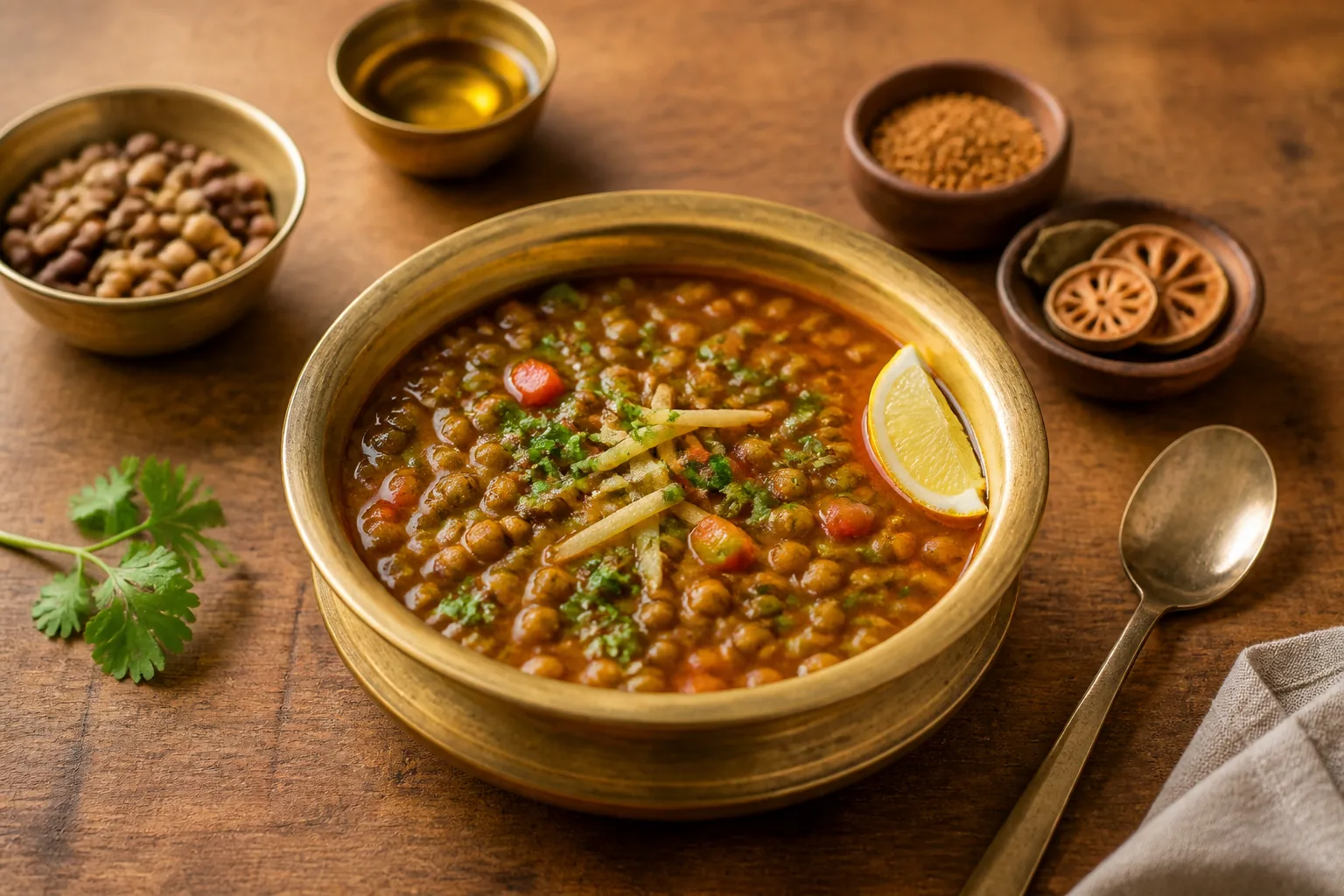
Ingredients
- Mixed dried kwati beans3/4 cup
- Mustard oil or ghee2 tbsp
- Fenugreek seeds1/4 tsp
- Dried jimbu1/2 tsp
- Bay leaf1
- Small red onion, finely chopped1
- Garlic, minced4 cloves
- Ginger, minced1 tbsp
- Tomato, finely chopped1 small
- Turmeric powder1/2 tsp
- Cumin powder1 tsp
- Coriander powder1 tsp
- Kashmiri chili powder1/2 tsp
- Garam masala1/4 tsp
- Saltto taste
- Water4 cups
- Fresh cilantro, chopped2 tbsp
- Lemon wedgesfor serving
Method
- Rinse the mixed kwati beans well, soak them in plenty of water overnight, then drain.
- Wrap the soaked beans in a clean damp cloth or keep them in a covered sprouting jar for 24 to 36 hours, rinsing once or twice, until small sprouts appear.
- Heat mustard oil or ghee in a pressure cooker or heavy pot over medium heat.
- Add fenugreek seeds and fry until dark brown, then add jimbu and bay leaf for a few seconds until fragrant.
- Add the chopped onion and cook until golden at the edges.
- Add garlic and ginger and cook for 1 minute, stirring so they do not burn.
- Add the tomato, turmeric, cumin, coriander, chili powder, and salt, then cook until the tomato softens and the oil begins to separate.
- Add the sprouted beans and stir-fry them in the masala for 3 to 4 minutes.
- Pour in the water, close the pressure cooker, and cook for 4 to 5 whistles over medium heat, or simmer covered in a pot for about 45 to 60 minutes until the beans are tender.
- Open the cooker once the pressure releases naturally, then simmer uncovered for 5 to 8 minutes to slightly thicken the broth.
- Stir in garam masala and chopped cilantro.
- Serve hot with lemon wedges, plain rice, or beaten rice.
Common questions
What can I substitute for dried jimbu if I can’t find it?
Use a small pinch of asafoetida (hing) instead, added with the mustard oil or ghee. It won’t taste exactly the same, but it gives a similar savory, onion-garlic aroma. Start with very little.
How long does the sprouting step usually take for kwati beans?
After soaking overnight, most mixed beans need about 24 to 36 hours to sprout. Rinse once or twice during that time and keep them covered but not waterlogged. Tiny sprouts are enough; don’t wait for long shoots.
What are the most common mistakes when cooking kwati?
The biggest mistakes are under-sprouting, burning the fenugreek seeds, and adding too little water. Also avoid skipping the masala cooking step; the tomatoes should soften and the oil should separate before adding the beans.
Can I make kwati ahead of time, and how should I store it?
Yes. Cool it completely, then refrigerate in a sealed container for up to 4 days. It often tastes better the next day. Reheat gently with a splash of water, since it thickens as it sits.
What is the best way to serve kwati?
Serve it hot with steamed rice, roti, or beaten rice. A little ghee on top works well. For a more Nepali-style meal, pair it with achar, sautéed greens, or a simple salad.