Thai
Kuai Tiao Ruea
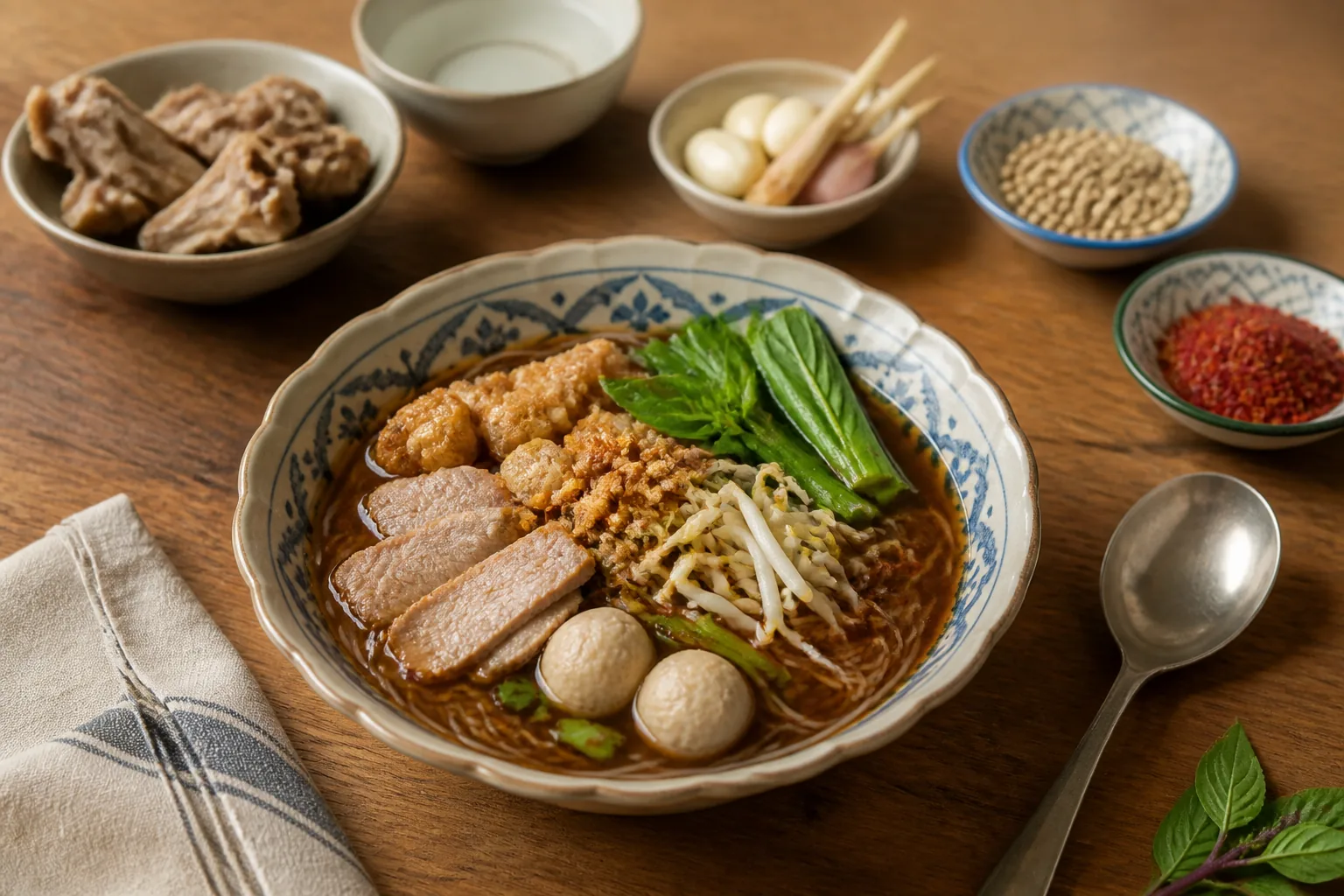
Thai boat noodles with a dark, aromatic pork broth, tender rice noodles, morning glory, pork slices, and a rich nam tok finish from fresh pig’s blood. Serve it hot with cracklings, fried garlic, herbs, and the usual Thai table seasonings.
Ingredients
- Pork neck bones or pork back bones700g
- Water1.8 liters
- Coriander roots, bruised3
- Garlic cloves, bruised5
- White peppercorns1 tsp
- Cinnamon stick1 small
- Star anise2 pods
- Galangal slices4 thin slices
- Daikon, cut into chunks150g
- Light soy sauce2 tbsp
- Dark soy sauce1 tbsp
- Fish sauce1 1/2 tbsp
- Palm sugar1 tbsp
- Fermented soybean paste1 tbsp
- Fresh pig’s blood1/4 cup
- Rice vinegar1 tbsp
- Thin pork loin or shoulder, sliced very thin180g
- Pork balls8
- Sen lek rice noodles, soaked until pliable160g dried
- Thai morning glory, cut into 5 cm pieces2 cups
- Bean sprouts1 cup
- Fried garlic with oil2 tbsp
- Pork cracklings1/4 cup
- Thai basil leaves1/2 cup
- Chinese celery or cilantro, chopped2 tbsp
- Roasted chili flakesto serve
- Sugar, fish sauce, and chilies in vinegarto serve
Method
- Rinse the pork bones, then cover with water in a pot and bring to a boil for 3 minutes; drain, rinse the bones, and wash the pot for a cleaner broth.
- Return the bones to the pot with 1.8 liters water, coriander roots, garlic, white peppercorns, cinnamon, star anise, galangal, and daikon.
- Bring to a gentle boil, skim well, then simmer uncovered for about 1 hour 15 minutes, keeping the broth just bubbling.
- Season the broth with light soy sauce, dark soy sauce, fish sauce, palm sugar, and fermented soybean paste; simmer for 10 minutes and adjust until salty-sweet and deeply aromatic.
- Mix the fresh pig’s blood with rice vinegar, then whisk in a ladle of hot broth to temper it.
- Lower the broth to a bare simmer and stir in the tempered blood; cook gently for 2 to 3 minutes until the broth darkens and slightly thickens, without boiling hard.
- Add the pork balls to the broth and simmer until heated through.
- Briefly blanch the thin pork slices in the hot broth until just cooked, then set aside for serving.
- Bring a separate pot of water to a boil and blanch the soaked rice noodles for 20 to 40 seconds, until tender but springy.
- In the same boiling water, briefly blanch the morning glory and bean sprouts until just wilted but still crisp.
- Divide noodles, morning glory, and bean sprouts between 2 bowls.
- Top each bowl with sliced pork, pork balls, fried garlic oil, pork cracklings, Thai basil, and Chinese celery or cilantro.
- Ladle the hot nam tok broth over the bowls and serve immediately with roasted chili flakes, sugar, fish sauce, and chilies in vinegar for seasoning at the table.
Common questions
What can I use instead of fresh pig’s blood in Kuai Tiao Ruea?
The closest substitute is congealed duck or pork blood if available. If not, skip it and use extra fermented soybean paste plus a little more palm sugar for body and color; the soup won’t be authentic, but it will still taste rich.
How long should I simmer the pork bones for the best broth?
Simmer the cleaned bones for about 1 hour 15 minutes at a gentle bubble. Too short gives a thin broth; too long can make it cloudy and fatty. Skim often and keep it below a rolling boil.
What are the most common mistakes when making this soup?
The biggest mistakes are boiling too hard, not skimming the scum, and adding the blood mixture over high heat. That can make the broth cloudy or grainy. Also, don’t overdo the soy sauce before tasting; the paste is already salty.
How do I store Kuai Tiao Ruea and reheat it safely?
Cool the broth quickly, then refrigerate in a covered container for up to 3 days. Reheat gently until steaming, not boiling. If noodles are already in the bowl, store them separately so they don’t turn mushy.
How should I serve Kuai Tiao Ruea for the best texture and flavor?
Serve it hot with rice noodles, pork balls, and any optional toppings like bean sprouts, morning glory, basil, chili flakes, and vinegar chilies. Add a squeeze of lime only at the table, so the broth stays balanced.