Ethiopian
Kocho
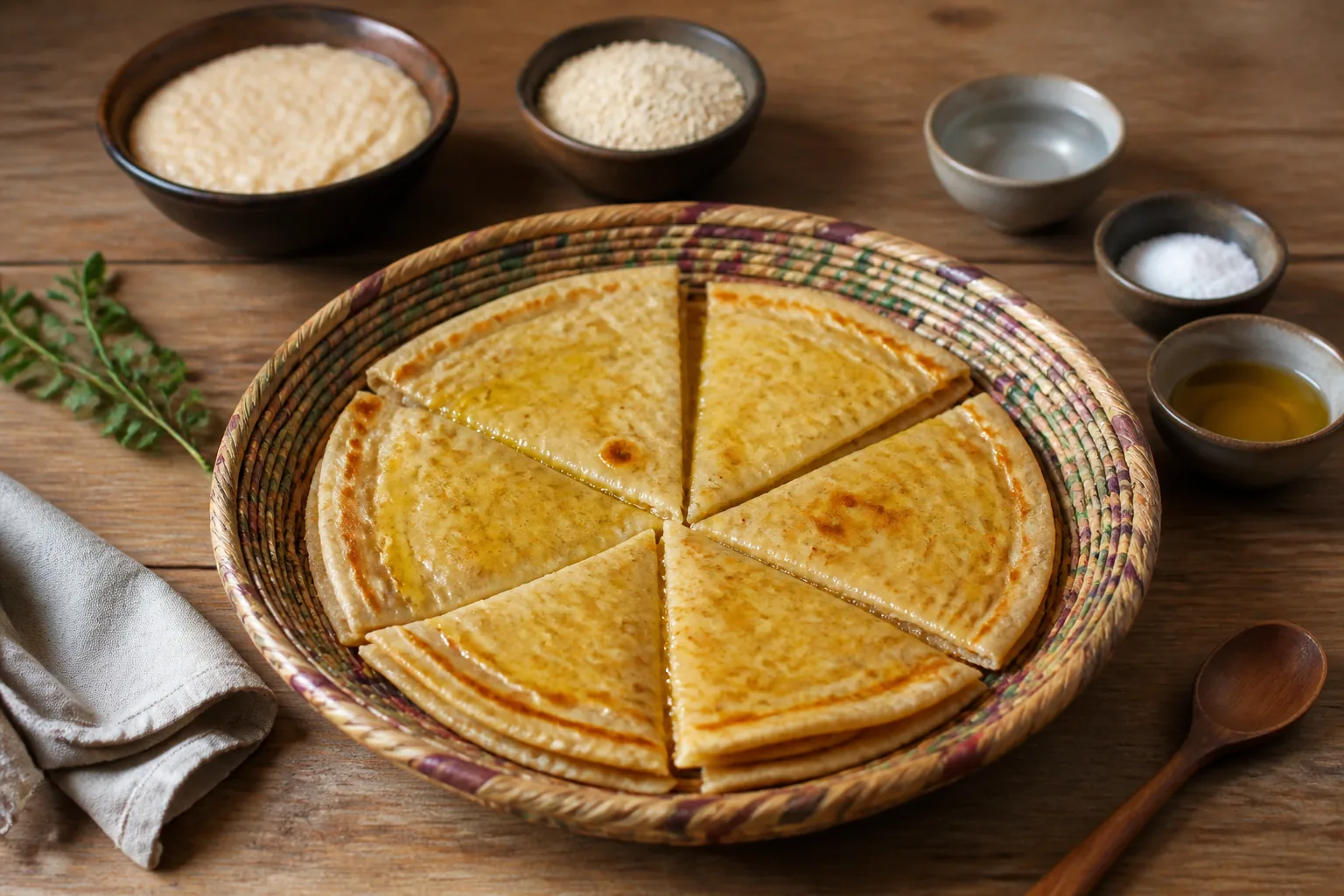
Kocho is a tangy, chewy flatbread made from fermented enset, traditionally baked in leaves on a hot mitad. Serve it warm with niter kibbeh, ayib, or a spicy Ethiopian stew.
 Watch it madeMelegna | መለኛ · 6:54
Ingredients
- Fermented kocho dough400g
- Bulla flour or finely crumbled dry kocho2 tbsp
- Water3-5 tbsp
- Salt1/2 tsp
- Niter kibbeh1 tbsp, plus more for serving
- Fresh enset leaves2 large pieces
Method
- Crumble the fermented kocho into a bowl, removing any hard fibers or dark outer bits.
- Sprinkle in the bulla flour and salt, then knead while adding water 1 tablespoon at a time until the dough is soft, cohesive, and slightly tacky.
- Divide the dough into 2 portions and pat each portion into a round flatbread about 1 cm thick.
- Warm the enset leaves briefly over the mitad or a flame to make them pliable, then lightly rub the inner side with niter kibbeh.
- Place each kocho round on a prepared leaf and fold the leaf over to enclose it completely.
- Heat a mitad or heavy clay griddle over medium heat until evenly hot.
- Place the wrapped kocho on the hot surface and cook for 10-12 minutes, pressing gently with a flat paddle so it cooks evenly.
- Turn the packet over and cook for another 10-12 minutes, until the kocho is firm, lightly browned in spots, and fragrant.
- Unwrap the kocho, scrape away any overly dark surface if needed, and brush lightly with niter kibbeh.
- Serve warm, cut into pieces, with extra niter kibbeh, ayib, or a saucy Ethiopian stew.
Common questions
Can I substitute bulla flour if I can't find it?
Yes. Use finely crumbled dry kocho as written, or mix in a little teff flour only if needed for binding. Add water slowly so the dough stays soft and cohesive, not sticky or gummy.
How long does kocho take to cook on a griddle?
Plan on about 20 to 24 minutes total: 10 to 12 minutes per side over medium heat. It should feel firm and light brown in spots, with a cooked, fragrant aroma before serving.
What are the most common mistakes when making kocho?
The biggest issues are leaving in hard fibers, adding too much water, and cooking over heat that is too high. Also make sure the enset leaves are warm and pliable so they do not crack or tear.
How should I store leftover kocho?
Cool it completely, then wrap tightly and refrigerate for up to 3 days. Reheat on a dry skillet or wrapped in a leaf over gentle heat. For longer storage, freeze well-wrapped portions and thaw before reheating.
What is the best way to serve kocho?
Serve it warm, unwrapped, with niter kibbeh, spicy stews, or simple vegetable sides. It also pairs well with coffee or tea. Slice into wedges or tear by hand while still hot for the best texture.