Sudanese
Kisra
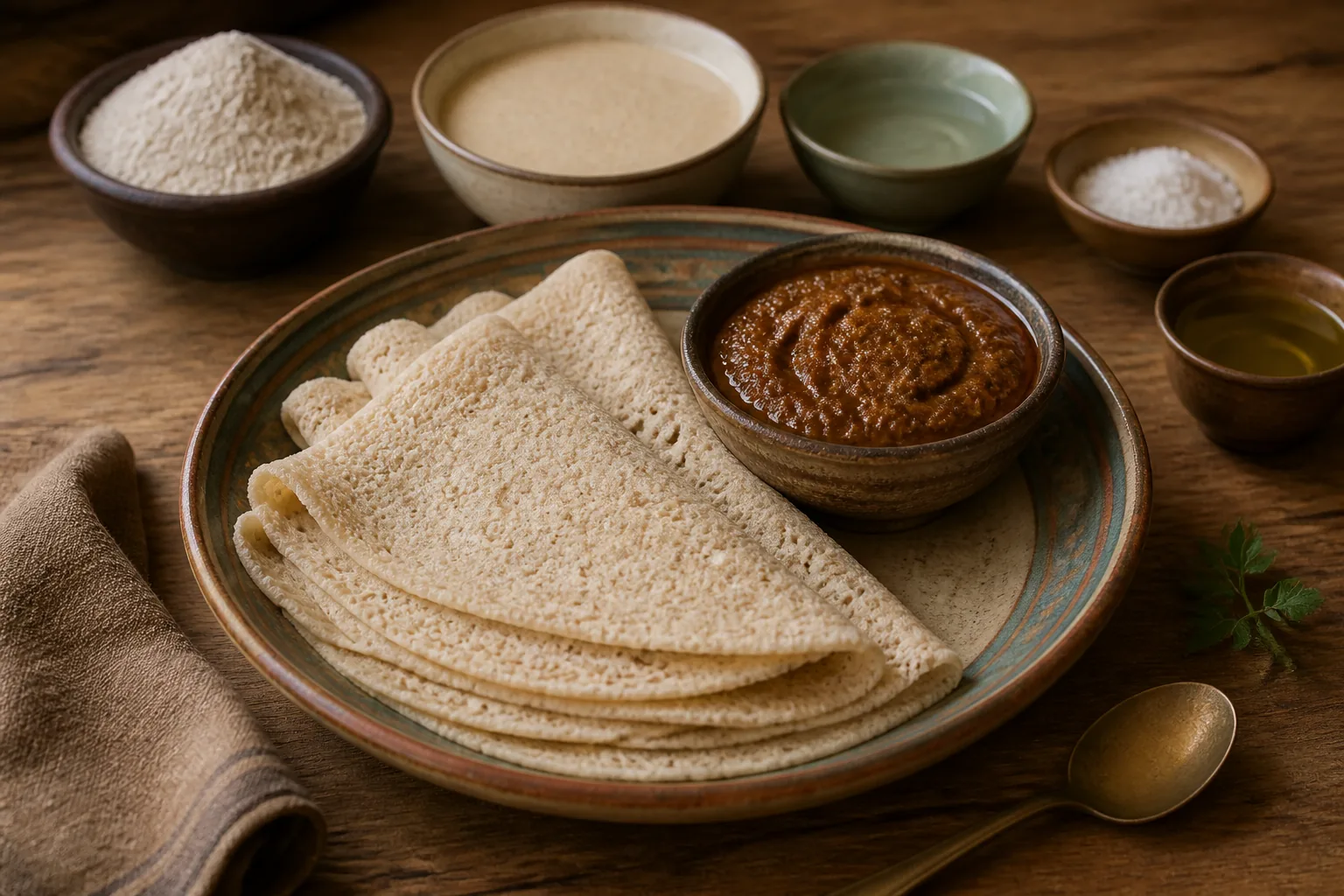
Kisra is a thin, tangy Sudanese sorghum flatbread cooked in delicate sheets on a hot griddle. It is soft and slightly spongy, made to scoop up stews such as mullah or bamia.
 Watch it madeTagwa Sudaniya · 10:54
Ingredients
- Fine sorghum flour1 cup
- Active kisra starter or previously fermented sorghum batter2 tbsp
- Lukewarm water1 3/4 cups, divided
- Salt1/4 tsp
- Neutral oil, for wiping the griddle1 tsp
Method
- In a nonreactive bowl, mix the sorghum flour with 1 cup lukewarm water and the kisra starter until smooth and thick like pancake batter.
- Cover the bowl loosely and leave it at warm room temperature for 18 to 24 hours, until the batter smells pleasantly sour and has small bubbles on the surface.
- Stir in the salt, then gradually add the remaining water until the batter is thin and pourable, similar to light cream.
- Heat a flat saj, crepe pan, or wide nonstick griddle over medium heat, then wipe it very lightly with oil.
- Pour a small ladle of batter onto one side of the hot surface and immediately spread it in one quick, thin circle using the back of the ladle or a folded cloth, Sudanese-style.
- Cook without flipping for 1 to 2 minutes, until the surface is set, the edges lift, and the kisra is pale with tiny holes.
- Lift the kisra gently with your fingers or a thin spatula and place it on a clean cloth, then repeat with the remaining batter.
- Stack the kisra sheets as they cool, keeping them covered with a cloth so they stay soft.
- Serve at room temperature or slightly warm, torn into pieces and used to scoop Sudanese stew.
Common questions
Can I substitute regular flour or cornmeal for fine sorghum flour in kisra?
Not well. Kisra depends on sorghum for its flavor, texture, and spreadability. Wheat flour will turn it chewy and more like a crepe; cornmeal won’t form the right batter. If needed, use another fine sorghum flour rather than substituting.
How long should kisra batter ferment, and how do I know it’s ready?
Usually 18 to 24 hours at warm room temperature. It’s ready when it smells pleasantly sour, has small bubbles on top, and looks slightly risen or airy. If your kitchen is cool, fermentation may take longer.
Why is my kisra tearing, sticking, or coming out too thick?
The batter is usually too thick, the pan isn’t hot enough, or it needs a bit more fermentation. Thin it to a light-cream consistency, heat the griddle well, and spread quickly in one motion. Use only a whisper of oil.
How should I store leftover kisra, and can I reheat it?
Stack cooled kisra with parchment or plastic between pieces, then refrigerate in an airtight bag for up to 3 days. Reheat briefly in a dry skillet, on a hot griddle, or wrapped in a towel to soften.
What do you serve with kisra, and how is it usually eaten?
Kisra is commonly served with stews, lentils, vegetables, or saucy meat dishes, used as a scoop or wrap. It also works with spiced bean dishes. Serve it warm for the best flexibility and mild sour flavor.