Afghan
Kichiri Quroot
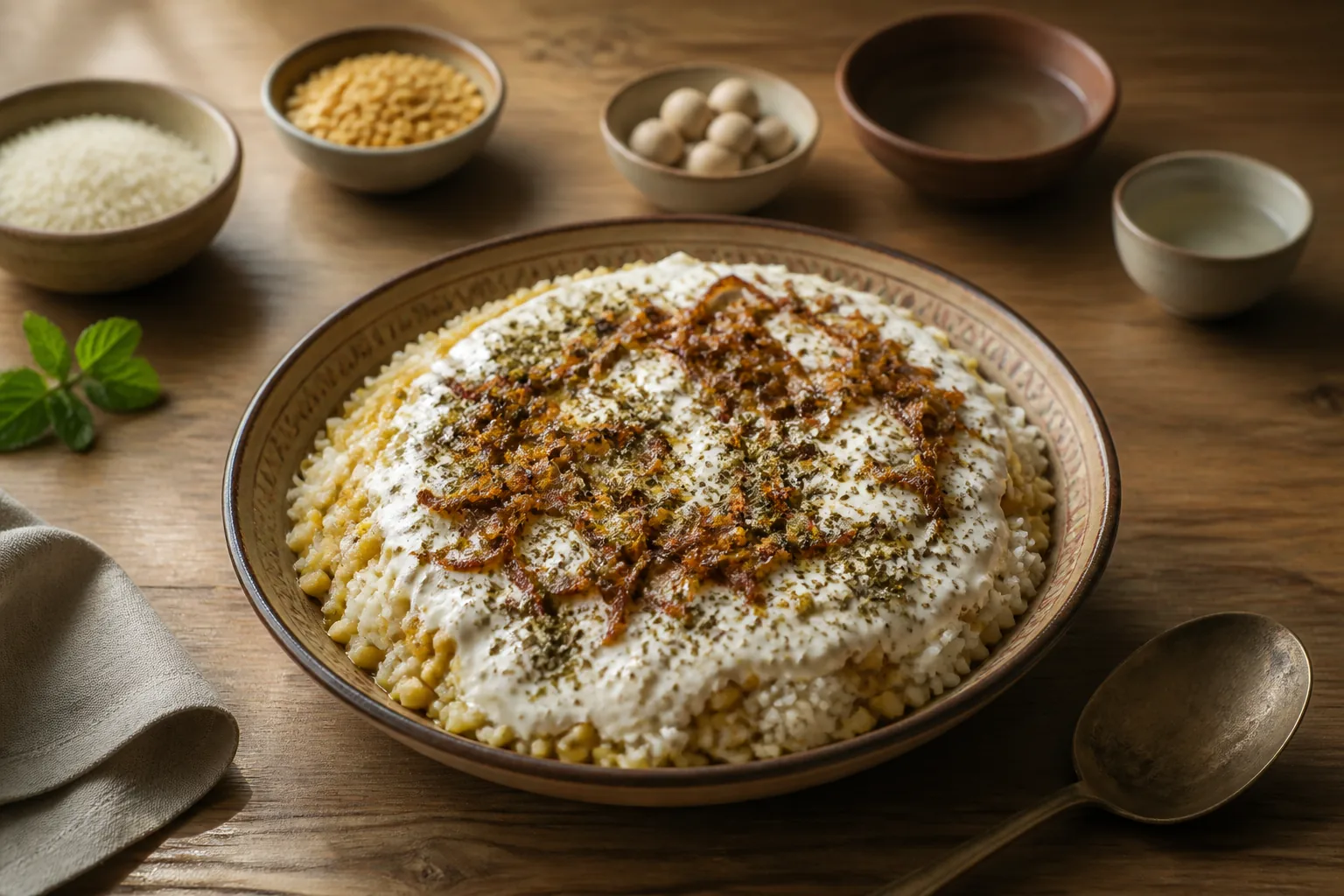
An Afghan comfort dish of soft rice and mung beans served with tangy quroot sauce and browned onions. The quroot is soaked, rubbed, and strained in the traditional way before being spooned over the kichiri.
Ingredients
- Short-grain rice1 cup
- Split yellow mung beans1/3 cup
- Dried quroot balls3 oz
- Warm water, for soaking quroot1 1/4 cups
- Water, for cooking rice and mung beans3 cups
- Yellow onion, thinly sliced1 medium
- Vegetable oil1/4 cup
- Garlic, minced1 clove
- Dried mint1 tsp
- Ground turmeric1/4 tsp
- Salt1 tsp, divided
- Black pepper1/4 tsp
Method
- Rinse the rice until the water runs mostly clear, then soak it in cool water for 20 minutes.
- Rinse the split mung beans and place them in a pot with 3 cups water and 1/2 teaspoon salt.
- Bring the mung beans to a boil, skim any foam, then simmer for 12 to 15 minutes until they are just tender but not falling apart.
- Drain the soaked rice and add it to the pot with the mung beans, cooking uncovered until the water is mostly absorbed and the rice is tender at the edges.
- Reduce the heat to low, cover the lid with a clean towel, and steam the kichiri for 15 minutes until fluffy and soft.
- While the rice cooks, break the quroot into small pieces and soak it in 1 1/4 cups warm water for 15 minutes.
- Rub the softened quroot between your fingers until it dissolves into a milky sauce, then strain it through a fine sieve into a small saucepan.
- Warm the quroot sauce gently over low heat with the turmeric, black pepper, and a pinch of salt, stirring often and not letting it boil.
- Heat the oil in a small pan and fry the sliced onion over medium heat until deep golden and crisp at the edges.
- Add the minced garlic and dried mint to the hot onion oil for the last 30 seconds, then remove from the heat.
- Spoon the kichiri into shallow bowls, pour warm quroot sauce over the top, and finish with the fried onions and mint oil.
Common questions
Can I substitute quroot if I can’t find dried quroot balls?
Closest substitutes are thick Greek yogurt thinned with a little water and a pinch of salt, or labneh whisked until pourable. The flavor won’t be identical, but both give a tangy creamy finish similar to quroot.
How do I time the rice, mung beans, and quroot sauce so everything finishes together?
Start soaking the quroot while the mung beans simmer. When the rice and beans begin steaming, make the quroot sauce and keep it warm on very low heat. Finish the sauce just before serving so it stays smooth.
What are the most common mistakes when making kichiri quroot?
Overcooking the mung beans is the biggest issue; they should be tender but still hold shape. Another mistake is stirring the rice too much, which makes it mushy. Also, don’t boil the quroot sauce hard or it may separate.
How should I store leftovers, and can I reheat this dish?
Store the rice-and-mung mixture and the quroot sauce separately if possible. Refrigerate both for up to 3 days. Reheat the kichiri with a splash of water over low heat, then spoon the quroot sauce on top after warming.
What should I serve with kichiri quroot, and how is it usually eaten?
Serve it warm in a shallow bowl with the quroot sauce spooned over the top or swirled through. A little extra dried mint or caramelized onion on top works well. It’s filling enough to be a main dish.