Georgian
Khinkali
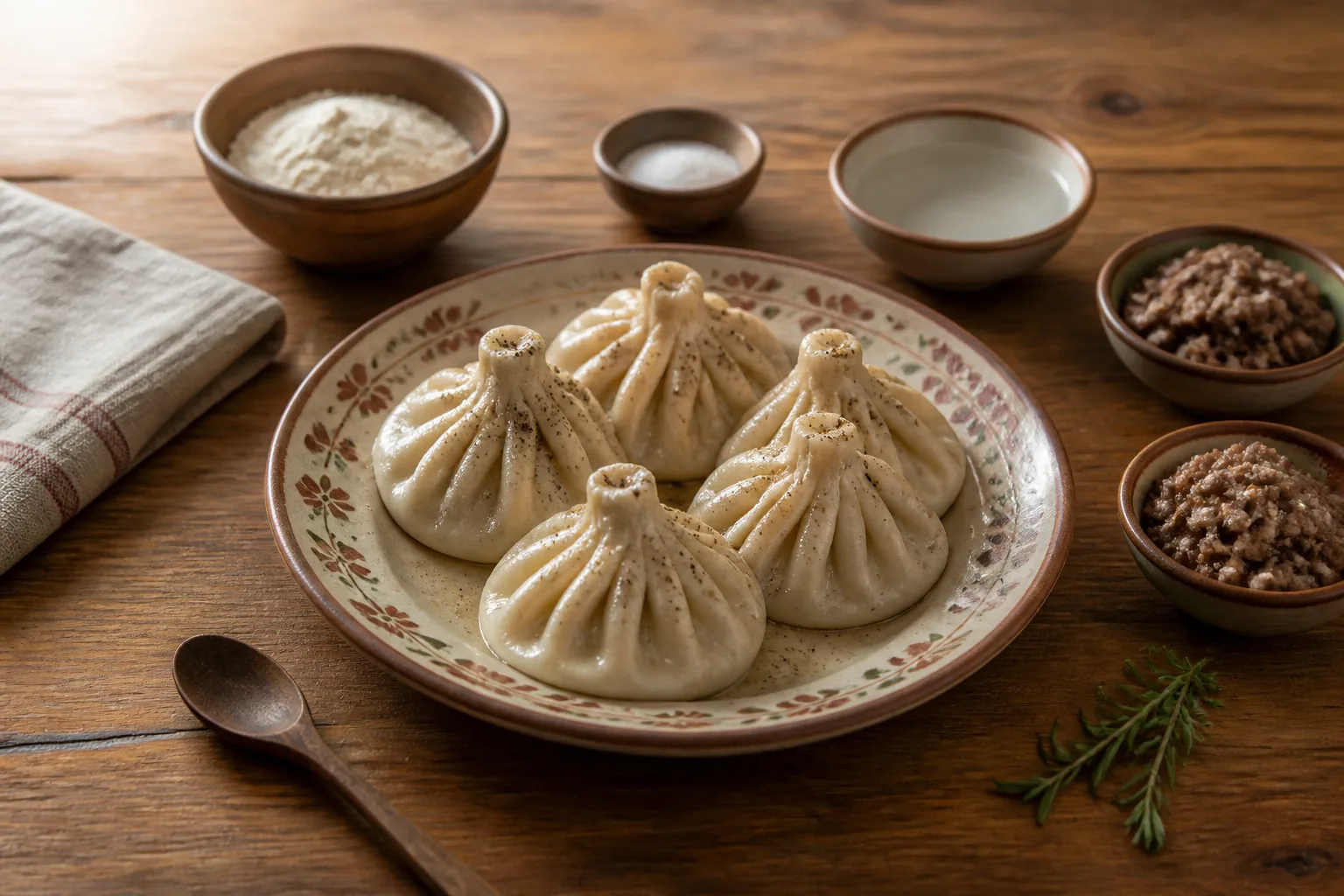
These Georgian soup dumplings are filled with peppery meat, onion, herbs, and a little cold water that turns into hot broth as they cook. Serve them simply with black pepper and eat by hand, holding the top knot.
 Watch it madeKənd Həyatı · 22:28
Ingredients
- All-purpose flour300g, plus extra for dusting
- Fine salt1/2 tsp for dough, plus 1 tsp for filling
- Cool water140ml for dough
- Ground beef180g
- Ground pork120g
- Yellow onion1 small, very finely minced or grated
- Fresh cilantro2 tbsp, finely chopped
- Fresh parsley1 tbsp, finely chopped
- Ground coriander1/2 tsp
- Ground caraway or Georgian dzira1/4 tsp
- Freshly ground black pepper1 tsp, plus more to serve
- Crushed red pepper or minced fresh chili1/4 tsp
- Cold water or unsalted beef stock120ml for filling
- Water for boiling2.5L
- Coarse salt1 tbsp for boiling water
Method
- Mix the flour and 1/2 tsp fine salt in a bowl, add 140ml cool water, and stir until a shaggy dough forms.
- Knead the dough on an unfloured surface for 8 to 10 minutes until very firm and smooth, then cover and rest for 30 minutes.
- Combine the beef, pork, onion, cilantro, parsley, 1 tsp salt, ground coriander, dzira, black pepper, and chili in a bowl.
- Gradually beat in the 120ml cold water or stock with your hand or a spoon until the filling is loose, sticky, and juicy but not separated.
- Knead the rested dough briefly, divide it into 8 equal pieces, and keep them covered while working.
- Roll each piece into a thin round about 12 to 13 cm wide, slightly thicker in the center than at the edges.
- Place about 2 tbsp filling in the center of each round.
- Lift the dough edge and make small pleats all the way around, gathering them tightly over the filling.
- Twist and pinch the pleats together to seal firmly, forming the traditional top knot, then trim any overly long tip if desired.
- Bring 2.5L water to a boil in a wide pot and season with 1 tbsp coarse salt.
- Stir the boiling water to create a gentle whirlpool, lower in the khinkali, and carefully loosen them from the bottom with a spoon.
- Boil uncovered for 8 to 10 minutes after they rise to the surface, keeping the water at a lively simmer without breaking the dumplings.
- Lift the khinkali out with a slotted spoon, let excess water drain, and serve immediately with plenty of freshly ground black pepper.
- Eat by holding the top knot, biting a small opening, drinking the hot broth, then eating the dumpling; the knot is traditionally left on the plate.
Common questions
Can I substitute the Georgian dzira or caraway in khinkali filling?
Yes. If you can’t find Georgian dzira, use regular caraway seeds in a smaller amount, or cumin for a different but pleasant warmth. Keep the other spices balanced so the filling stays savory, not overly aromatic.
How long does khinkali dough need to rest, and can I make it ahead?
Rest the dough at least 30 minutes so it relaxes and rolls more easily. You can make it a few hours ahead; keep it tightly wrapped at room temperature, or refrigerate briefly and let it warm slightly before rolling.
What are the most common mistakes when shaping khinkali?
The biggest mistakes are overfilling, sealing with dry or cracked dough, and leaving air pockets. The filling should be loose but not watery. Pleat tightly, pinch firmly at the top, and make sure each dumpling is fully sealed.
How should I store uncooked or cooked khinkali?
Uncooked khinkali can be frozen on a tray until firm, then bagged for up to 2 months. Cooked khinkali are best eaten fresh, but leftovers keep 2 days in the fridge and reheat gently in simmering water or steam.
How do you serve khinkali properly?
Serve them hot, drained well, and dusted with black pepper if you like. Traditional eating is by the top knot: hold, bite a small opening, sip the broth first, then eat the rest. The knot is usually left behind.