Armenian
Khash
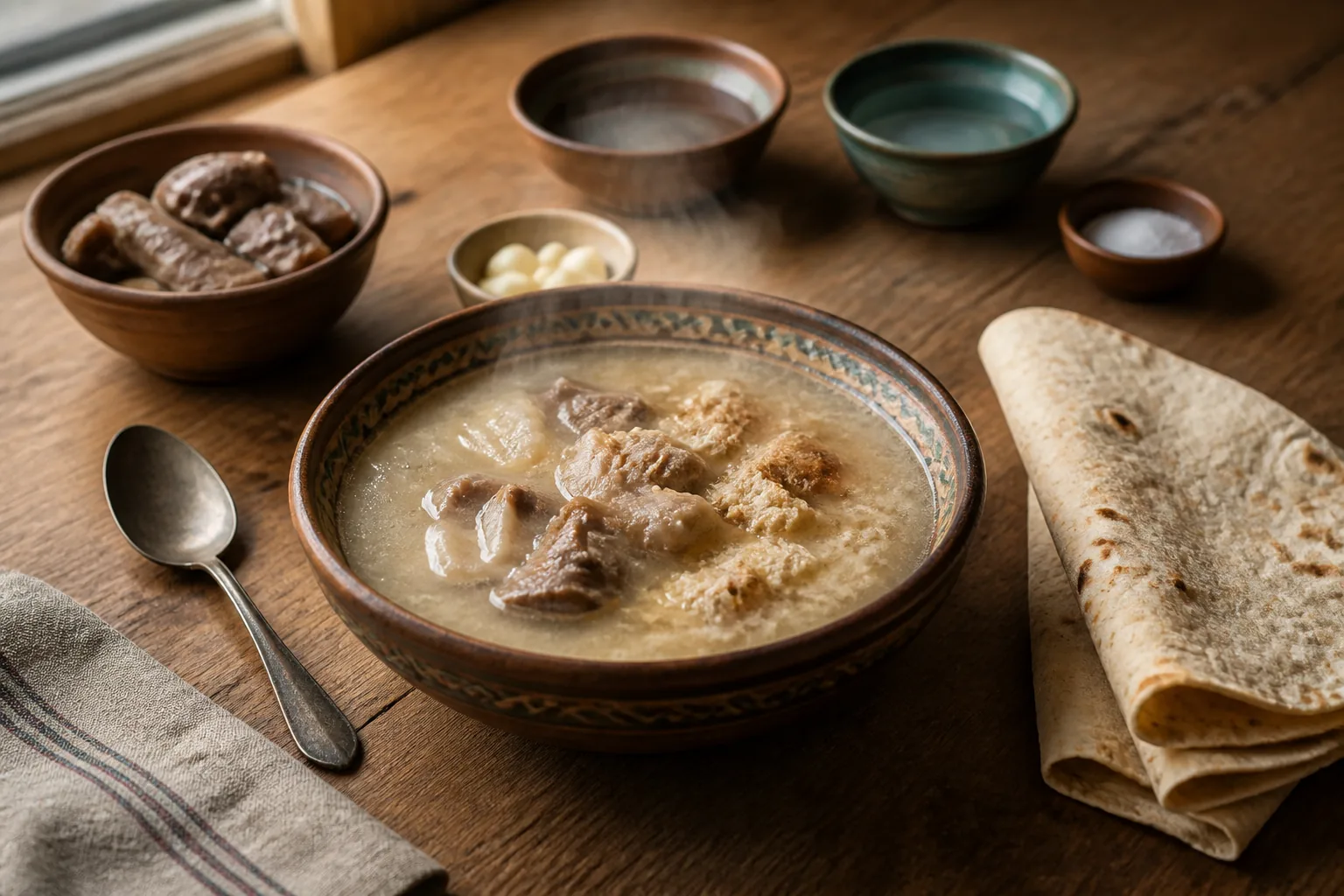
Khash is a traditional Armenian beef foot broth, simmered until deeply gelatinous and served at dawn with garlic, salt, and lavash. The soup itself is left unsalted so each bowl can be seasoned at the table in the old style.
 Watch it madeHeghineh Cooking Show · 19:53
Ingredients
- Beef feet, cleaned, split lengthwise or cut into large pieces1.2 kg
- Cold water, for soakingas needed
- Cold water, for simmering2.5 liters
- Garlic cloves6
- Fine saltto taste
- Dried lavash, broken into pieces2 sheets
- Soft lavash, for serving2 sheets
- Radishes4
- Fresh herbs such as parsley, cilantro, or purple basil1 small handful
Method
- Rinse the beef feet very well, scraping away any dark spots or loose residue.
- Place the feet in a large pot or bowl, cover with cold water, and soak for 24 hours, changing the water every 4 to 6 hours until it stays mostly clear.
- Drain the feet, transfer them to a heavy pot, cover with fresh cold water, and bring to a boil.
- Boil for 5 minutes, then drain, rinse the feet, and wash the pot to remove scum and impurities.
- Return the feet to the clean pot, add 2.5 liters cold water, and bring slowly to a bare simmer.
- Skim carefully, then cook uncovered or partly covered over very low heat for 6 to 7 hours, adding a little hot water only if needed to keep the feet submerged.
- Do not add salt while the khash cooks; the broth should remain plain and milky-gelatinous.
- When the tendons are soft and the meat slips easily from the bones, remove the bones and any large pieces, keeping the edible gelatinous meat in the broth or serving it alongside.
- Crush the garlic with a pinch of salt in a small bowl, then loosen it with a ladleful of hot khash broth.
- Ladle the khash into deep bowls while boiling hot.
- Serve immediately with the garlic mixture, salt, dried lavash to crumble into the broth, soft lavash for scooping, radishes, and fresh herbs.
Common questions
Can I substitute beef feet with another cut if I can’t find them?
For authentic khash, beef feet are hard to replace because they provide the collagen-rich, gelatinous broth. In a pinch, use beef shanks or knuckles, but the texture will be less traditional and the broth less silky.
How long does khash really take, including soaking?
Plan on about 24 hours of soaking plus 6 to 7 hours of simmering, so it’s a long project. The hands-on time is small, but you need to change the soaking water every 4 to 6 hours.
What are the most common mistakes when making khash?
The biggest mistakes are not cleaning the feet well enough, skipping the parboil and rinse, boiling too hard, and salting the pot early. A vigorous boil makes the broth cloudy and greasy; gentle simmering is key.
How should I store leftover khash broth and meat?
Cool it quickly, then refrigerate in a covered container for up to 3 days. The broth will set firmly when cold. Reheat gently over low heat; add a little water if needed to loosen it.
How is khash served, and what goes with it?
Serve it piping hot with soft lavash on the side and dried lavash pieces stirred into the bowl. Offer crushed garlic and fine salt separately, plus radishes and fresh herbs like parsley, cilantro, or purple basil.