Thai
Khao Man Gai
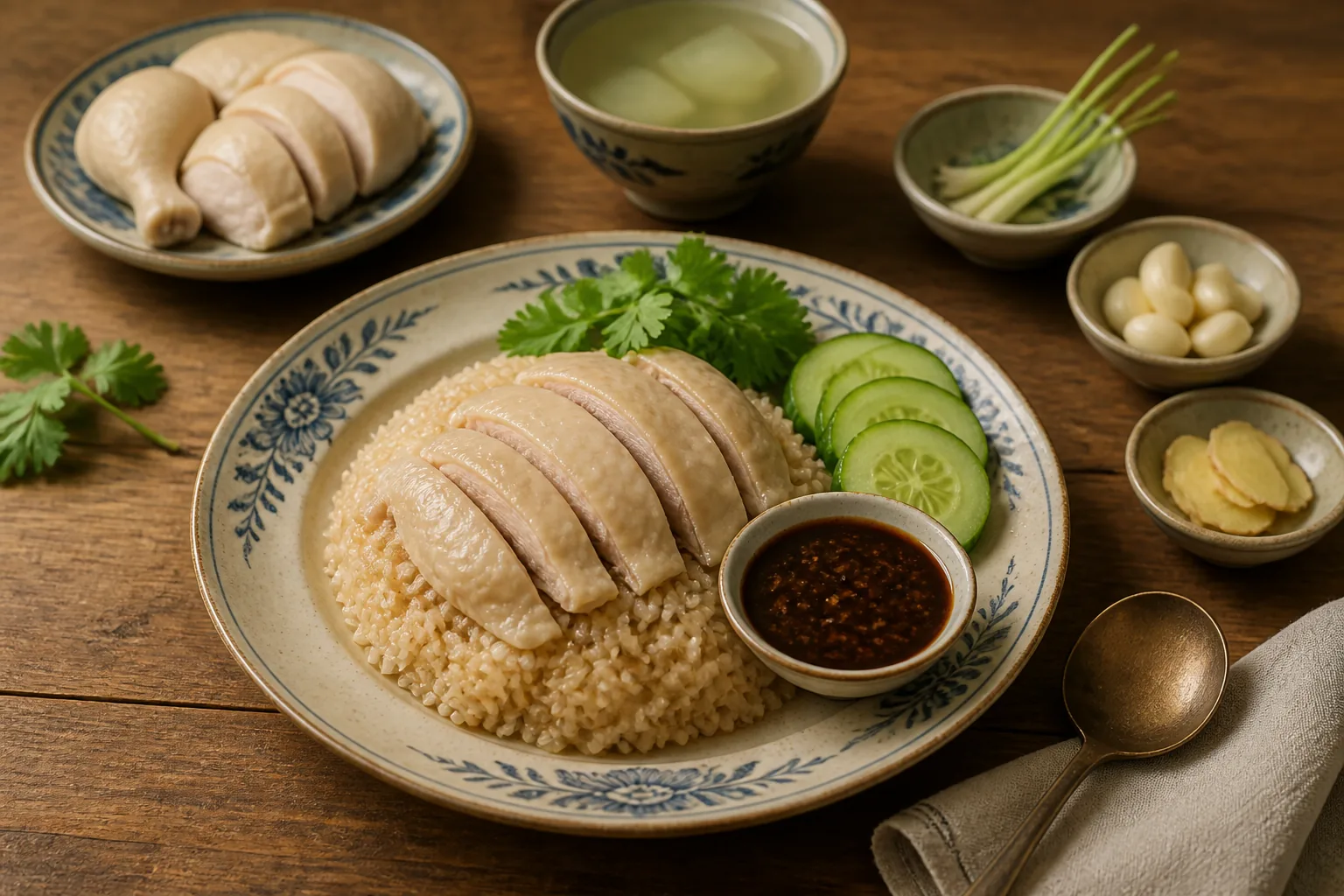
Tender poached chicken is served over fragrant rice cooked in chicken fat, garlic, ginger, and broth. A sharp fermented soybean chile sauce, cucumber, cilantro, and clear chicken soup make it taste like a Thai street-side plate.
Ingredients
- Bone-in chicken thighs or leg quarters, skin on600 g
- Water1.2 liters
- Cilantro roots or stems, lightly crushed3 roots or 6 stems
- Garlic cloves, lightly crushed4 cloves
- Fresh ginger, sliced20 g
- White peppercorns, lightly crushed1/2 tsp
- Sea salt1 1/2 tsp
- Jasmine rice, rinsed and drained1 cup
- Chicken skin or rendered chicken fat2 tbsp
- Garlic, finely chopped3 cloves
- Fresh ginger, finely chopped1 tbsp
- Pandan leaf, knotted1 leaf
- Cucumber, sliced1/2 cucumber
- Cilantro leaves1/4 cup
- Fermented soybean paste, tao jiew2 tbsp
- Fresh ginger, finely minced1 1/2 tbsp
- Garlic, finely minced2 cloves
- Thai bird's eye chilies, minced2 to 4
- Thai thin soy sauce1 tbsp
- Black soy sauce1 tsp
- Rice vinegar1 tbsp
- Sugar1 1/2 tsp
- Reserved chicken broth1 tbsp
- Winter melon or daikon, cut into chunks150 g
Method
- Place the chicken, water, cilantro roots, crushed garlic, sliced ginger, white peppercorns, and salt in a pot and bring slowly to a gentle simmer.
- Skim the surface, then keep the broth at a bare simmer and poach the chicken for 25 to 30 minutes, until cooked through and tender.
- Transfer the chicken to a bowl of cool water for 5 minutes to tighten the skin, then drain and let rest; strain and reserve the broth.
- For the rice, render the chicken skin or warm the chicken fat in a saucepan over medium heat until fragrant.
- Add the chopped garlic and chopped ginger and fry until pale golden, not brown.
- Add the rinsed jasmine rice and stir for 2 minutes until the grains are glossy and coated in the aromatic fat.
- Add 1 1/4 cups of the reserved hot chicken broth and the pandan leaf, bring to a simmer, cover, and cook on low for 15 minutes.
- Turn off the heat and let the rice steam, covered, for 10 minutes, then fluff and remove the pandan leaf.
- Return the remaining broth to a pot, add the winter melon or daikon, and simmer until tender; season with a little salt if needed.
- Make the sauce by stirring together the fermented soybean paste, minced ginger, minced garlic, chilies, thin soy sauce, black soy sauce, rice vinegar, sugar, and 1 tablespoon chicken broth until balanced and slightly chunky.
- Debone the rested chicken and slice it neatly with the skin attached.
- Spoon the fragrant rice onto plates, top with sliced chicken, and serve with cucumber slices, cilantro leaves, the soybean chile sauce, and small bowls of hot broth soup.
Common questions
Can I substitute chicken breast or boneless thighs for the bone-in chicken thighs or leg quarters?
Yes, but bone-in, skin-on pieces give the most flavor and juiciest texture. Boneless thighs cook faster and stay tender, while chicken breast can turn dry. Reduce poaching time and check early; pull when just cooked through.
How do I know when the chicken and rice are done without overcooking them?
The chicken is done when the thickest part reaches 165°F and the juices run clear; usually 25 to 30 minutes at a bare simmer. The rice is done after 15 minutes covered plus 10 minutes resting, with no liquid left.
What are the most common mistakes when making Khao Man Gai?
Boiling the chicken too hard, which makes it tough; browning the garlic and ginger too much, which turns bitter; and using too little broth for the rice. Keep the simmer gentle, fry aromatics lightly, and measure the broth carefully.
How should I store leftovers, and can I reheat the chicken and rice separately?
Store chicken, rice, broth, and sauce separately in airtight containers for up to 3 to 4 days in the fridge. Reheat the rice with a splash of broth or water, and warm the chicken gently so it stays moist.
What should I serve with Khao Man Gai, and can I make it without pandan leaf?
Serve it with cucumber slices, cilantro, and a dipping sauce if you like extra punch. Pandan leaf is optional; the rice will still be good without it, though less aromatic. A small bay leaf is a mild substitute.