Kenyan
Kenyan Chapati
Soft, layered Kenyan chapati cooked on a hot pan with just enough oil for golden spots and tender folds. It is perfect with bean stew, sukuma wiki, beef stew, or a cup of chai.
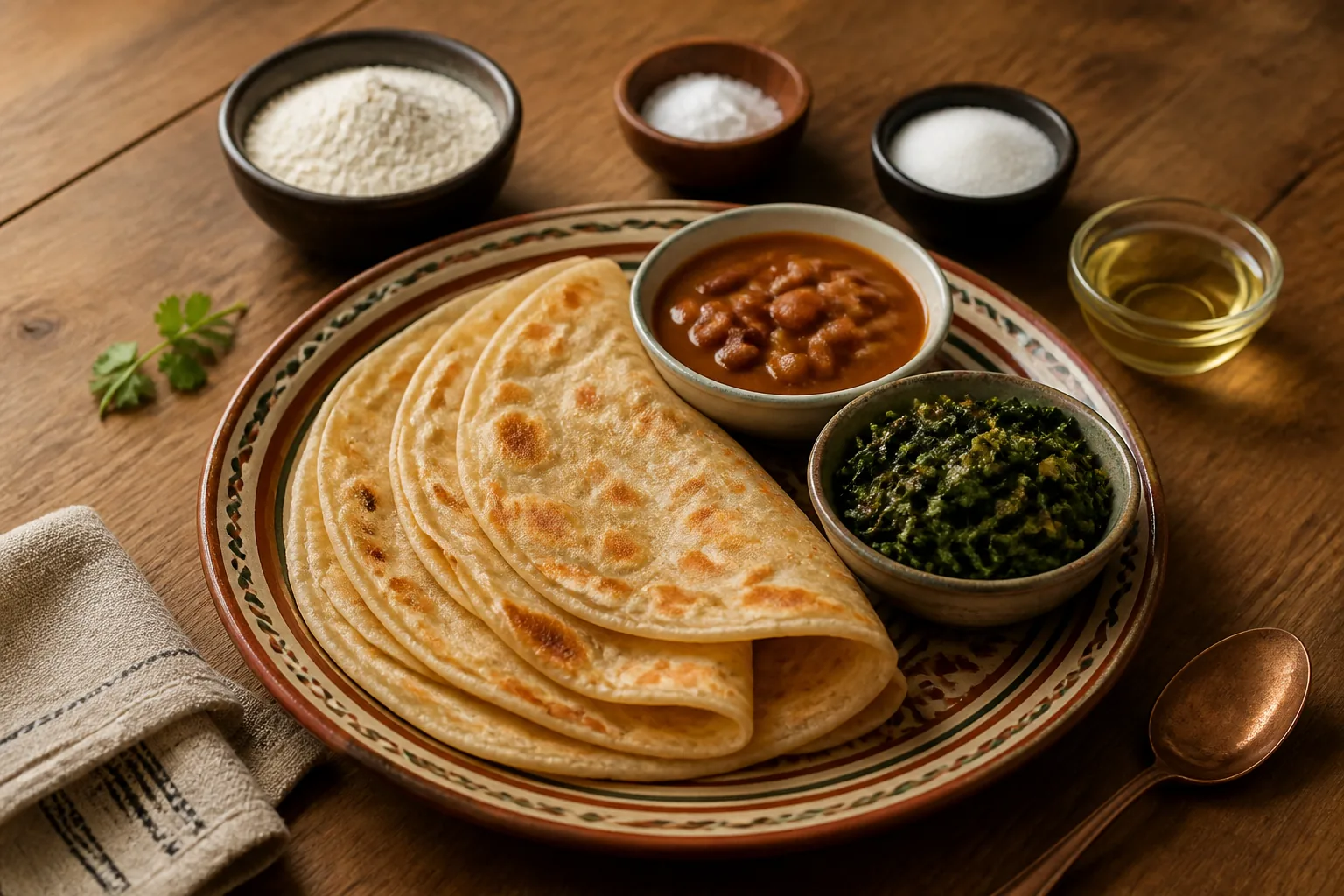
Ingredients
- All-purpose flour2 cups, plus extra for dusting
- Salt1/2 tsp
- Sugar1/2 tsp
- Warm water3/4 cup, plus 1-2 tbsp if needed
- Vegetable oil4 tbsp, divided
Method
- Mix the flour, salt, and sugar in a large bowl.
- Add 1 tablespoon of the oil, then gradually pour in the warm water while mixing until a soft dough forms.
- Knead the dough on a lightly floured surface for 8-10 minutes until smooth, elastic, and not sticky.
- Rub the dough with a little oil, cover it with a clean towel, and rest for 20 minutes.
- Divide the dough into 4 equal balls.
- Roll one ball into a thin circle, brush lightly with oil, then roll it up into a rope.
- Coil the rope into a spiral, tuck the end underneath, and repeat with the remaining dough balls.
- Cover the coils and rest them for 10 minutes to relax the gluten and help form soft layers.
- Heat a heavy frying pan, chapati pan, or tawa over medium-high heat.
- Roll one coil into a thin round chapati, dusting lightly with flour only as needed.
- Place the chapati on the hot pan and cook for about 45 seconds, until small bubbles appear and the underside has light brown spots.
- Flip, brush the top lightly with oil, cook for 45-60 seconds, then flip again and brush the other side with oil.
- Press gently with a spatula while turning once or twice more, cooking until both sides are golden with darker speckles and the chapati is cooked through.
- Transfer to a plate and cover with a clean towel to keep soft while cooking the remaining chapatis.
- Serve warm, whole or folded, with stew, beans, vegetables, or chai.
Common questions
Can I substitute whole wheat flour for some or all of the all-purpose flour in Kenyan chapati?
Yes. You can replace up to half the all-purpose flour with whole wheat flour for a slightly nuttier, denser chapati. If using all whole wheat, add a little extra water and expect less flakiness and a firmer texture.
How long should I rest the dough, and can I skip the second rest after shaping?
Rest the dough for 20 minutes first, then 10 minutes after coiling. Don’t skip the second rest; it relaxes the gluten, making the chapati easier to roll thin and helping create softer layers when cooked.
What are the most common mistakes when making Kenyan chapati?
Using too much flour during rolling, skipping the oil layering, or cooking on heat that’s too low are common mistakes. Too much flour makes them dry, while low heat prevents browning and can leave them tough instead of flaky.
How should I store leftover chapati, and can I freeze them?
Cool chapati completely, then store them in an airtight container or zip-top bag for up to 2 days at room temperature or 4 days in the fridge. Freeze with parchment between each one for up to 2 months.
What are good ways to serve Kenyan chapati?
Serve chapati warm with stew, beans, lentils, beef, chicken, or vegetables. It also works as a side with tea or as a wrap for leftovers. Reheat briefly in a dry pan to bring back softness and flexibility.