Turkish
Keşkek
Keşkek is a slow-cooked Turkish dish of hulled wheat and tender meat beaten together until creamy and stretchy. It is served hot with foaming butter and red pepper, the way it is made for village feasts and family tables.
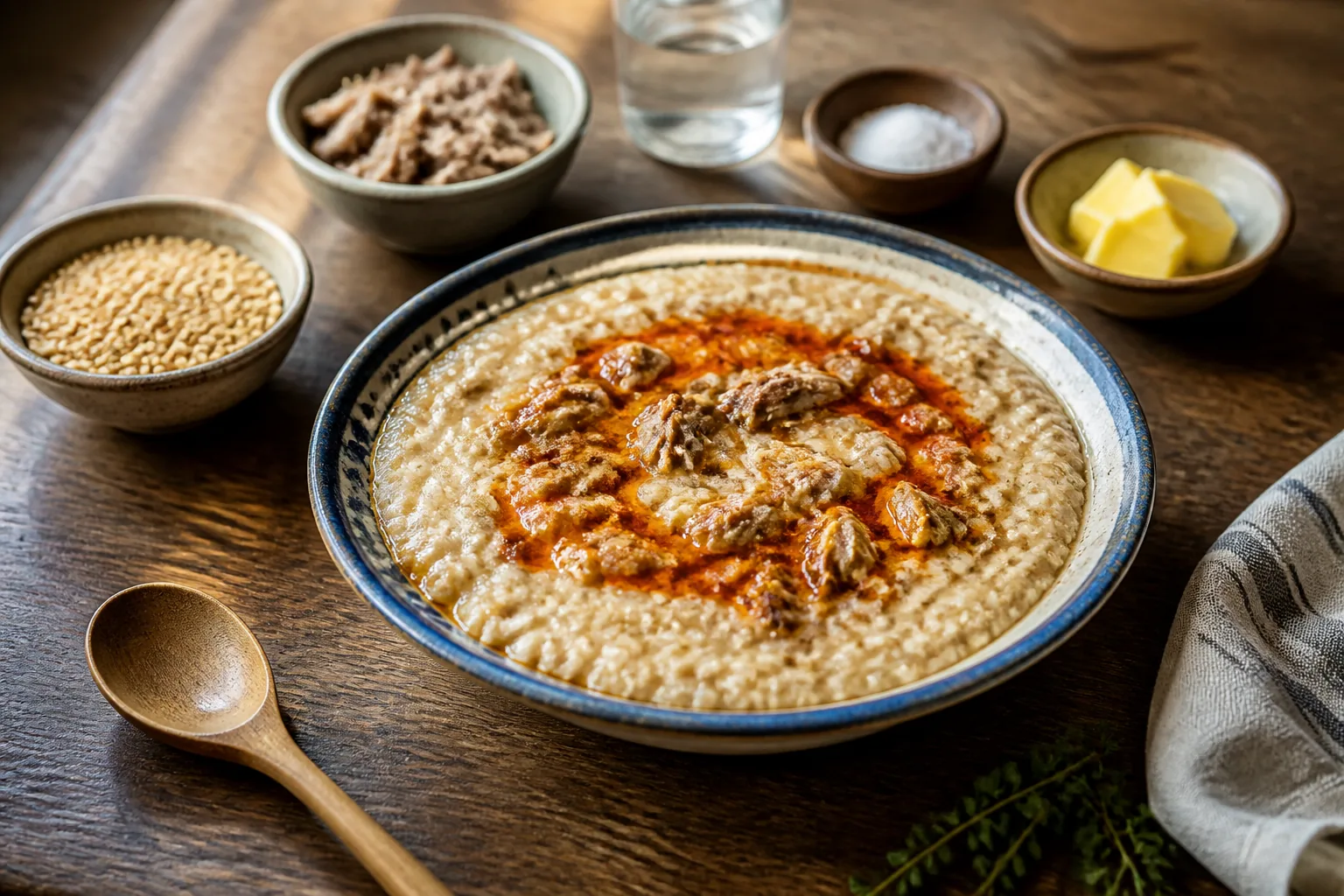
Ingredients
- Keşkeklik buğday or hulled wheat1 cup
- Bone-in lamb shoulder or neck300g
- Water5 cups
- Salt1 tsp, plus to taste
- Unsalted butter3 tbsp
- Sweet red pepper flakes or pul biber1 tsp
- Ground black pepper1/4 tsp
Method
- Rinse the hulled wheat well, cover it with plenty of cold water, and soak overnight.
- Drain the wheat and place it in a heavy pot with the lamb and 5 cups of fresh water.
- Bring to a boil, skim off the foam, then reduce the heat to very low and simmer gently with the lid slightly ajar for about 2 hours, until the meat is falling from the bone and the wheat has burst open.
- Remove the lamb, discard the bone and any excess fat, then shred the meat very finely.
- Return the shredded meat to the pot and add the salt.
- Continue cooking over low heat, stirring often, until the wheat and meat begin to merge into a thick porridge, adding a splash of hot water if it becomes too dry.
- Beat the mixture firmly with a wooden spoon or potato masher for 10 to 15 minutes, until creamy, cohesive, and slightly elastic.
- Taste and adjust the salt, then spoon the keşkek into warm shallow bowls.
- Melt the butter in a small pan until foamy, stir in the pul biber and black pepper, and remove from the heat before the pepper burns.
- Pour the red pepper butter over the hot keşkek and serve immediately.
Common questions
Can I substitute the hulled wheat or keşkeklik buğday with something else?
Yes, but the texture will change. Pearled barley is the closest substitute for chew and starchiness. Cracked wheat cooks faster but won’t thicken as smoothly. Avoid regular rice if you want the classic creamy, elastic finish.
How long does keşkek take from start to finish, including soaking?
Plan for overnight soaking plus about 2 to 2.5 hours of simmering, then 10 to 15 minutes of beating to make it creamy. If the wheat is old or very dry, it may need a little longer.
What are the most common mistakes when making keşkek?
The biggest mistakes are boiling too hard, which breaks the wheat unevenly and can scorch the bottom, and under-stirring near the end. Also don’t add too much water at once; add only small splashes if it gets too thick.
How should I store leftover keşkek, and can I reheat it?
Cool it quickly, refrigerate in a covered container for up to 3 days, or freeze for up to 2 months. Reheat gently on low heat with a splash of water, stirring often, because it thickens a lot as it sits.
What is the best way to serve keşkek?
Serve it hot in shallow bowls, then drizzle with melted butter flavored with pul biber and black pepper. It pairs well with pickles, green salad, or yogurt on the side, and it’s best eaten while still very warm.