Korean
Kalguksu
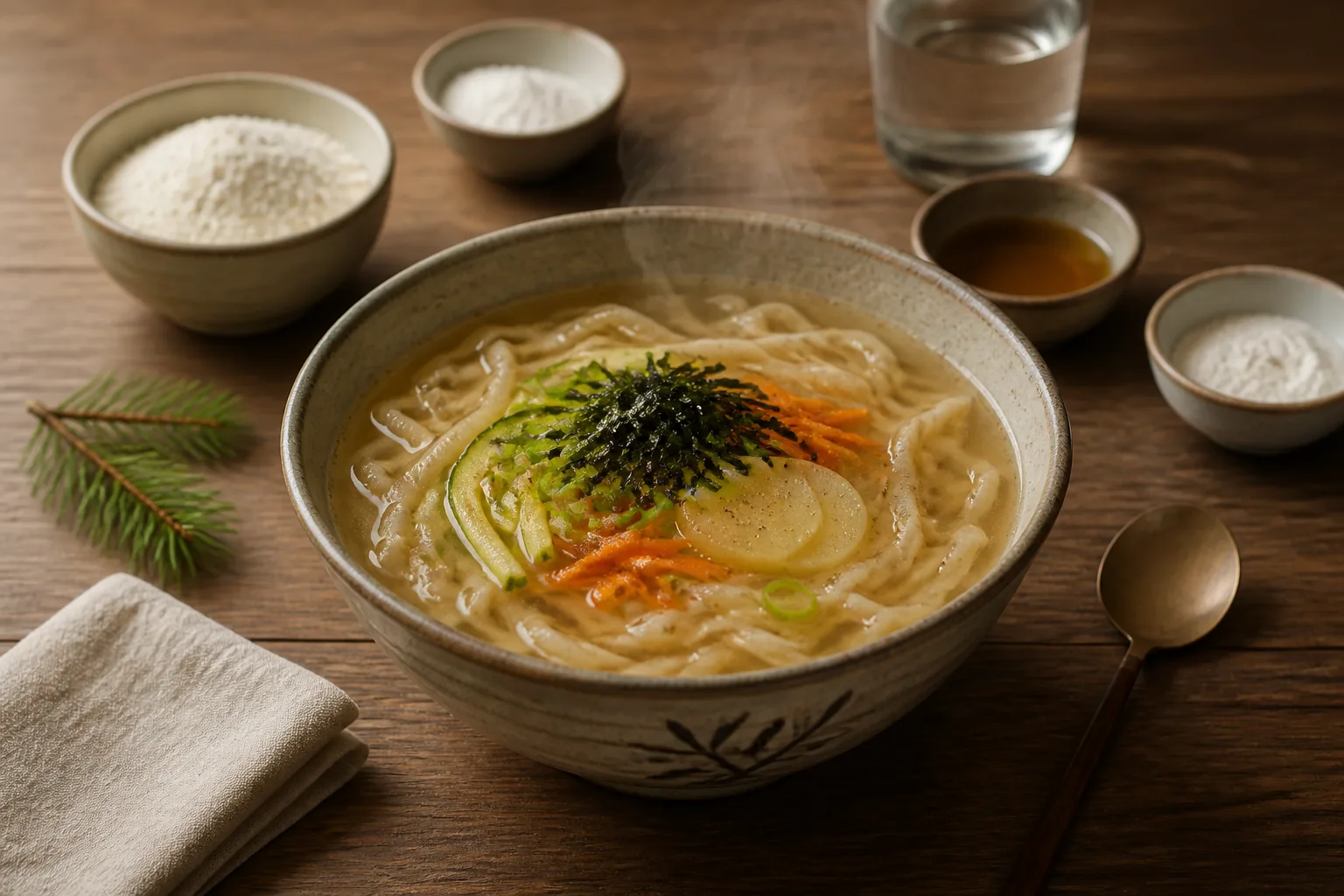
A comforting Korean bowl of hand-cut wheat noodles in a clear anchovy-kelp broth with zucchini, potato, and scallions. The noodles are rolled and sliced by hand, giving the soup its soft, pleasantly chewy texture.
 Watch it madeMaangchi · 12:14
Ingredients
- All-purpose flour2 cups
- Fine sea salt3/4 tsp, divided
- Water, for noodle dough2/3 cup
- Toasted sesame oil1 tsp
- Potato starch or flour, for dusting2 tbsp
- Water, for broth6 cups
- Dried anchovies for broth, heads and guts removed12 large
- Dried kelp1 piece, about 3 x 3 inches
- Korean radish, sliced4 oz
- Yellow onion1/2 medium
- Garlic cloves, smashed3
- Zucchini, julienned1/2 medium
- Potato, peeled and thinly sliced1 small
- Carrot, julienned1/4 small
- Soup soy sauce1 tbsp
- Fish sauce1 tsp
- Green onions, thinly sliced2
- Ground black pepper1/4 tsp
- Roasted seaweed, crushed1 sheet
Method
- Combine the flour and 1/2 teaspoon salt in a bowl, then gradually add 2/3 cup water while mixing until a shaggy dough forms.
- Knead the dough for 8 to 10 minutes until smooth, rub with sesame oil, cover, and rest for 30 minutes.
- Place 6 cups water, dried anchovies, kelp, Korean radish, onion, and smashed garlic in a pot and bring to a gentle boil.
- Remove the kelp after 10 minutes, then simmer the broth for another 15 minutes.
- Strain the broth, discard the solids, and return the clear broth to the pot.
- Dust the dough generously with starch or flour, roll it into a thin sheet about 1/8 inch thick, fold it loosely, and slice into 1/4-inch-wide noodles with a knife.
- Shake the cut noodles gently to separate them and dust lightly so they do not stick.
- Bring the broth back to a boil and season with soup soy sauce, fish sauce, and the remaining 1/4 teaspoon salt.
- Add the potato and cook for 3 minutes, then add the noodles while stirring gently to prevent clumping.
- Boil for 5 to 6 minutes, skimming excess foam, until the noodles are tender and the broth is slightly thickened from the wheat starch.
- Add the zucchini and carrot and cook for 2 more minutes until just tender.
- Ladle into two bowls and finish with green onions, black pepper, and crushed roasted seaweed.
Common questions
Can I substitute the dried anchovies or kelp if I can’t find them?
Yes. For anchovies, use a light dried fish stock or a small amount of bonito flakes; for kelp, use kombu or skip it and boost umami with a little more soy sauce. The broth will be less traditional but still tasty.
How long should I rest the dough, and why does it matter?
Rest the dough for 30 minutes at room temperature, covered. This relaxes the gluten so the dough rolls thinner and cuts more cleanly. If you skip the rest, the noodles can shrink back and feel tougher.
What are the most common mistakes when making the noodles?
The biggest mistakes are adding too much water, under-kneading, and cutting noodles that are too thick. Keep the dough slightly firm, knead until smooth, and dust well so the strands separate instead of clumping.
How do I store leftover kalguksu without the noodles getting mushy?
Store broth and noodles separately if possible. Refrigerate the broth up to 3 days and the cooked noodles 1 day. If already combined, expect softer noodles; reheat gently and add a splash of water if needed.
What should I serve with kalguksu for the best meal?
Serve it hot with kimchi, especially baek-kimchi or napa cabbage kimchi, plus a little extra sliced scallion if you have it. A small dish of chili paste or chili flakes on the side is also common.