Kenyan
Kaimati
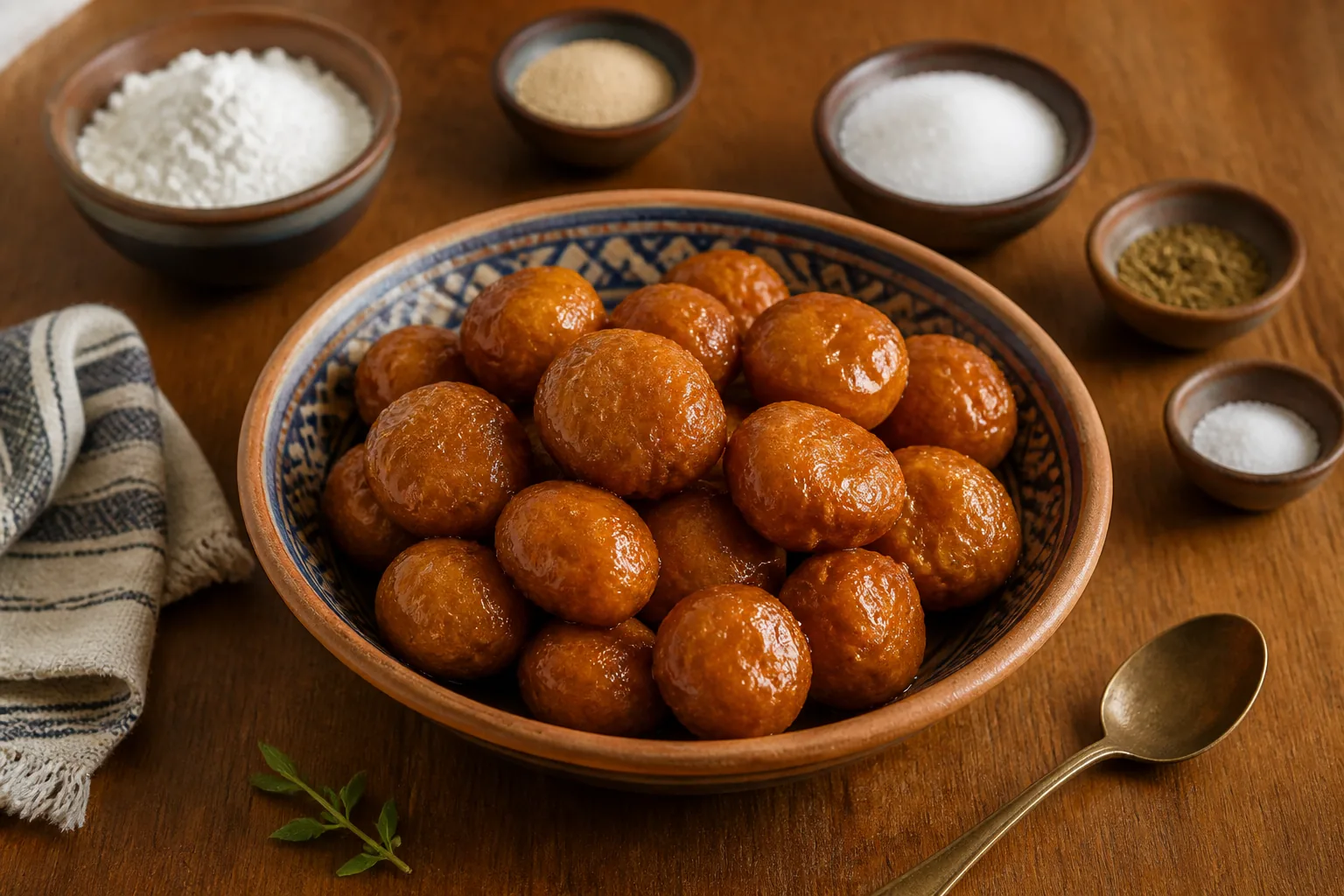
Kaimati are soft, yeasted Kenyan coastal dumplings fried until golden and coated in a fragrant cardamom sugar syrup. They are best served warm, with a slightly crisp outside and a sweet, sticky glaze.
 Watch it madeAroma Of Zanzibar & Beyond · 6:29
Ingredients
- All-purpose flour1 cup
- Instant yeast1/2 tsp
- Granulated sugar1 tsp, plus 1/2 cup for syrup
- Ground cardamom1/2 tsp, divided
- Salt1/8 tsp
- Warm coconut milk or warm water1/2 cup
- Water1/4 cup, for syrup
- Lemon juice1/2 tsp
- Vegetable oil2 cups, for deep-frying
Method
- In a bowl, mix the flour, yeast, 1 tsp sugar, 1/4 tsp cardamom, and salt.
- Add the warm coconut milk or water gradually, stirring with your hand or a wooden spoon until you have a thick, sticky batter that drops slowly from a spoon.
- Cover the bowl and let the batter rise in a warm place for about 1 hour, until puffed and bubbly.
- While the batter rises, make the syrup by combining 1/2 cup sugar, 1/4 cup water, lemon juice, and the remaining 1/4 tsp cardamom in a small saucepan.
- Simmer the syrup for 5 to 7 minutes until slightly thickened, then keep it warm off the heat.
- Heat the vegetable oil in a deep pot over medium heat until a small drop of batter sizzles and rises steadily.
- Wet your fingertips or use two small spoons to drop small rounds of batter into the hot oil, frying in batches without crowding the pot.
- Turn the kaimati as they fry for 4 to 5 minutes, until evenly golden brown and cooked through.
- Lift the kaimati out with a slotted spoon and drain briefly on paper towels.
- While still hot, toss the kaimati in the warm syrup until evenly coated and glossy.
- Serve warm, allowing any extra syrup to cling to the dumplings.
Common questions
Can I substitute coconut milk with water or dairy milk in kaimati dough?
Yes. Warm water works well and gives a lighter, more neutral taste. Coconut milk adds richness and a faint coconut aroma. Dairy milk can work too, but use it warm and avoid overheating, which can slow the yeast.
How long should I let kaimati batter rise, and how do I know it's ready?
Usually about 1 hour in a warm place. It’s ready when the batter looks puffed, bubbly, and slightly expanded. If your kitchen is cool, it may take longer; if it doubles too fast, check it early.
What are the most common mistakes when frying kaimati?
The biggest mistakes are oil that’s too hot, batter that’s too thin, and overcrowding the pot. Too-hot oil browns the outside before the inside cooks; crowded frying drops the temperature and makes greasy, dense kaimati.
How should I store leftover kaimati and syrup?
Store cooled kaimati in an airtight container at room temperature for 1 day or refrigerate for up to 3 days. Rewarm briefly before serving. Keep the syrup separately in the fridge, then warm it gently before pouring or dipping.
What is the best way to serve kaimati?
Serve them warm, coated or drizzled with the warm cardamom-lemon syrup right after frying. They’re best fresh and crisp outside, soft inside. You can also dust lightly with sugar, but syrup gives the classic finish.