Tunisian
Kafteji
Kafteji is a beloved Tunisian plate of fried vegetables and eggs, chopped together while hot and seasoned with harissa and tabil. It is rustic, colorful, and usually served with bread and a little fresh parsley.
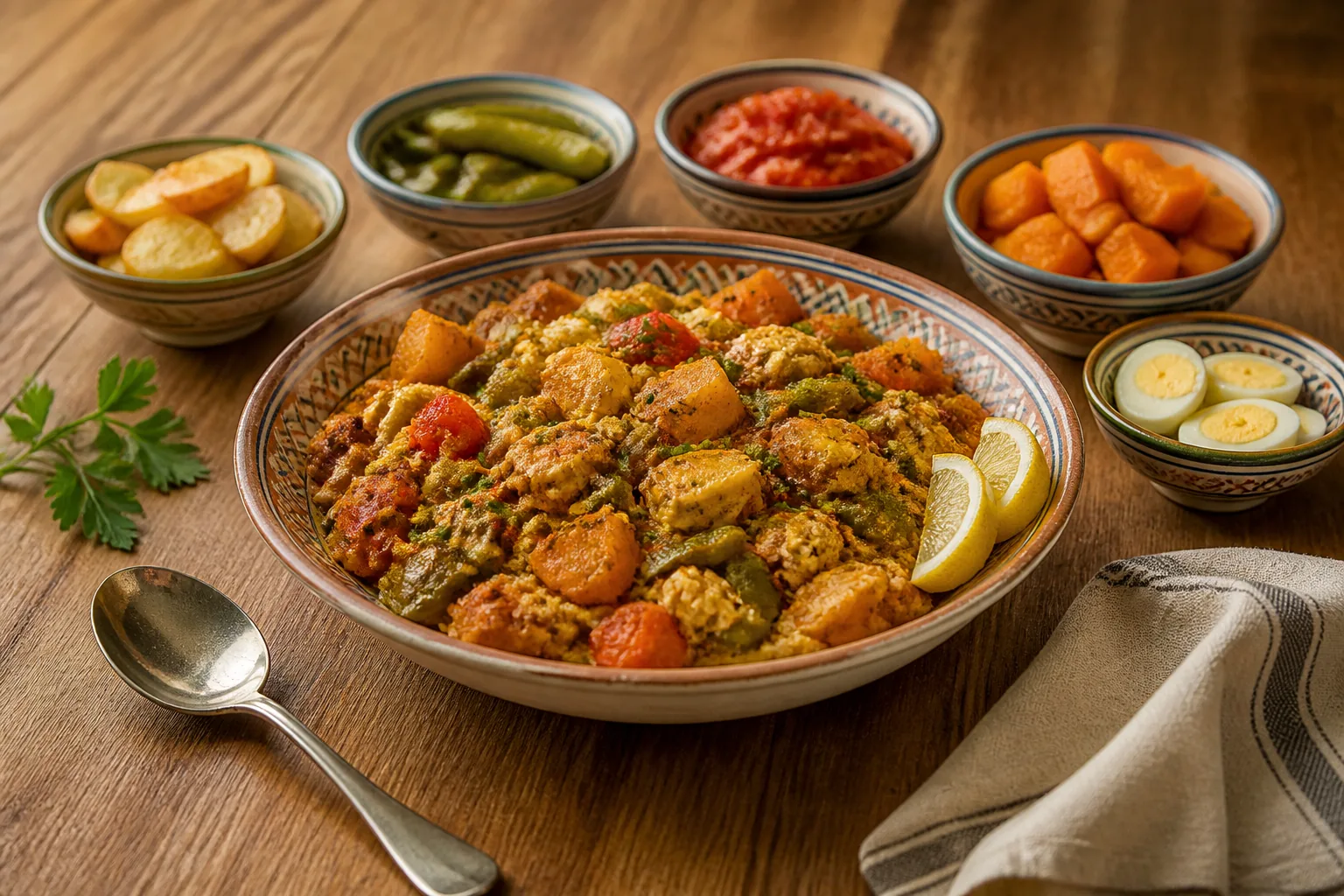
Ingredients
- Potatoes, peeled and cut into thick slices2 medium
- Green frying peppers2
- Ripe tomatoes2 medium
- Pumpkin or butternut squash, peeled and sliced200g
- Eggs2
- Neutral oil, for frying2 cups
- Harissa1 to 2 tsp
- Tabil1 tsp
- Ground caraway1/2 tsp
- Fine saltto taste
- Black pepper1/4 tsp
- Fresh parsley, chopped2 tbsp
- Lemon wedges2
Method
- Heat the frying oil in a deep skillet over medium-high heat until shimmering.
- Fry the potato slices until golden and tender, then lift them onto a paper-lined plate and salt lightly.
- Fry the pumpkin or squash slices until soft and lightly browned, then drain and salt lightly.
- Prick the green peppers with a knife and fry them until blistered and collapsed, then drain, peel off the loose skins, remove the stems and seeds, and set aside.
- Fry the tomatoes whole or halved until their skins split and the flesh softens, then drain and peel away the skins.
- Fry the eggs sunny-side up in the same oil until the whites are set and the yolks are still slightly soft.
- On a large chopping board, place the fried potatoes, pumpkin, peppers, tomatoes, and eggs together.
- Chop everything with a large knife or mezzaluna until the mixture is coarse and well combined, not smooth.
- Transfer the chopped kafteji to a bowl and mix in the harissa, tabil, caraway, black pepper, and more salt if needed.
- Spoon onto a serving plate, scatter with chopped parsley, and serve warm with lemon wedges and bread.
Common questions
Can I substitute the pumpkin or butternut squash in kafteji?
Yes. Butternut squash is the closest swap. Sweet potato also works, though it tastes sweeter and softens faster, so cut it thicker and fry gently. Avoid watery vegetables, which can make the chop soggy.
How long does it take to make kafteji from start to finish?
Plan on about 45 to 60 minutes. Frying each ingredient separately takes the most time, especially potatoes and squash. If you work in batches and keep ingredients drained and ready, assembly is quick at the end.
What are the most common mistakes when making kafteji?
The biggest mistakes are overcrowding the pan, which steams instead of fries, and chopping too finely, which turns the dish mushy. Also avoid undercooking the potatoes or overcooking the eggs and tomatoes until they disappear into the mix.
How should I store leftover kafteji?
Store leftovers in an airtight container in the refrigerator for up to 2 days. The texture softens, so reheat gently in a skillet rather than the microwave if possible. Add fresh parsley and a squeeze of lemon after reheating.
What is the best way to serve kafteji?
Serve it warm with harissa, parsley, and lemon wedges, often with bread to scoop it up. It also works as a sandwich filling or alongside fried eggs. Keep the chop coarse so each bite has texture.