Korean
Jajangmyeon
A Korean-Chinese bowl of chewy wheat noodles covered in glossy black bean sauce with pork and diced vegetables. The chunjang is fried first to mellow its bitterness and give the sauce its deep, savory character.
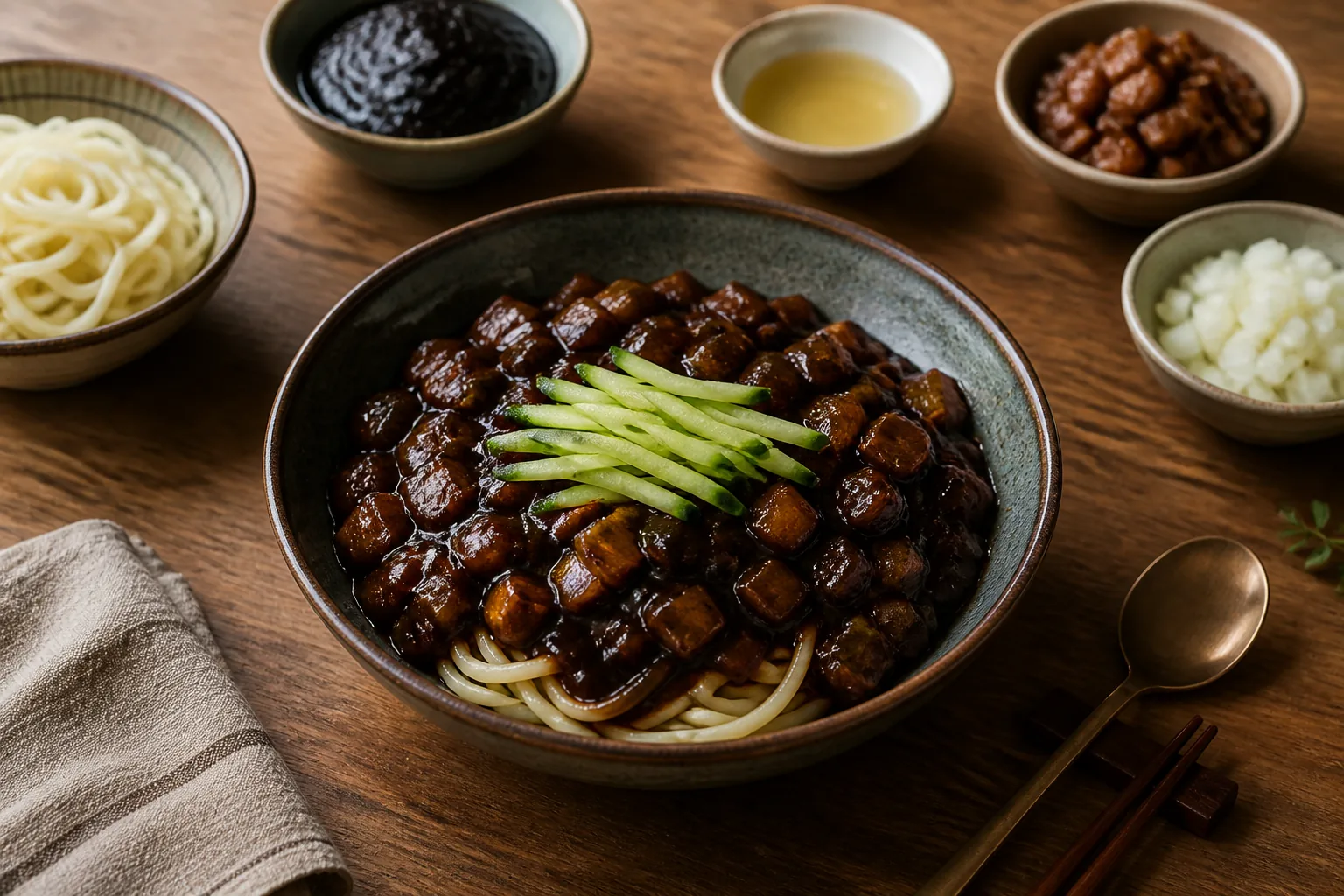
Ingredients
- Fresh jajangmyeon wheat noodles400g
- Chunjang Korean black bean paste1/4 cup
- Neutral oil3 tbsp
- Pork belly or pork shoulder, diced180g
- Yellow onion, diced1 large
- Korean zucchini, diced1/2 medium
- Green cabbage, diced1 cup
- Potato, peeled and diced1 small
- Daepa or scallion, finely chopped1/2 cup
- Fresh ginger, minced1 tsp
- Soy sauce1 tbsp
- Sugar1 tbsp
- Water or light chicken stock1 1/4 cups
- Potato starch1 tbsp
- Cold water for slurry2 tbsp
- Cucumber, julienned1/4 cup
Method
- Heat the neutral oil in a wok or deep skillet over medium heat, add the chunjang, and fry it for 2 to 3 minutes while stirring until fragrant and slightly loosened.
- Push the fried chunjang through a small strainer or tilt the pan to separate and reserve the flavored oil, then set the paste aside.
- Return 1 tablespoon of the reserved oil to the wok over medium-high heat and cook the diced pork until the fat renders and the edges begin to brown.
- Add the daepa and ginger and stir-fry for 30 seconds until aromatic.
- Add the onion, zucchini, cabbage, and potato, then stir-fry for 4 to 5 minutes until the onion softens and the vegetables are lightly coated in pork fat.
- Splash the soy sauce around the hot edge of the wok, let it sizzle briefly, then stir it through the vegetables.
- Add the fried chunjang and sugar, stirring well so the paste coats the pork and vegetables evenly.
- Pour in the water or light stock, bring to a simmer, cover, and cook for 8 to 10 minutes until the potato is tender.
- Mix the potato starch with 2 tablespoons cold water, then stir the slurry into the sauce a little at a time until it becomes thick, glossy, and spoonable.
- Boil the fresh noodles in a large pot of water according to the package directions, stirring to prevent sticking.
- Rinse the cooked noodles briefly under warm running water to remove excess starch, then drain very well.
- Divide the noodles between two bowls, ladle the hot jajang sauce generously over the top, and garnish with julienned cucumber.
Common questions
Can I substitute the pork belly in jajangmyeon with another meat or make it vegetarian?
Yes. Pork shoulder works well and is a bit leaner. For vegetarian jajangmyeon, use mushrooms like king oyster or cremini plus extra oil for richness. Keep the chunjang frying step, since it gives the sauce its deep, toasted flavor.
When should I add the noodles, and how long should I cook them?
Boil the fresh noodles right before serving, usually just 2–4 minutes depending on thickness. Drain well and toss immediately with the sauce. Don’t overcook them; jajangmyeon is best when the noodles stay springy and chewy.
What are the most common mistakes when making jajangmyeon?
The biggest mistakes are not frying the chunjang first, overcrowding the pan, and adding too much liquid too early. Also avoid undercooking the onions and potatoes; the sauce should taste deep, glossy, and slightly sweet, not raw or watery.
How do I store leftover jajangmyeon sauce and reheat it?
Store the sauce separately from the noodles in an airtight container for up to 3–4 days in the fridge. Reheat gently with a splash of water or stock until loosened and hot. Fresh noodles should be cooked again, not stored mixed in.
What should I serve with jajangmyeon?
Serve it hot with sliced raw cucumber or a small cucumber garnish for freshness, plus danmuji (yellow pickled radish) if you have it. A simple broth or cold water is common alongside, since the sauce is rich and salty.