Korean
Gimbap
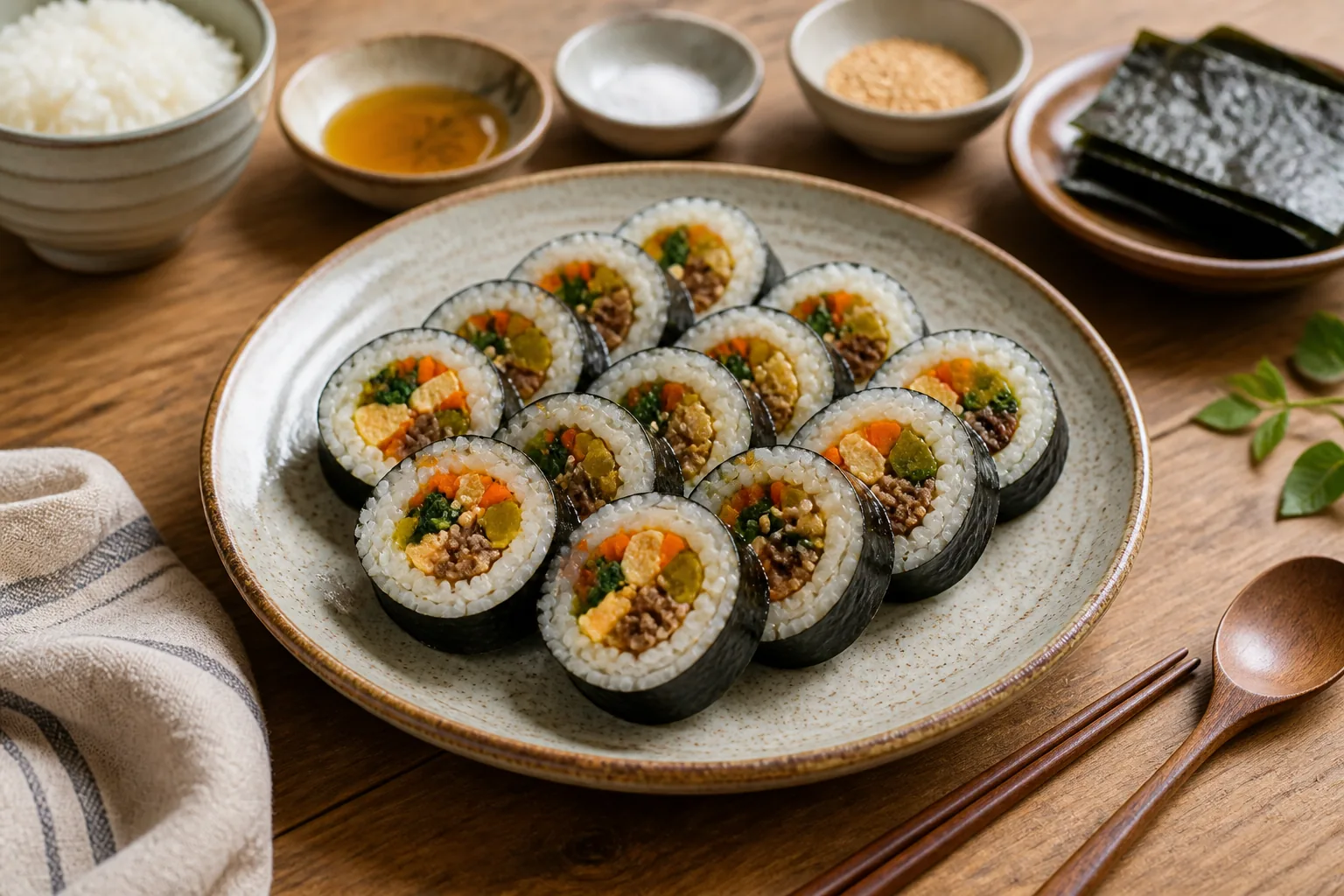
Korean seaweed rice rolls filled with seasoned vegetables, egg, and savory beef, sliced into neat rounds for a comforting lunch or picnic meal. Each piece has the nutty scent of sesame oil and the bright crunch of pickled radish.
 Watch it madeMaangchi · 13:51
Ingredients
- Short-grain white rice, cooked warm3 cups
- Roasted gim seaweed sheets4 sheets
- Sesame oil, divided2 tbsp
- Fine sea salt, divided1 tsp
- Toasted sesame seeds2 tsp
- Beef sirloin or bulgogi beef, cut into thin strips150g
- Soy sauce1 tbsp
- Sugar1 tsp
- Garlic, minced1 clove
- Ground black pepper1 pinch
- Eggs2 large
- Spinach120g
- Carrot, julienned1 medium
- Danmuji pickled yellow radish, cut into long strips4 strips
- Burdock root strips for gimbap, drained4 strips
- Neutral oil2 tsp
Method
- Season the warm cooked rice with 1 tablespoon sesame oil, 1/2 teaspoon salt, and toasted sesame seeds, then spread it in a wide bowl to cool until just warm.
- Mix the beef with soy sauce, sugar, minced garlic, 1 teaspoon sesame oil, and black pepper, then let it marinate while preparing the vegetables.
- Blanch the spinach in boiling water for 30 seconds, rinse under cold water, squeeze out excess moisture, and season with 1 teaspoon sesame oil and a small pinch of salt.
- Heat a little neutral oil in a pan and stir-fry the julienned carrot with a pinch of salt until just softened but still bright, then set aside.
- Beat the eggs with a pinch of salt, cook them in a thin omelet over low heat, cool slightly, and slice into long strips.
- Stir-fry the marinated beef in a hot pan until cooked through and any liquid has reduced, then let it cool slightly.
- Place one sheet of gim shiny side down on a bamboo rolling mat, with the longer edge facing you.
- Spread about 3/4 cup seasoned rice evenly over the gim, leaving a 2 cm border at the far edge.
- Arrange beef, egg, spinach, carrot, danmuji, and burdock in horizontal lines across the lower third of the rice.
- Lift the mat from the near edge and roll firmly over the fillings, tucking tightly to form a compact cylinder.
- Seal the far edge with a few grains of rice, then place the roll seam side down while making the remaining rolls.
- Brush the outside of each roll lightly with sesame oil, then slice with a sharp knife wiped with a little oil or water between cuts.
- Serve the gimbap at room temperature, sprinkled with extra sesame seeds if desired.
Common questions
Can I substitute the beef in gimbap with another protein or make it vegetarian?
Yes. Use thinly sliced chicken, tuna, crab sticks, or pan-fried tofu for a non-beef version. For vegetarian gimbap, add extra egg, mushrooms, spinach, and cucumber. Season replacements lightly so the roll doesn’t become too wet or salty.
How far in advance can I prep the ingredients before rolling gimbap?
Most fillings can be made 1 day ahead and refrigerated. Cook the rice close to serving, since it rolls best when warm. Let every filling cool completely before assembling so the gim stays crisp and the rice doesn’t steam it soft.
What are the most common mistakes when rolling gimbap?
Using rice that’s too hot or too wet, overfilling the roll, and not tightening as you roll are the biggest problems. Also, place the gim shiny side down, keep fillings in a neat line, and seal the edge with a little pressure.
How should I store leftover gimbap, and does it freeze well?
Store leftovers wrapped tightly in the refrigerator for up to 1 day, but the seaweed will soften. Gimbap does not freeze well because the rice turns dry and the fillings lose texture. If possible, eat it the same day for best quality.
What’s the best way to serve gimbap so it tastes fresh?
Slice with a very sharp knife lightly brushed with sesame oil or water to prevent sticking. Serve at room temperature with danmuji on the side. It’s often eaten as a snack, picnic food, or lunch with kimchi and soup.