Indonesian
Gado-gado
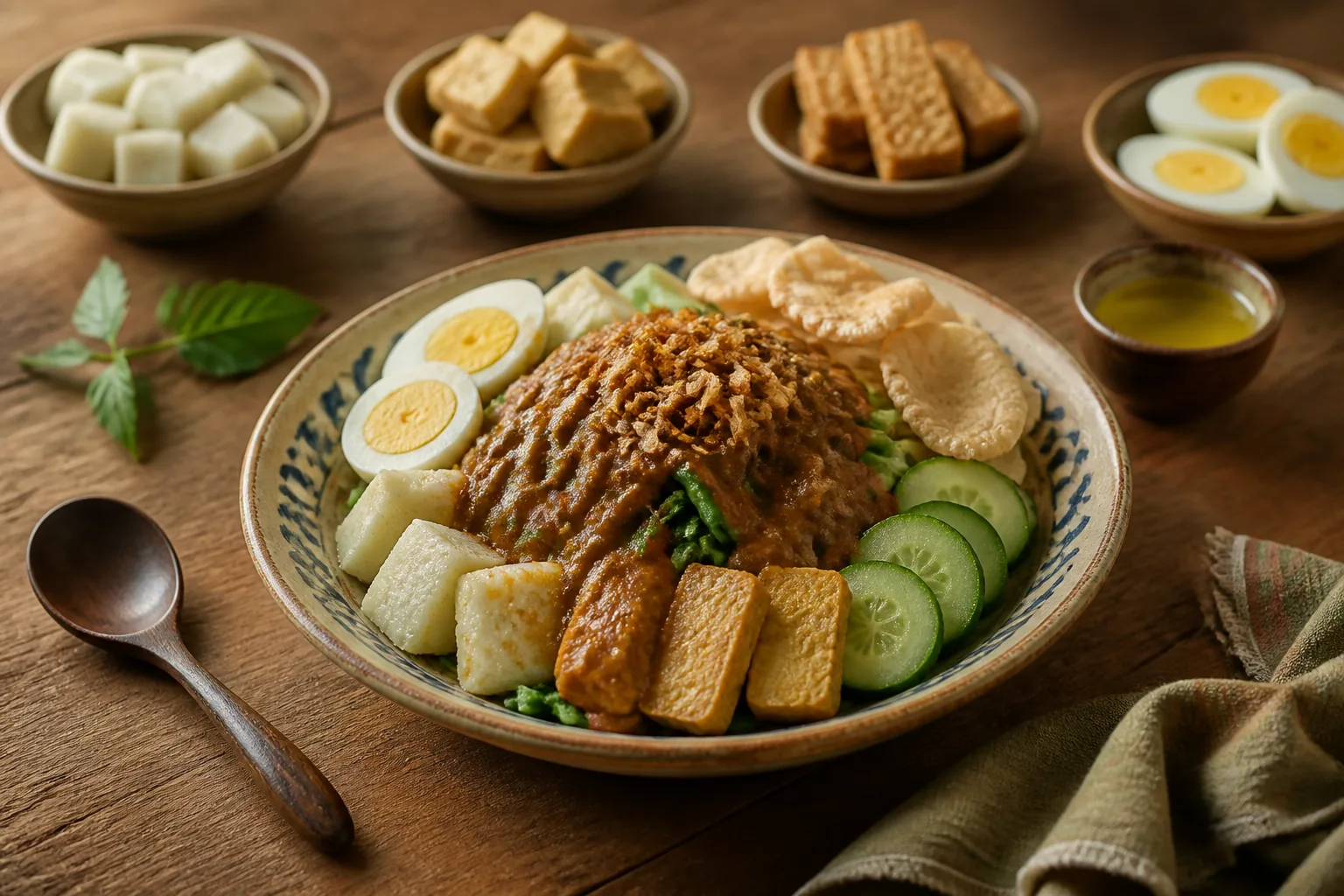
A generous Indonesian salad of blanched vegetables, lontong, tofu, tempeh, and egg dressed with a warm, freshly ground peanut sauce. The sauce is sweet, savory, tangy, and gently spicy, with palm sugar, tamarind, lime, and a little kencur for its traditional aroma.
Ingredients
- Lontong or compressed rice cake, sliced200g
- Firm tofu, cut into rectangles150g
- Tempeh, cut into rectangles150g
- Vegetable oil, for frying1 cup
- Eggs2
- Potato, peeled and cut into chunks1 medium
- Long beans, cut into 5 cm pieces100g
- Cabbage, roughly sliced100g
- Bean sprouts100g
- Kangkung or spinach, trimmed100g
- Cucumber, sliced1 small
- Raw unsalted peanuts150g
- Garlic cloves2
- Red bird's eye chilies, or to taste2
- Kencur, peeled1 small piece, about 1 cm
- Palm sugar, shaved35g
- Tamarind pulp mixed with 3 tablespoons warm water, strained1 tablespoon pulp
- Fine salt3/4 teaspoon
- Warm water160ml, plus more as needed
- Kaffir lime or regular lime juice1 tablespoon
- Sweet soy sauce, optional for serving1 tablespoon
- Fried shallots2 tablespoons
- Emping or krupuk crackers1 small handful
Method
- Boil the eggs for 9 to 10 minutes, cool in water, peel, and halve them.
- Boil the potato chunks in salted water until tender, then drain and set aside.
- Blanch the long beans for 2 minutes, the cabbage for 1 minute, the bean sprouts for 30 seconds, and the kangkung or spinach for 30 to 60 seconds, cooling each vegetable briefly and draining well.
- Fry the tofu and tempeh in hot oil over medium heat until golden on the outside, then drain on paper towels.
- Fry the peanuts over medium-low heat, stirring often, until deep golden and fragrant, then drain and let them cool slightly.
- Using a mortar and pestle or a stone grinder, pound the garlic, chilies, kencur, salt, and palm sugar into a paste.
- Add the fried peanuts and grind until mostly smooth but still slightly textured.
- Mix in the tamarind water, lime juice, and warm water gradually until the sauce is thick, pourable, and glossy; adjust with more salt, palm sugar, or lime if needed.
- Arrange the lontong, tofu, tempeh, potato, blanched vegetables, cucumber, and egg on two plates.
- Spoon the peanut sauce generously over the arranged ingredients.
- Finish with fried shallots, a drizzle of sweet soy sauce if using, and emping or krupuk on the side.
Common questions
Can I substitute any of the vegetables or protein in gado-gado if I can’t find the exact ingredients?
Yes. Use green beans for long beans, broccoli or bok choy for cabbage, spinach for kangkung, and extra tofu if you don’t have tempeh. Peanut sauce matters more than perfect vegetable matches, so keep the textures varied.
How far ahead can I cook the components, and what should I do first to save time?
Boil eggs, cook potatoes, and make the peanut sauce up to 2 days ahead; refrigerate separately. Blanch vegetables and fry tofu and tempeh closer to serving so they stay bright, crisp-tender, and not soggy.
What are the most common mistakes when making gado-gado peanut sauce?
The biggest mistakes are burning the peanuts, adding too much water too fast, and making the sauce too thin. Grind the paste first, then loosen gradually. The sauce should be thick enough to coat vegetables, not pour like dressing.
How should I store leftovers, and how long do the cooked parts keep?
Store sauce, boiled eggs, potatoes, fried tofu/tempeh, and vegetables separately. Sauce keeps about 4–5 days refrigerated; eggs and potatoes 3 days; cooked vegetables 2 days. Reheat tofu/tempeh gently and add a splash of water to the sauce.
What is the best way to serve gado-gado so it stays fresh and looks good?
Arrange the vegetables, tofu, tempeh, egg, cucumber, and lontong on a platter, then spoon sauce over just before serving or offer it on the side. Serve at room temperature so the peanut sauce clings well.