Ethiopian
Fatira
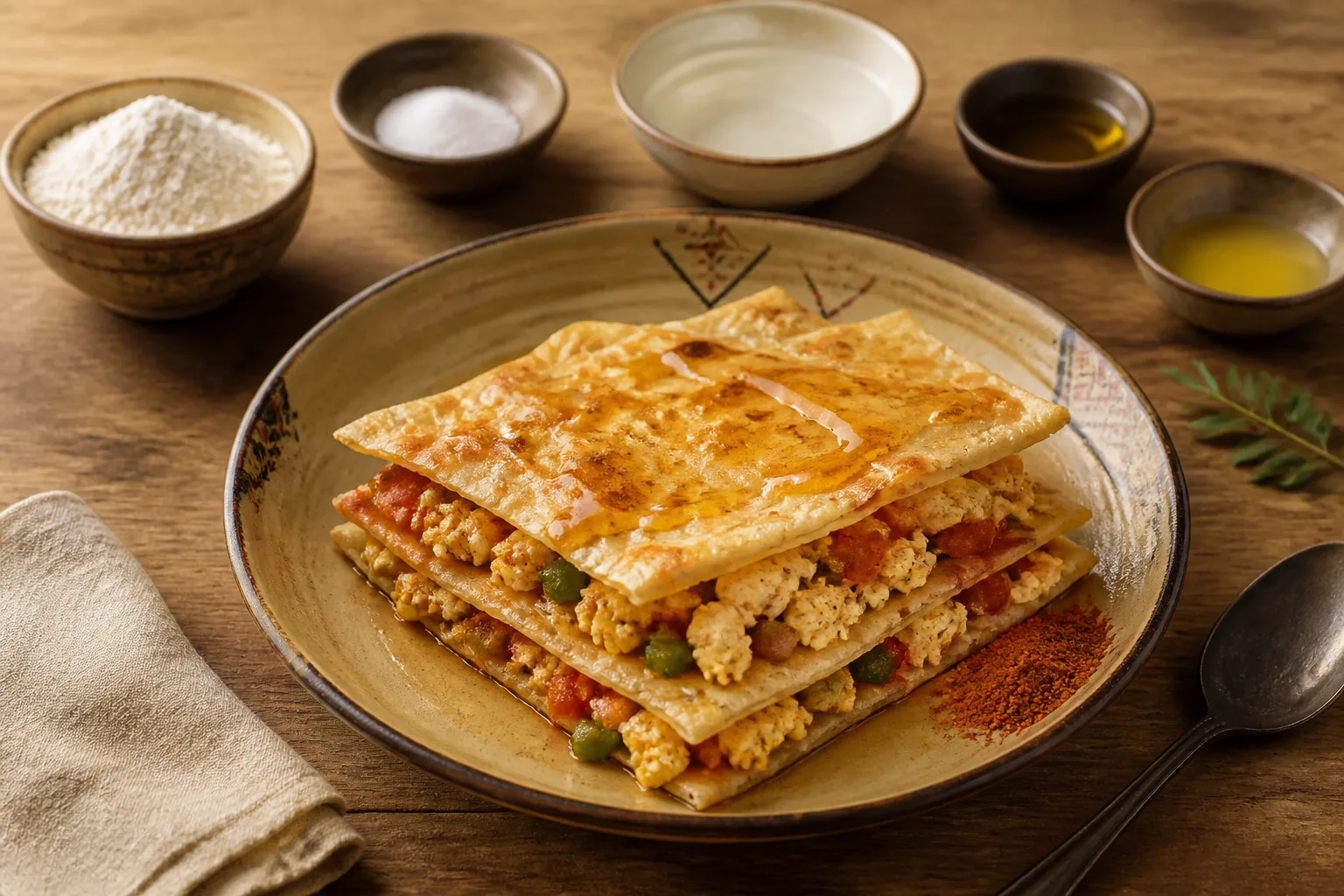
Fatira is an Ethiopian breakfast flatbread made from a thin, oiled dough folded into flaky layers and cooked on a hot mitad or skillet. It is commonly served warm with eggs, honey, and a little berbere for contrast.
Ingredients
- All-purpose flour1 1/2 cups
- Fine salt1/2 tsp
- Warm water1/2 cup plus 2 tbsp
- Neutral oil2 tbsp, plus 3 tbsp for shaping and cooking
- Niter kibbeh or neutral oil2 tbsp
- Eggs2 large
- Small red onion, finely chopped1/2
- Green chile, finely chopped1
- Tomato, finely chopped1 small
- Berbere1/2 tsp, plus more to serve
- Honey2 tbsp
Method
- Combine the flour and salt in a bowl, then gradually mix in the warm water and 2 tbsp oil until a soft dough forms.
- Knead the dough for 6 to 8 minutes until smooth and elastic, adding only a little flour if it is too sticky.
- Rub the dough lightly with oil, cover it, and let it rest for 20 minutes.
- Divide the dough into 2 equal balls and oil the work surface generously.
- Press and stretch one dough ball into a very thin round or square, using oiled hands so it does not tear.
- Brush the surface with a little niter kibbeh or oil, then fold the edges inward to make a layered square packet.
- Repeat with the second dough ball.
- Heat a mitad, mitad-style griddle, or heavy skillet over medium heat and add a little oil.
- Cook each folded dough packet for 3 to 4 minutes per side, pressing gently, until golden, flaky, and cooked through; keep warm.
- In the same pan, melt a little niter kibbeh or oil and cook the onion and green chile for 2 minutes until softened.
- Add the tomato and berbere and cook for 2 minutes until the tomato breaks down slightly.
- Beat the eggs with a pinch of salt, pour them into the pan, and stir gently until softly scrambled.
- Serve each warm fatira with the scrambled eggs on top or alongside, drizzle with honey, and offer extra berbere at the table.
Common questions
Can I substitute butter or ghee for niter kibbeh in fatira?
Yes. Regular butter works, but add a little oil so it doesn’t burn. Ghee is the closest substitute for niter kibbeh and gives a richer, more authentic flavor. Neutral oil alone will still work for the dough and pan.
How long does fatira take from start to finish?
Plan on about 45 to 60 minutes total. The dough needs 20 minutes to rest, then you’ll need time to stretch, fold, and cook each round plus make the onion-tomato topping. Working one at a time helps keep it manageable.
What are the most common mistakes when making fatira?
The biggest mistakes are adding too much flour, not oiling the surface enough, and stretching the dough too thick. That can make it tough instead of flaky. Also avoid high heat, which can brown the outside before the inside cooks through.
How should I store leftover fatira?
Cool it completely, then wrap tightly and refrigerate for up to 3 days. Reheat in a skillet or oven to bring back some crispness. You can freeze the cooked flatbread for about 1 month; thaw before reheating.
What is the best way to serve fatira?
Serve it warm, cut into wedges or squares, with the cooked onion, tomato, chile, and berbere mixture spooned on top. A drizzle of honey adds the classic sweet-salty contrast. It also pairs well with tea or a simple egg on the side.