Persian
Eshkeneh
Eshkeneh is a homely Persian egg-and-onion soup scented with turmeric and dried fenugreek. The broth is lightly thickened, with tender potato and softly set eggs traditionally eaten with pieces of flatbread.
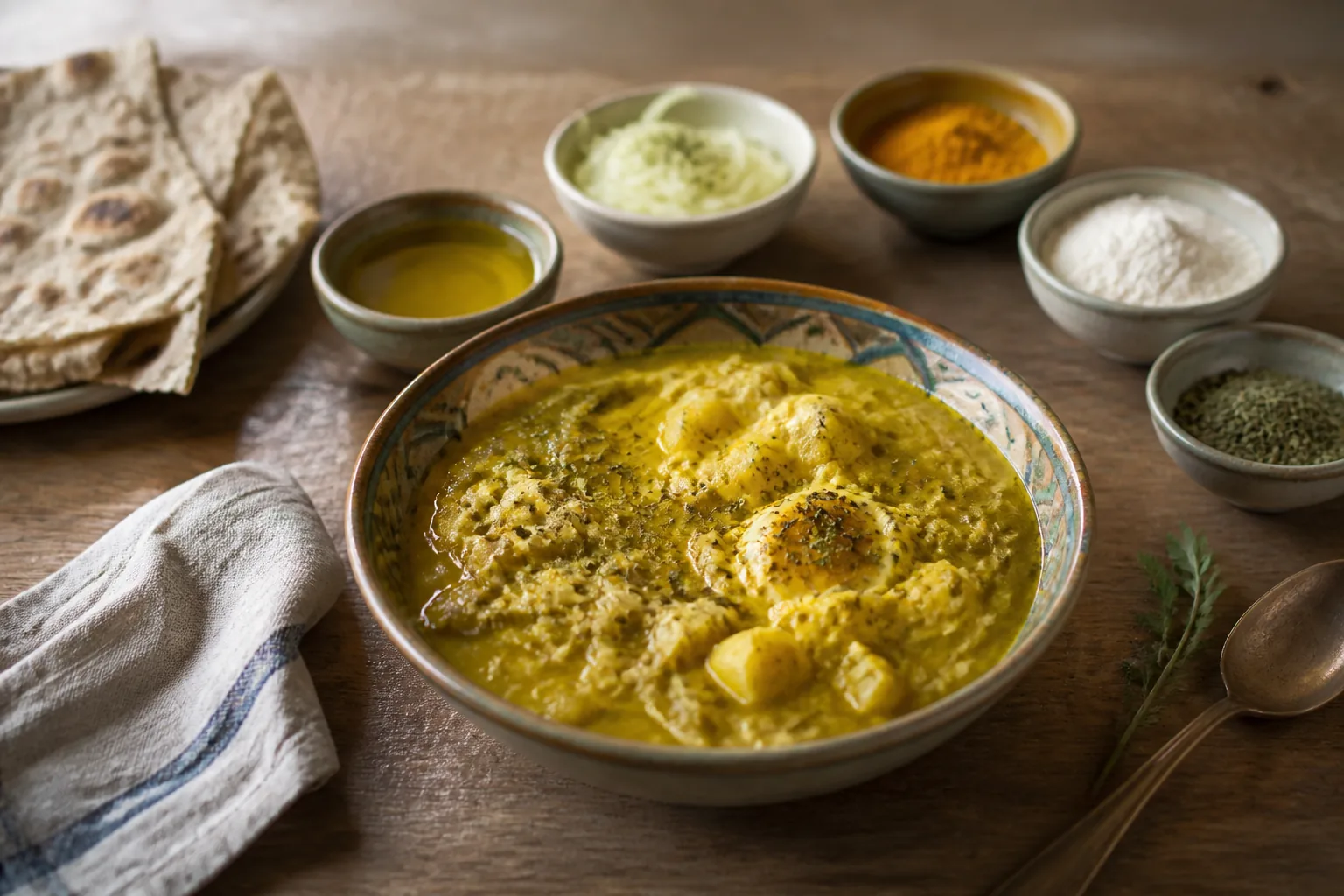
 Watch it madeCountry Life Diary · 11:35
Ingredients
- Neutral oil2 tbsp
- Yellow onion, thinly sliced1 medium
- Ground turmeric1 tsp
- All-purpose flour1 tbsp
- Dried fenugreek leaves, lightly crushed1 tbsp
- Small potato, peeled and diced1
- Water3 cups
- Fine sea salt3/4 tsp, or to taste
- Black pepper1/4 tsp
- Eggs2 large
- Verjuice or fresh lemon juice1 tbsp
- Lavash, sangak, or barbari bread, for servingas needed
Method
- Heat the oil in a small pot over medium heat, add the sliced onion, and cook until soft and golden at the edges.
- Add the turmeric and stir for 30 seconds until fragrant and the oil turns deep yellow.
- Sprinkle in the flour and stir constantly for 1 minute so it loses its raw smell without browning too much.
- Add the dried fenugreek leaves and stir for 15 to 20 seconds, taking care not to burn them.
- Add the diced potato, water, salt, and black pepper, then stir well to loosen anything stuck to the bottom of the pot.
- Bring to a boil, then lower the heat and simmer uncovered for 15 to 18 minutes, until the potato is tender and the broth is lightly thickened.
- Taste the broth and adjust the salt, then stir in the verjuice or lemon juice.
- Crack each egg into a small bowl, slide them gently into the simmering soup, and leave them whole for poached eggs or stir lightly for ribbons.
- Simmer for 3 to 5 minutes, until the whites are set and the yolks are cooked to your liking.
- Ladle into bowls and serve hot with Persian flatbread torn into the soup.
Common questions
Can I substitute fresh fenugreek for dried fenugreek leaves in eshkeneh?
Yes, but use much less: fresh fenugreek is stronger and can turn bitter fast. Start with about 1 to 2 tablespoons chopped fresh leaves in place of 1 tablespoon dried, and add near the end of cooking.
How long does the potato need to simmer before adding the eggs?
Simmer the soup until the potato is fully tender, usually 15 to 18 minutes after adding the water. If the potato is still firm, the broth won’t feel finished and the eggs may overcook while you wait.
What are the most common mistakes when making eshkeneh?
Burning the fenugreek, browning the flour too much, and adding too little acid are the big ones. Fenugreek should only toast briefly, flour should just lose its raw taste, and the lemon or verjuice should be added at the end.
How should I store leftover eshkeneh and reheat it?
Store the soup and eggs separately if possible, because eggs get rubbery when reheated. Refrigerate the soup for up to 3 days. Reheat gently over low heat, then add freshly poached eggs or a stirred egg just before serving.
What is the best way to serve eshkeneh?
Serve it hot with lavash, sangak, or barbari for dipping. The bread is important because the soup is brothy but lightly thickened. A final squeeze of lemon and a little black pepper right before serving brighten the flavor.