Egyptian
Eggah
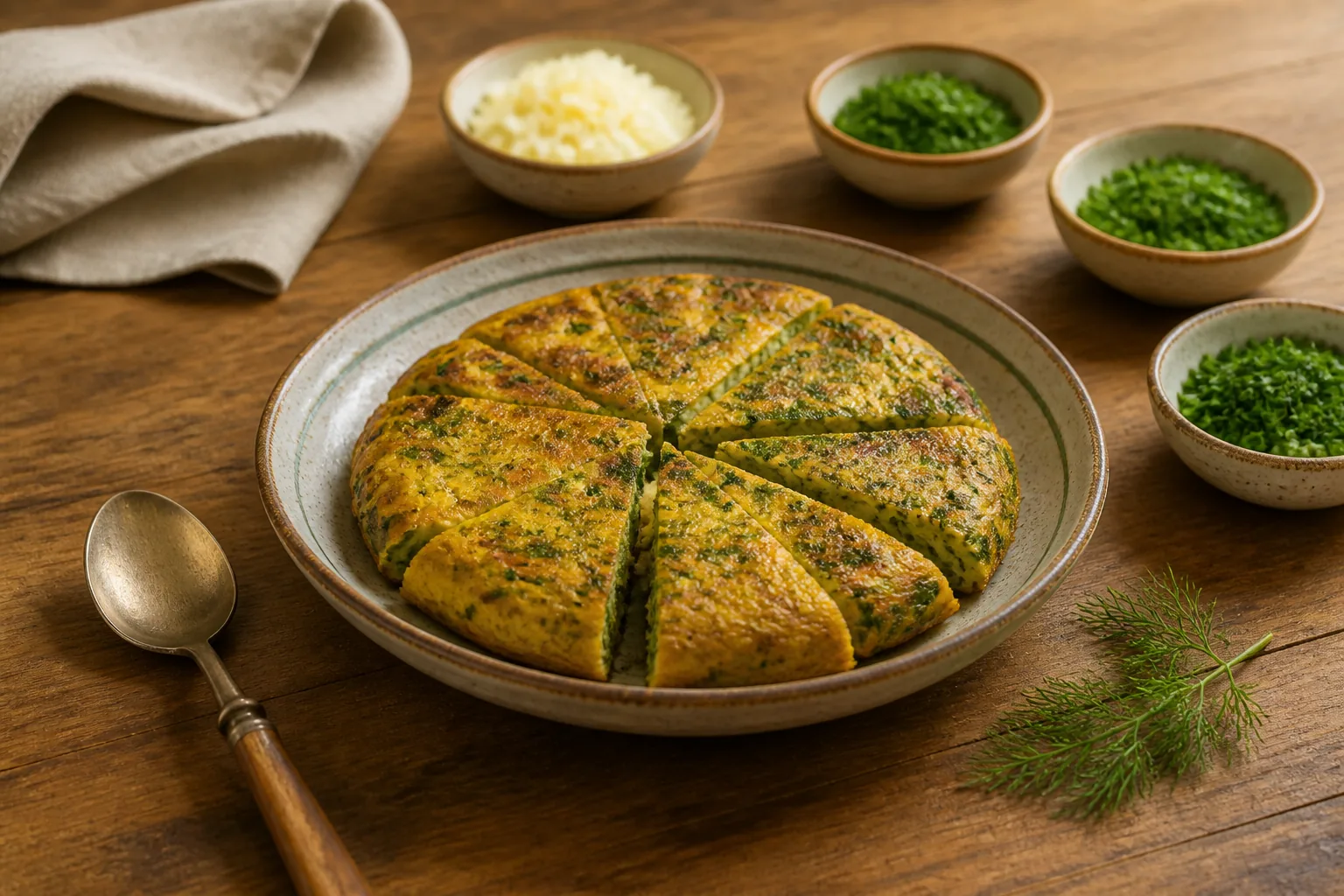
Eggah is an Egyptian baked herb omelet, thick with parsley, dill, coriander, and gently browned onions. It is sliced into wedges and served warm or at room temperature with bread and pickles.
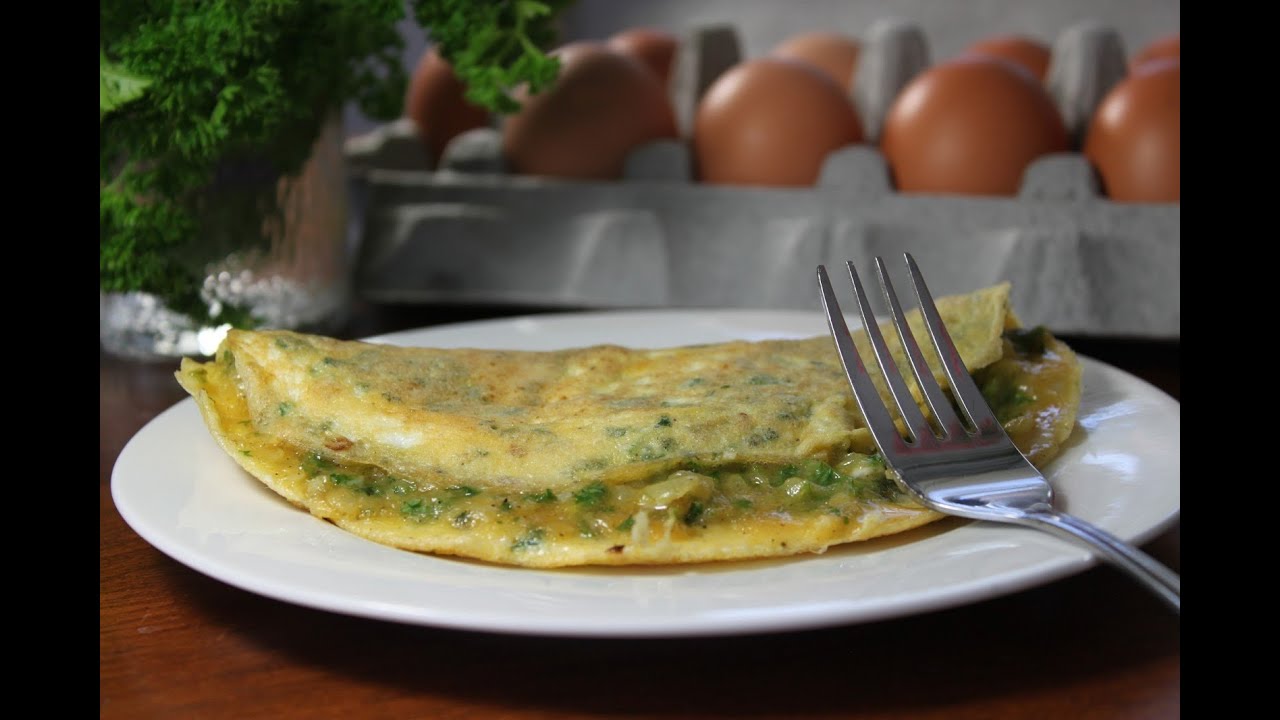 Watch it madeDyna's Egyptian Cooking · 5:49
Ingredients
- Large eggs4
- Yellow onion, finely chopped1 small
- Fresh parsley, finely chopped1/2 cup
- Fresh dill, finely chopped1/4 cup
- Fresh coriander, finely chopped1/4 cup
- All-purpose flour2 tbsp
- Baking powder1/4 tsp
- Ground cumin1/2 tsp
- Ground coriander1/2 tsp
- Black pepper1/4 tsp
- Salt3/4 tsp
- Ghee or neutral oil2 tbsp
Method
- Preheat the oven to 190°C / 375°F.
- Heat the ghee in a small ovenproof skillet over medium heat.
- Add the chopped onion and cook, stirring often, until soft and lightly golden, about 6 to 8 minutes.
- In a bowl, beat the eggs with the flour, baking powder, cumin, ground coriander, black pepper, and salt until mostly smooth.
- Stir in the parsley, dill, fresh coriander, and the cooked onion with its ghee.
- Pour the mixture back into the warm skillet and cook over low heat for 3 to 4 minutes, until the edges begin to set.
- Transfer the skillet to the oven and bake for 12 to 15 minutes, until puffed, set in the center, and lightly golden on top.
- Let the eggah rest for 5 minutes, then cut into wedges and serve warm or at room temperature.
Common questions
Can I substitute the herbs in eggah if I don’t have all three fresh herbs?
Yes. Use whatever mix you have, but keep parsley as the base if possible. Good swaps are extra dill or cilantro, or a little mint. Avoid dried herbs here—they won’t give the same fresh flavor or texture.
How do I know when the eggah is cooked through without overbaking it?
It should be puffed, set around the edges, and only slightly wobbly in the center when it comes out of the oven. A knife inserted in the middle should come out mostly clean. It will finish setting as it rests.
What are the most common mistakes when making eggah?
The biggest mistakes are overcooking the onion, using too much flour, and baking too long. Also avoid high heat on the stove, which can brown the bottom too fast before the center sets. Cook low and steady for the best texture.
How should I store leftover eggah, and can I reheat it?
Store leftovers covered in the fridge for up to 3 days. Reheat slices in a low oven or toaster oven until warmed through, or eat them cold or at room temperature. Microwaving works, but the texture is softer.
What should I serve with eggah?
Serve it with baladi bread, pita, tomatoes, cucumbers, olives, or a simple salad. It also works well with yogurt or labneh. Eggah is good warm or at room temperature, so it’s useful for brunch, lunch, or a light dinner.