Chinese
Cantonese Steamed Fish
A hallmark of Cantonese cuisine, emphasizing the freshness of the ingredients. The fish is steamed to perfection and dressed with soy sauce and sizzling oil.
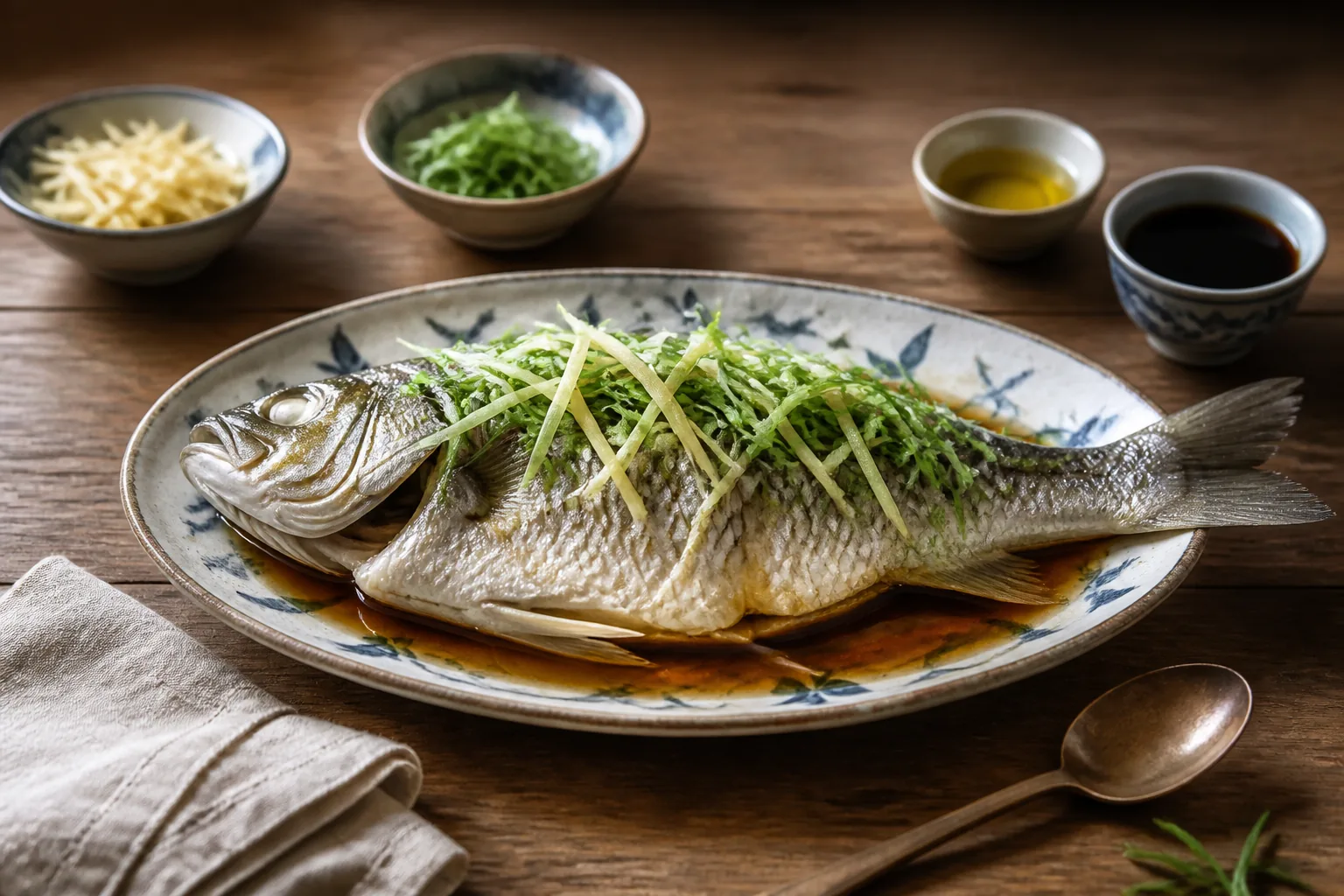
 Watch it madeSnowy's Cafe · 1:50
Ingredients
- Whole White Fish (e.g., Sea Bass)1 (approx 600g)
- Ginger50g
- Scallions3 stalks
- Vegetable Oil3 tbsp
- Soy Sauce for Seafood3 tbsp
Method
- Clean the fish and pat dry. Place ginger slices and scallion whites on a heat-proof plate, then lay the fish on top.
- Steam the fish over boiling water for about 8-10 minutes depending on size.
- Remove from steamer, discard the old water and aromatics. Top with fresh julienned ginger and scallions.
- Heat oil until smoking and pour over the aromatics on the fish. Drizzle with seasoned soy sauce.
Common questions
What fish can I substitute if I can’t find whole sea bass for Cantonese steamed fish?
Use another firm, mild white fish of similar size, like branzino, snapper, grouper, or trout. Choose one with a clean smell and thin to medium thickness so it steams evenly without drying out.
How long should I steam the fish so it’s cooked through but still tender?
For a whole fish about 1 to 1.5 pounds, steam 8 to 10 minutes after the water is fully boiling. Add 2 to 4 minutes for larger fish. The flesh should turn opaque and flake easily near the backbone.
What are the most common mistakes when making steamed fish?
Overcooking is the biggest mistake. Also avoid starting with cold water, using too much sauce before steaming, or skipping the fresh ginger and scallions at the end. Always pour off the steaming liquid before finishing.
Can I store leftovers, and how should I reheat steamed fish?
Store leftovers in an airtight container in the fridge for up to 2 days. Reheat gently by steaming briefly or microwaving on low power. The texture softens, so avoid high heat, which makes the fish dry and tough.
What should I serve with Cantonese steamed fish?
Serve it with plain jasmine rice to catch the sauce, plus simple sides like stir-fried greens, bok choy, or noodles. It also pairs well with a light soup and other mild dishes that won’t overpower the fish.