Egyptian
Besara
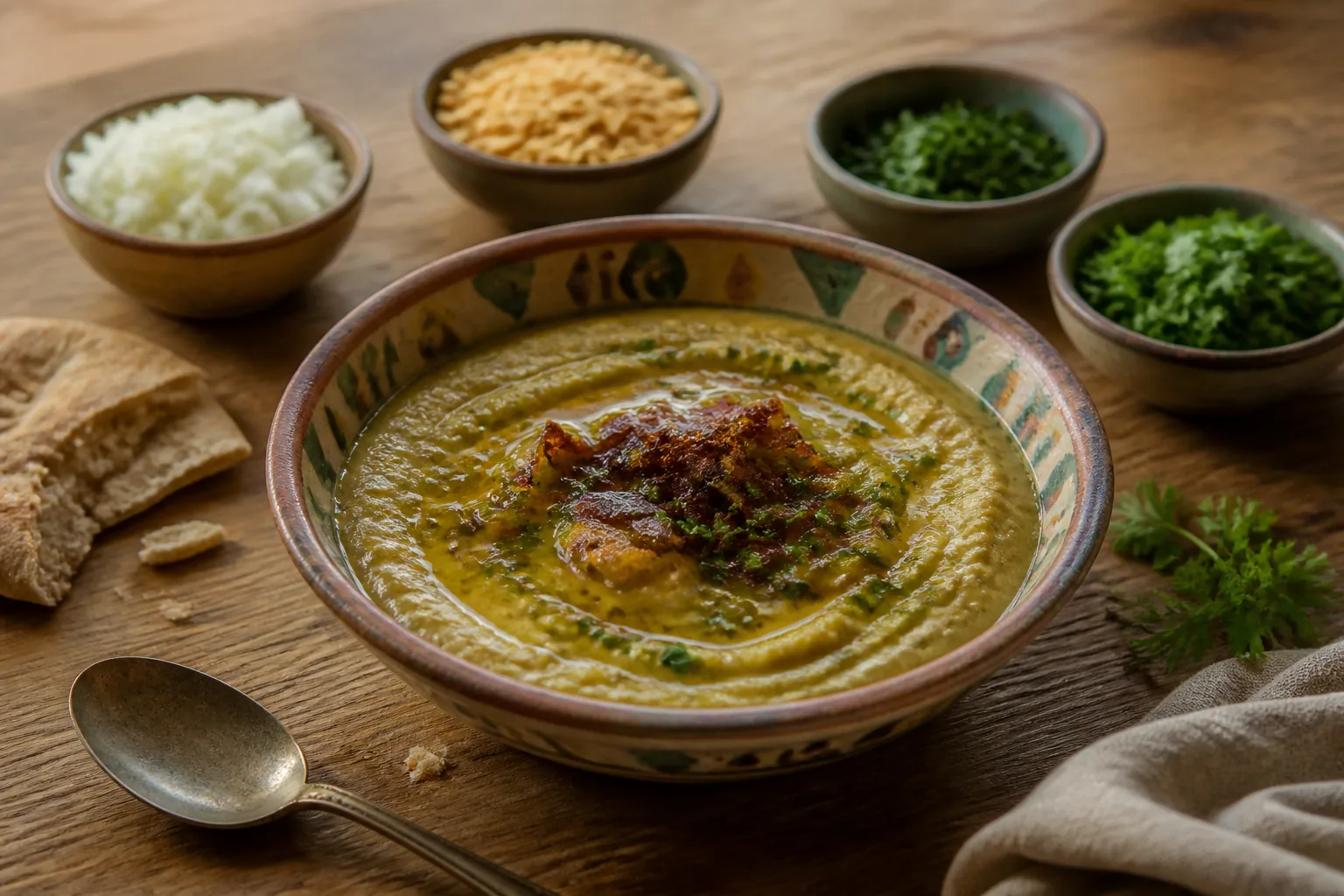
Besara is a rustic Egyptian fava bean purée cooked with fresh herbs, cumin, and garlic until thick and velvety. It is served warm or at room temperature with crisp fried onions and baladi bread.
Ingredients
- Split peeled fava beans3/4 cup
- Yellow onion, chopped1 small
- Garlic cloves4
- Fresh cilantro, chopped1/2 cup
- Fresh dill, chopped1/2 cup
- Fresh parsley, chopped1/4 cup
- Green onions, chopped2
- Ground cumin1 teaspoon
- Ground coriander1 teaspoon
- Dried mint1/2 teaspoon
- Salt3/4 teaspoon, plus more to taste
- Black pepper1/4 teaspoon
- Water3 cups
- Vegetable oil or ghee3 tablespoons
- Yellow onion, thinly sliced1 small
- Garlic clove, minced1
- Ground coriander, for topping1/2 teaspoon
- Baladi bread or warm pitato serve
Method
- Rinse the split fava beans well, then soak them in plenty of water for 2 hours and drain.
- Put the drained beans in a pot with the chopped onion, 3 garlic cloves, cilantro, dill, parsley, green onions, cumin, 1 teaspoon ground coriander, dried mint, salt, pepper, and 3 cups water.
- Bring to a boil, skim any foam, then reduce the heat and simmer uncovered for 40 to 45 minutes, stirring occasionally, until the beans are completely soft and the mixture is thick.
- Blend the mixture directly in the pot until smooth, adding a splash of hot water only if it is too stiff; besara should be thicker than soup and soft enough to scoop.
- Return the pot to low heat and simmer for 5 minutes, stirring often, then taste and adjust the salt.
- Heat the oil or ghee in a small skillet over medium heat and fry the thinly sliced onion until deep golden and crisp.
- Lift out half of the fried onion for garnish, then add the minced garlic and 1/2 teaspoon ground coriander to the remaining oil and onion in the skillet.
- Cook the garlic and coriander for 30 seconds until fragrant, then stir this hot tasha into the besara.
- Spoon the besara into shallow bowls, top with the reserved crisp onion, and serve with baladi bread or warm pita.
Common questions
Can I substitute canned or whole fava beans for split peeled fava beans in besara?
Yes, but the texture and timing change. Use cooked canned fava beans only if well-rinsed; simmer much less, about 10–15 minutes. Whole dried favas need soaking overnight and a much longer cook until very soft.
How long does besara take from start to finish?
Plan for about 3 hours total with the 2-hour soak. Active cooking is closer to 1 hour: simmering the beans 40–45 minutes, blending, a short final simmer, plus frying the onion.
What are the most common mistakes when making besara?
The biggest mistakes are undercooking the beans, adding too much water, and not seasoning enough. Besara should be thick, not soupy. Also keep stirring near the end so it doesn’t catch on the bottom.
How should I store leftover besara, and can I freeze it?
Cool it quickly, then refrigerate in a sealed container for up to 4 days. It thickens as it sits, so loosen with hot water when reheating. It also freezes well for about 2 months.
What is the best way to serve besara?
Serve hot, thick, and spoonable, topped with the crispy fried onion and some of the onion oil. It’s excellent with pita or flatbread, plus pickles, fresh greens, or a squeeze of lemon if you like.