Vietnamese
Bánh Da Lợn
This Vietnamese steamed layer cake has chewy pandan-scented green layers and soft yellow mung bean layers. It is cooled completely before slicing so the glossy layers stay clean and springy.
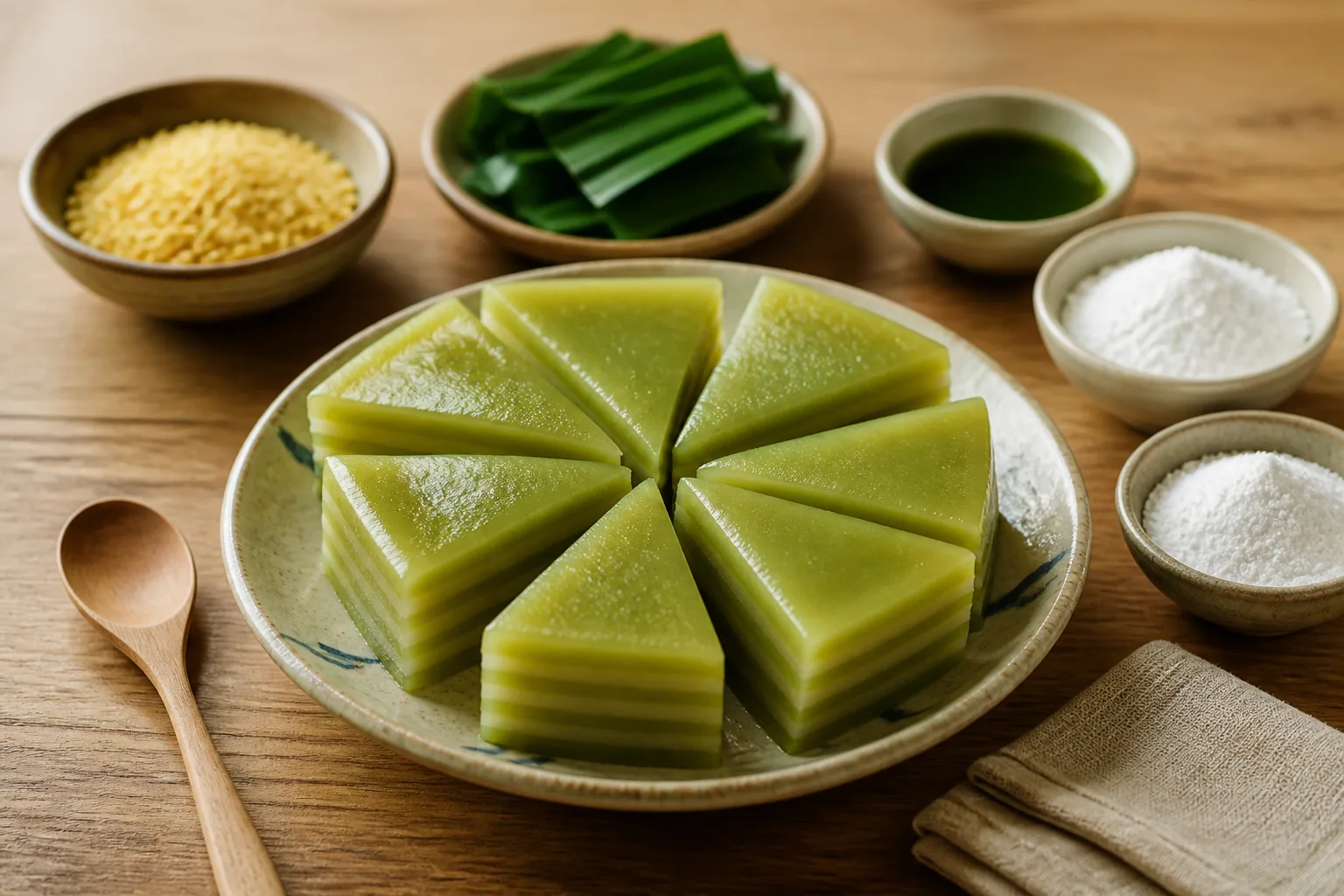
Ingredients
- Hulled split mung beans1/4 cup
- Pandan leaves, cut into short pieces6 leaves
- Water for pandan extract1/3 cup
- Tapioca starch for pandan layer1/2 cup
- Rice flour for pandan layer1 tbsp
- Coconut milk for pandan layer1/3 cup
- Sugar for pandan layer2 tbsp
- Fine sea salt for pandan layer1 pinch
- Tapioca starch for mung bean layer1/3 cup
- Rice flour for mung bean layer1 tbsp
- Coconut milk for mung bean layer1/2 cup
- Sugar for mung bean layer2 tbsp
- Fine sea salt for mung bean layer1 pinch
- Neutral oil, for greasing1 tsp
Method
- Rinse the hulled split mung beans, soak them in water for 2 hours, then drain well.
- Steam the soaked mung beans over medium-high heat for 15 to 20 minutes, until soft enough to mash, then let them cool slightly.
- Blend the pandan leaves with 1/3 cup water until finely broken down, then strain through a fine cloth or sieve and squeeze firmly to extract the green juice.
- Make the pandan batter by whisking the pandan juice, 1/3 cup coconut milk, 2 tbsp sugar, and a pinch of salt until dissolved, then whisk in 1/2 cup tapioca starch and 1 tbsp rice flour until smooth.
- Make the mung bean batter by blending the steamed mung beans with 1/2 cup coconut milk, 2 tbsp sugar, and a pinch of salt until very smooth, then add 1/3 cup tapioca starch and 1 tbsp rice flour and blend again.
- Strain both batters separately for a smoother cake, and thin the mung bean batter with 1 to 2 tbsp water only if it is much thicker than the pandan batter.
- Set up a steamer with plenty of water, wrap the lid in a clean kitchen towel to catch condensation, and bring the water to a steady boil.
- Lightly oil a small 5-inch round cake pan or heatproof dish and warm it in the steamer for 2 minutes.
- Pour in a thin layer of pandan batter, about 1/4 cup, cover, and steam for 4 to 5 minutes until set and slightly translucent.
- Pour a thin layer of mung bean batter over the set pandan layer and steam for 5 minutes until set.
- Continue alternating pandan and mung bean layers, stirring each batter before pouring, until all batter is used.
- Steam the final layer for 8 to 10 minutes, until the cake is firm and no wet batter remains on top.
- Remove the pan from the steamer and let the cake cool completely, at least 1 hour, before unmolding.
- Cut with a lightly oiled knife or plastic knife into small wedges or diamonds and serve at room temperature.
Common questions
Can I substitute pandan leaves if I can’t find them fresh?
Yes. Use frozen pandan leaves if available, or a few drops of pandan extract for the green layer. Start with a small amount and reduce sugar slightly if the extract is sweetened or strongly flavored.
How long does each layer take to cook, and how do I know when to add the next one?
Steam each layer about 6 to 8 minutes, until the surface looks set, glossy, and no longer wet in the center. Add the next layer only after the top is firm enough to support batter without mixing.
Why did my layers separate or turn mushy?
The usual causes are batter that’s too thin, under-steamed layers, or pouring the next layer too soon. Strain the batters, keep the batter consistency similar, and steam each layer until fully set before adding more.
How should I store bánh da lợn, and can I freeze it?
Store it covered in the refrigerator for up to 3 days. It’s best eaten chilled or at room temperature. Freezing is not ideal because the texture can become watery and slightly grainy after thawing.
What’s the best way to serve it, and should it be warm or cold?
Cut with an oiled knife for clean slices and serve at room temperature or lightly chilled. It’s commonly eaten as a snack or dessert. A small cup of tea pairs well with the rich coconut and pandan flavor.