Vietnamese
Bánh chưng
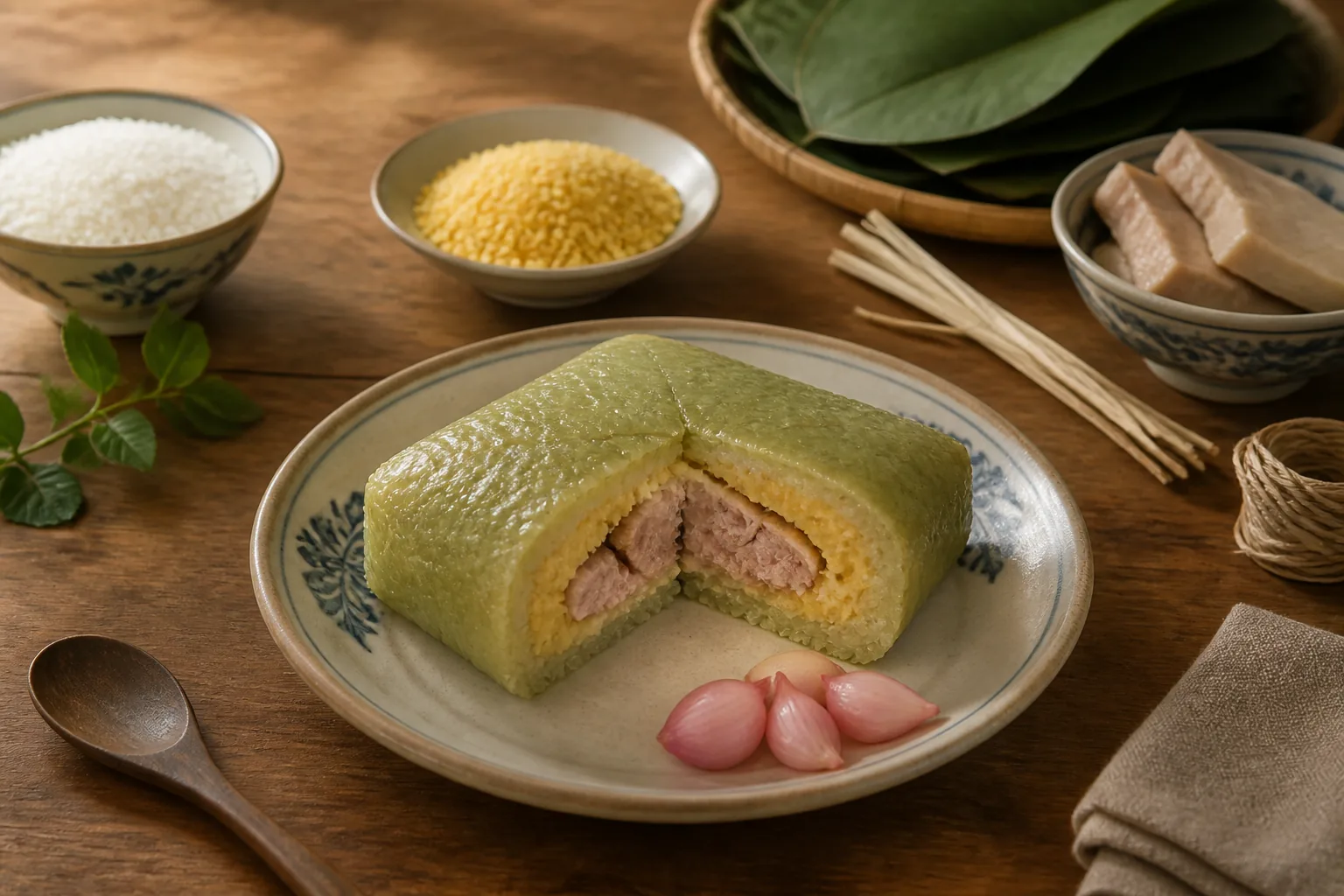
A small square bánh chưng with sticky rice, creamy mung bean, and peppery pork belly wrapped in lá dong and boiled until tender. It is traditionally cooled and pressed before slicing, revealing the green-tinged rice and rich savory center.
 Watch it madeCô Ba Bình Dương · 11:30
Ingredients
- Glutinous rice1 1/2 cups
- Hulled split mung beans1/2 cup
- Pork belly, skin removed, cut into thick strips120g
- Fresh lá dong leaves4 large leaves
- Bamboo tying strips or kitchen twine4 to 6 pieces
- Shallot, finely minced1 small
- Fish sauce1 tsp
- Fine sea salt1 1/4 tsp, divided
- Freshly ground black pepper1 tsp
- Wateras needed for soaking and boiling
Method
- Rinse the glutinous rice until the water runs mostly clear, then soak it in plenty of water with 1/2 tsp salt for 6 to 8 hours or overnight.
- Rinse the mung beans and soak them in water for 4 to 6 hours, then drain well.
- Drain the rice thoroughly and toss it with 1/4 tsp salt.
- Steam the mung beans for 20 to 25 minutes until soft, then mash lightly and season with 1/4 tsp salt and 1/2 tsp black pepper.
- Marinate the pork belly with the minced shallot, fish sauce, remaining 1/4 tsp salt, and remaining 1/2 tsp black pepper for at least 30 minutes.
- Wipe the lá dong leaves clean, briefly blanch if stiff, pat dry, and trim the thick central ribs so the leaves fold without tearing.
- Arrange the leaves shiny side down in a small square mold or by hand in a cross pattern, overlapping them to form a tight wrapper.
- Spread half the rice into the center, keeping the edges slightly higher to help enclose the filling.
- Add half the mung bean in a compact square, place the marinated pork belly on top, then cover with the remaining mung bean.
- Cover the filling with the remaining rice, pressing gently so the cake is even and square.
- Fold the lá dong leaves tightly over the filling to make a neat square parcel, then tie firmly with bamboo strips or twine in both directions.
- Place the bánh chưng in a deep pot, cover completely with water, bring to a boil, then simmer steadily for about 6 hours, adding boiling water as needed to keep it submerged.
- Turn the cake once halfway through cooking to help it cook evenly.
- Remove the bánh chưng, rinse the outside briefly with hot water, then press it under a light weight for 1 to 2 hours to set the shape and drain excess moisture.
- Let cool to room temperature before unwrapping, then slice into portions with a knife or a taut piece of string.
Common questions
What can I use instead of lá dong leaves for bánh chưng if I can’t find them?
If lá dong is unavailable, use banana leaves; they’re the closest practical substitute and give a similar aroma. If neither is available, parchment plus foil will hold shape, but you’ll lose the leaf fragrance.
How long does bánh chưng take from start to finish?
Plan on one day for soaking plus 6–10 hours for wrapping and boiling, depending on size. The rice and beans can soak overnight, and the finished cakes should rest several hours before cutting.
What are the most common mistakes when making bánh chưng?
The biggest mistakes are under-soaking the rice, overfilling the wrapper, and not packing the layers tightly enough. Loose wrapping lets water seep in and ruins the shape; too much filling can cause bursting during boiling.
How should I store bánh chưng after cooking?
Cool completely, then keep wrapped at cool room temperature for 1–2 days, or refrigerate for up to a week. For longer storage, freeze portions tightly wrapped; reheat by steaming or pan-frying slices.
What’s the best way to serve bánh chưng?
Cut with a very sharp knife or string into neat squares or wedges. Serve at room temperature or gently warmed, usually with pickled onions or vegetables and a little fish sauce for contrast.