Vietnamese
Bánh bèo
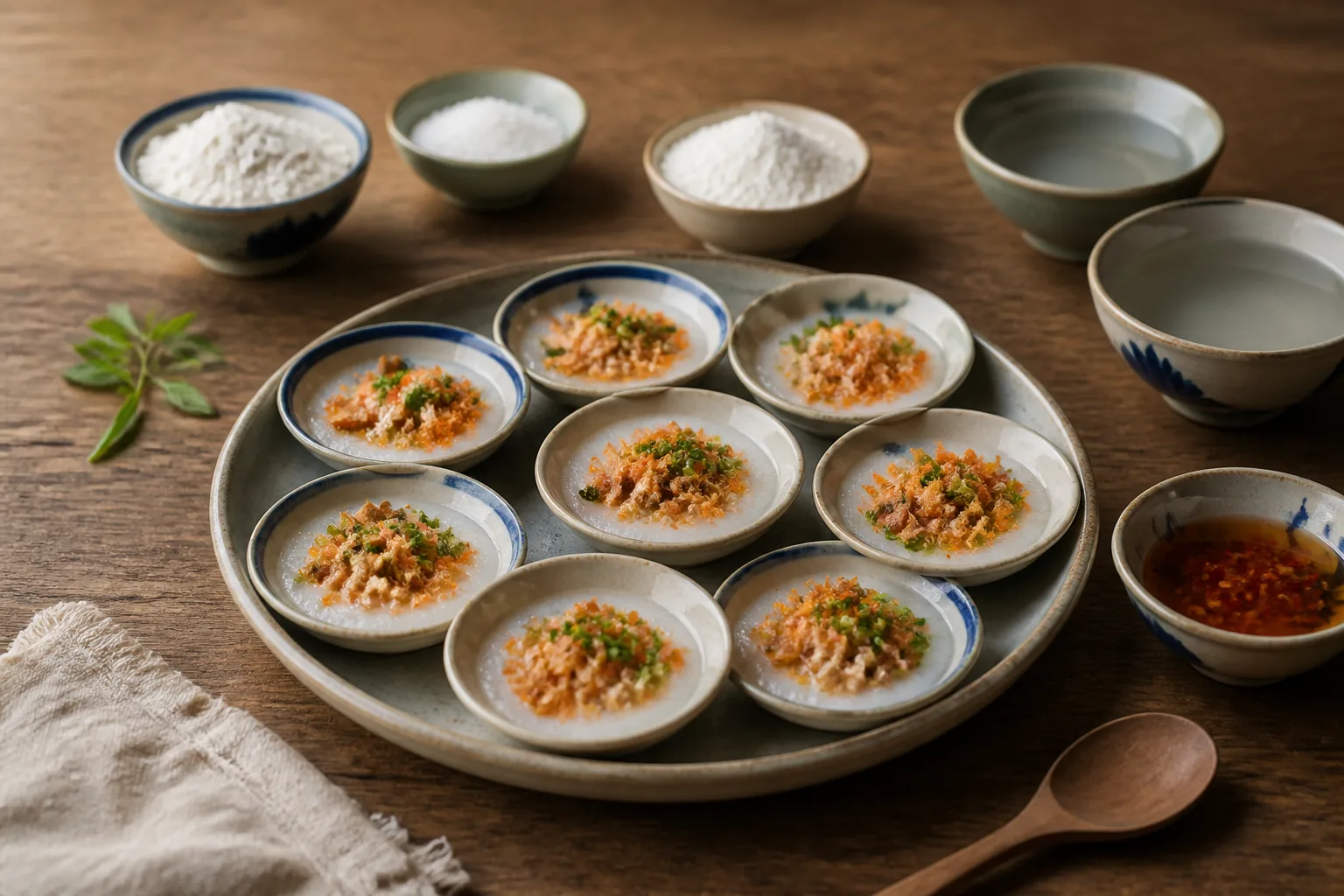
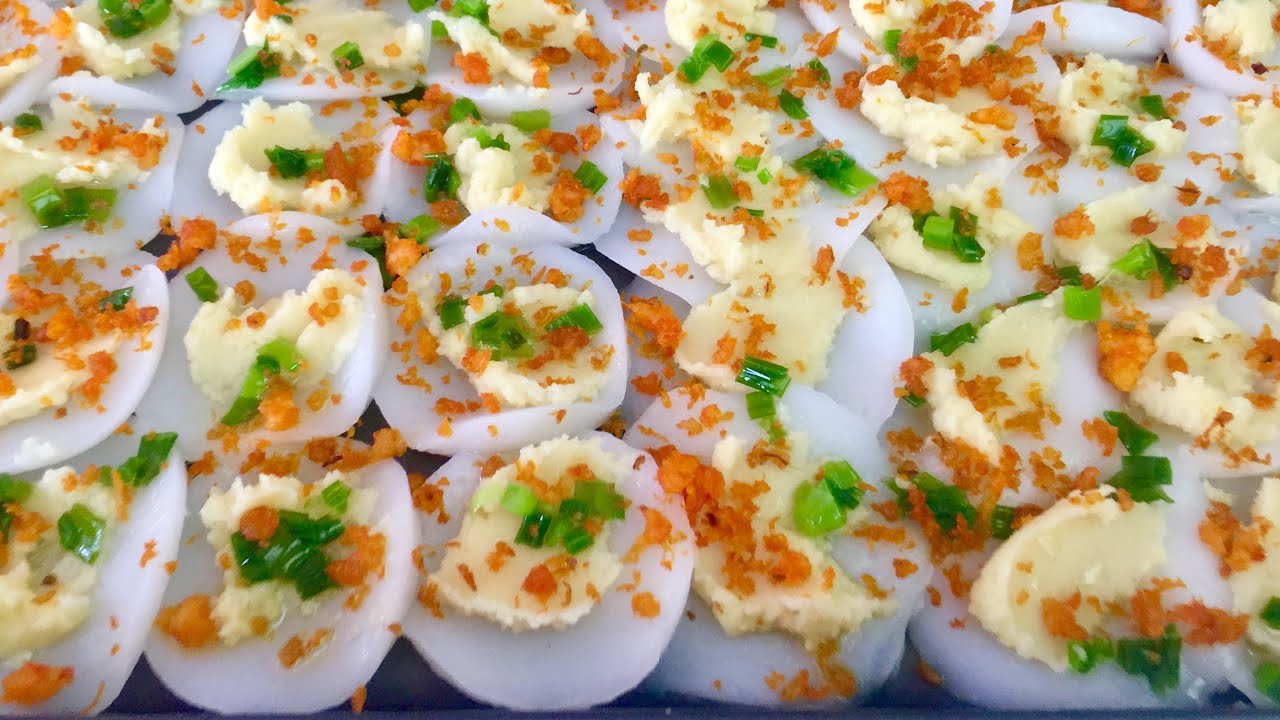
Delicate steamed rice cakes sit in small saucers with a soft dimple, topped with savory shrimp floss, scallion oil, crisp shallots, and nước chấm. This Huế-style bánh bèo is light, fragrant, and best eaten warm with a spoon.
 Watch it madeKim Oanh Canada · 10:13
Ingredients
- Rice flour1/2 cup
- Tapioca starch1 tbsp
- Fine sea salt1/4 tsp
- Warm water3/4 cup
- Boiling water1/4 cup
- Neutral oil2 tbsp, divided
- Small peeled shrimp120g
- Fish sauce2 tbsp, divided
- Sugar1 1/2 tbsp, divided
- Ground white pepper1/8 tsp
- Scallions, thinly sliced2
- Fried shallots2 tbsp
- Crispy pork skin or pork cracklings, crushed2 tbsp
- Lime juice1 tbsp
- Garlic, finely minced1 small clove
- Thai bird chile, thinly sliced1
- Warm water for dipping sauce3 tbsp
Method
- Whisk the rice flour, tapioca starch, and salt in a bowl, then whisk in 3/4 cup warm water until smooth.
- Let the batter rest for 20 minutes, then stir in 1/4 cup boiling water and 1 teaspoon neutral oil to make a thin, pourable batter.
- Steam or boil the shrimp until just cooked, drain well, then pound or finely chop it into small flakes.
- Heat 1 teaspoon oil in a small pan, add the shrimp, 1 teaspoon fish sauce, 1/2 teaspoon sugar, and white pepper, then cook over low heat, stirring constantly, until dry, fluffy, and orange-pink.
- Make scallion oil by heating the remaining neutral oil until shimmering, pouring it over the sliced scallions, and adding a pinch of salt.
- Make nước chấm by stirring together the remaining fish sauce, remaining sugar, lime juice, 3 tablespoons warm water, garlic, and chile until the sugar dissolves.
- Set small bánh bèo saucers or shallow heatproof bowls in a steamer and preheat them over rapidly boiling water for 3 minutes.
- Stir the batter well, pour a thin layer into each hot saucer, cover, and steam for 4 to 5 minutes until the cakes turn translucent-white and form a slight dimple.
- Remove the saucers carefully, repeat with the remaining batter, and keep the cooked cakes warm.
- Top each rice cake with scallion oil, shrimp floss, fried shallots, and crushed crispy pork skin.
- Serve warm in the saucers with nước chấm spooned over each bánh bèo just before eating.
Common questions
Can I substitute tapioca starch or rice flour in bánh bèo batter?
You can swap a little tapioca starch, but don’t replace all of it. Rice flour gives the structure; too much tapioca makes the cakes rubbery and chewy. If needed, use cornstarch only sparingly, not as a full substitute.
How long should I rest the batter before steaming, and why does it matter?
Rest the batter about 20 minutes, then stir again before using. This hydrates the flour evenly and helps the batter steam up smooth instead of grainy. Skipping the rest can leave the cakes dense or uneven.
What are the most common mistakes when making bánh bèo?
The biggest mistakes are batter that’s too thick, oversteaming, and not seasoning the toppings enough. Thin batter should pour easily. Steam just until set; overcooking makes them tough. Also drain the shrimp filling well so it stays fluffy, not wet.
Can I make bánh bèo components ahead of time, and how should I store them?
Yes. The shrimp topping, scallion oil, and nước chấm can be made a day ahead and chilled separately. Rewarm the shrimp gently. Cooked bánh bèo are best fresh, but you can refrigerate them covered for a few hours and re-steam briefly.
How should I serve bánh bèo for the best texture and flavor?
Serve the cakes warm in their small cups, topped with shrimp, scallion oil, fried shallots, and pork cracklings. Pass the dipping sauce separately so people add it to taste. Eat soon after assembling for the best soft-yet-silky texture.