Indian
Appam with Vegetable Stew
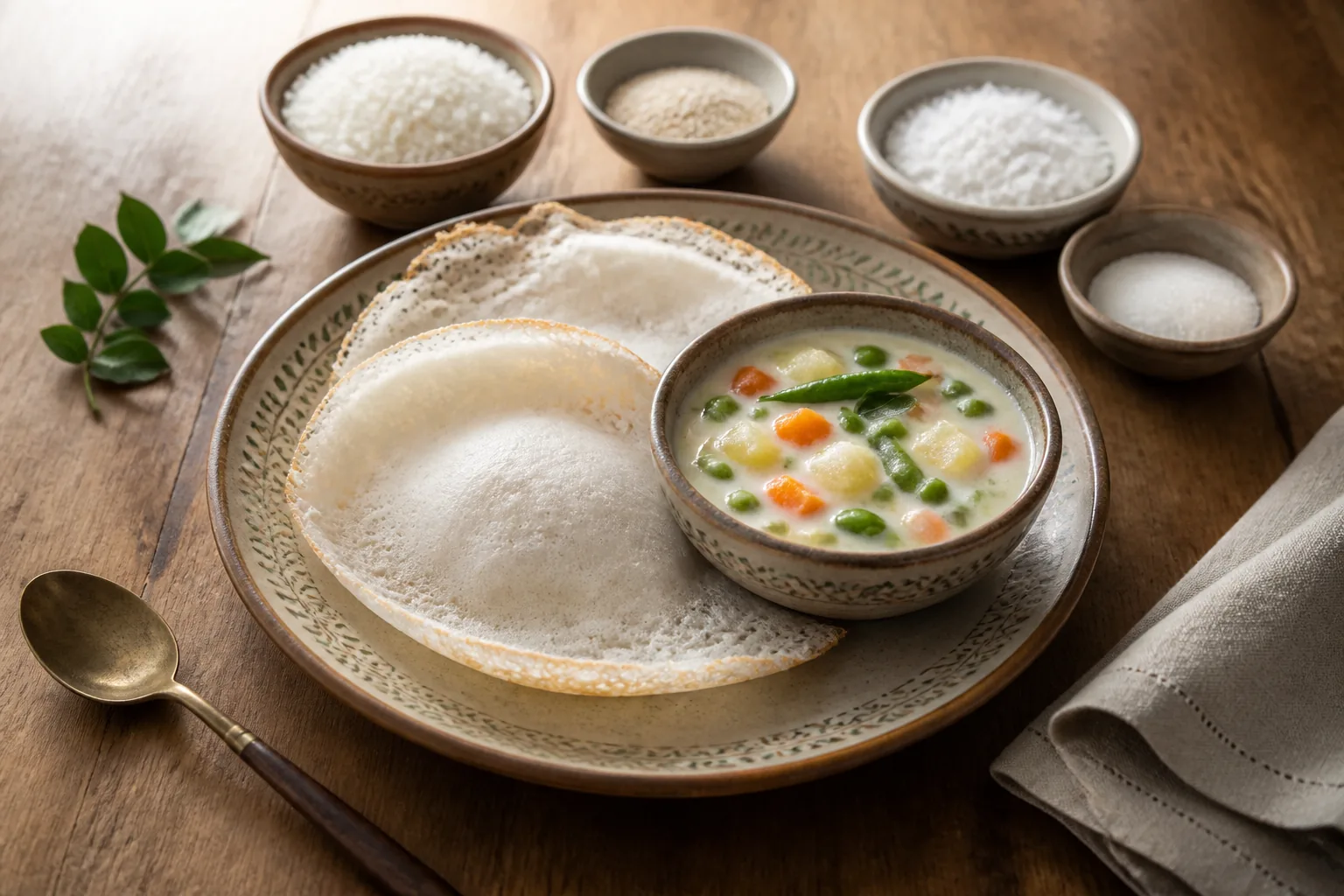
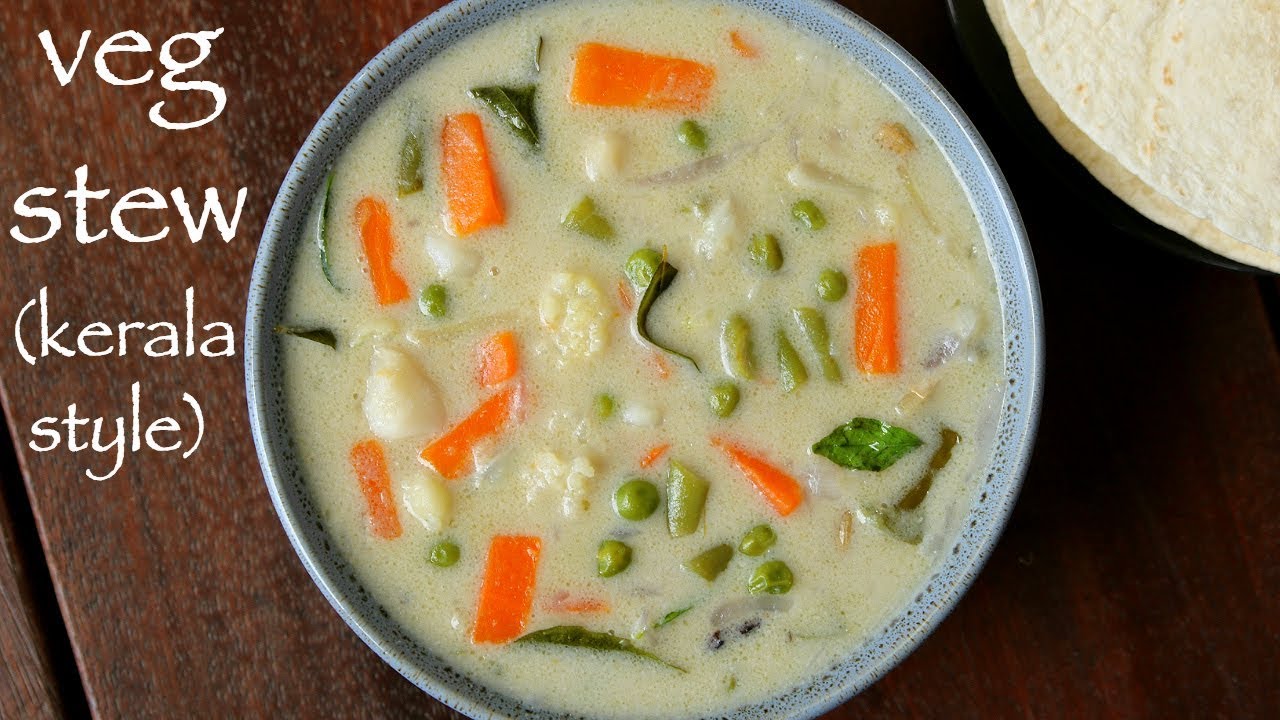
Soft, lacy Kerala-style appams are served with a gently spiced vegetable stew simmered in coconut milk. The stew is fragrant with curry leaves, ginger, green chilli, and whole spices.
 Watch it madeHebbars Kitchen · 1:30
Ingredients
- Raw rice or idli rice1 cup
- Cooked rice2 tbsp
- Fresh grated coconut1/4 cup
- Instant yeast1/4 tsp
- Sugar1 tsp
- Salt3/4 tsp, divided
- Wateras needed
- Coconut oil2 tbsp
- Cinnamon stick1 small piece
- Green cardamom2 pods
- Cloves2
- Black peppercorns1/2 tsp
- Curry leaves1 sprig
- Ginger1 tbsp, julienned
- Green chillies2, slit
- Onion1 small, thinly sliced
- Potato1 small, cubed
- Carrot1 small, cubed
- Green beans1/3 cup, chopped
- Green peas1/4 cup
- Thin coconut milk1 1/2 cups
- Thick coconut milk1/2 cup
Method
- Rinse the raw rice well, then soak it in plenty of water for 4 to 5 hours.
- Drain the rice and grind it with cooked rice, grated coconut, sugar, yeast, and enough water to make a smooth, pourable batter.
- Transfer the batter to a bowl, cover it, and ferment in a warm place for 6 to 8 hours until slightly risen and bubbly.
- Stir in 1/2 tsp salt and adjust with a little water so the batter is thinner than dosa batter but not watery.
- Heat 1 tbsp coconut oil in a kadai or saucepan and add cinnamon, cardamom, cloves, peppercorns, and curry leaves.
- Add ginger, green chillies, and sliced onion, then sauté on medium heat until the onion turns soft without browning.
- Add potato, carrot, beans, peas, and 1/4 tsp salt, then stir for 2 minutes.
- Pour in the thin coconut milk, cover, and simmer until the vegetables are tender, about 12 to 15 minutes.
- Lower the heat and stir in the thick coconut milk, then warm gently for 2 minutes without boiling.
- Finish the stew with the remaining 1 tbsp coconut oil and a few curry leaves, then keep it covered.
- Heat an appachatti or small curved nonstick pan over medium heat and lightly grease it if needed.
- Pour in a ladleful of appam batter, lift the pan, and swirl so the batter coats the sides in a thin layer with a thicker pool in the center.
- Cover and cook for 2 to 3 minutes until the edges are lacy and crisp and the center is soft and cooked through.
- Repeat with the remaining batter to make about 6 appams.
- Serve the hot appams with the warm vegetable stew ladled alongside.
Common questions
Can I substitute idli rice for raw rice in appam batter?
Yes. Idli rice works very well and is often easier to grind into a smooth batter. Soak it the same way. If using only raw rice, add a little extra cooked rice for softness and better fermentation.
How long does appam batter need to ferment, and how do I know it is ready?
Usually 6 to 8 hours in a warm place, but cooler kitchens may take longer. It is ready when slightly risen, airy, and bubbly. The batter should smell pleasantly fermented, not sour or yeasty.
What are the most common mistakes when making appam or vegetable stew?
For appam, the batter should not be too thick or it will not spread well; also avoid adding salt before fermentation. For stew, do not boil after adding thick coconut milk, or it may split.
How should I store leftover appam batter and vegetable stew?
Store batter in the fridge in a covered container for up to 2 days; bring it to room temperature before cooking. Keep stew refrigerated for 2 to 3 days and reheat gently on low heat without boiling.
What is the best way to serve appam with vegetable stew?
Serve appam hot and fresh, with the soft center and crisp lacy edges intact. Ladle the stew alongside or over the appam. It also pairs well with extra coconut milk-based gravy or a mild pickle on the side.