Sri Lankan
Appa
Sri Lankan appa are bowl-shaped hoppers with crisp, lacy edges and a soft, lightly tangy centre. This version uses soaked rice, coconut milk, and a slow ferment for the traditional flavour and texture.
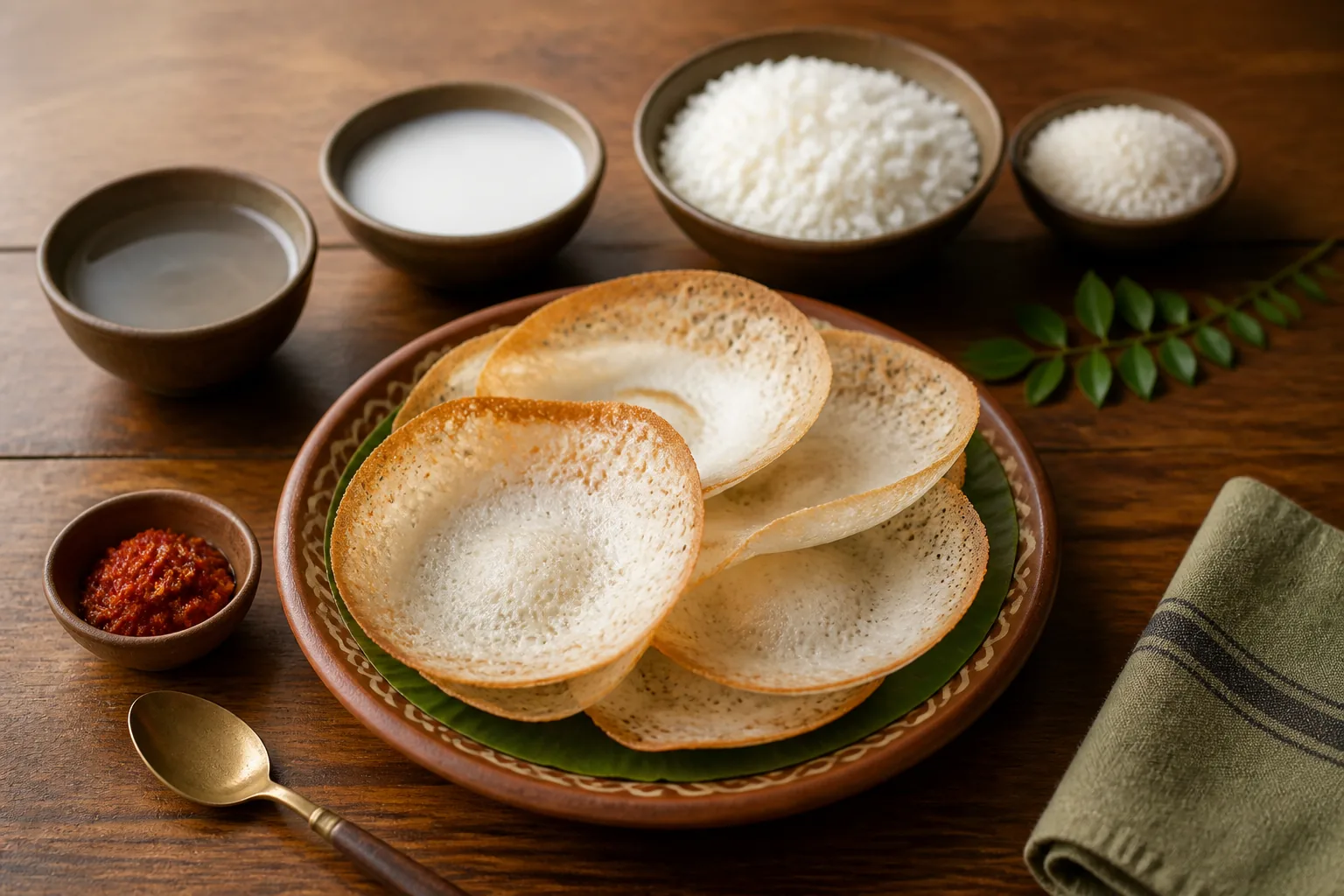
Ingredients
- Raw white rice1 cup
- Cooked white rice2 tbsp
- Thick coconut milk3/4 cup
- Thin coconut milk or water1/2 cup, plus more as needed
- Lukewarm coconut water or water1/4 cup
- Instant yeast1/4 tsp
- Sugar1 tsp
- Salt1/2 tsp
- Coconut oil1 tsp, for the pan
Method
- Wash the raw rice well, then soak it in plenty of water for 4 to 6 hours.
- Drain the soaked rice and add it to a blender with the cooked rice and thin coconut milk or water.
- Blend until very smooth, adding a little more thin coconut milk or water only if needed to help the blades move.
- Stir the yeast and sugar into the lukewarm coconut water and let it stand for 5 minutes until slightly foamy.
- Mix the yeast mixture into the rice batter, cover, and leave in a warm place for 6 to 8 hours or overnight until lightly risen and tangy.
- Stir in the thick coconut milk and salt to make a batter the consistency of thin pouring cream.
- Let the batter rest for 20 minutes while you heat a small appachatti or hopper pan over medium heat.
- Lightly wipe the hot pan with coconut oil.
- Pour in a small ladle of batter, immediately lift and swirl the pan so the batter coats the sides in a thin layer and settles slightly thicker in the centre.
- Cover the pan and cook for 2 to 3 minutes until the edges are crisp and lacy and the centre is set but soft.
- Lift out the appa without flipping it, then repeat with the remaining batter, adjusting the heat so the edges crisp without burning.
- Serve the appa hot, ideally straight from the pan.
Common questions
Can I substitute dry yeast or sourdough starter for instant yeast in appa batter?
Yes. Use active dry yeast at about 1.25 times the instant yeast amount, dissolving it in the lukewarm liquid first and giving it 10 minutes. Sourdough starter can work, but fermentation will be slower and the flavor more tangy.
How long should the batter ferment, and how do I know it is ready?
At warm room temperature, 6 to 8 hours is common; overnight is fine if your kitchen is cool. The batter should look slightly risen, smell pleasantly tangy, and have tiny bubbles. If it barely changes, give it more time.
Why are my appa not lacy or are sticking to the pan?
Usually the batter is too thick, the pan is not hot enough, or there is too little oil. Thin the batter to pourable cream, heat the hopper pan properly before each one, and lightly oil the pan between appa.
Can I store appa batter or cooked appa for later?
Cooked appa are best fresh, but you can refrigerate leftover batter for 1 to 2 days; it may continue fermenting, so stir and thin as needed before cooking. Cooked appa can be refrigerated and reheated in a dry pan or steamer.
What should I serve with appa, and how do I keep them warm for guests?
Serve with kiri hodi, lunu miris, dhal curry, or coconut sambol. Keep cooked appa warm in a low oven, stacked with parchment between them, but not covered tightly or they may soften and lose their crisp edges.