Nigerian
Abacha
Abacha, also called African salad, is a beloved Igbo dish of softened shredded cassava tossed in a glossy palm oil sauce with ugba, crayfish, pepper, and fragrant ehuru. It is served warm or at room temperature with fish, kpomo, onions, and fresh garden egg leaves.
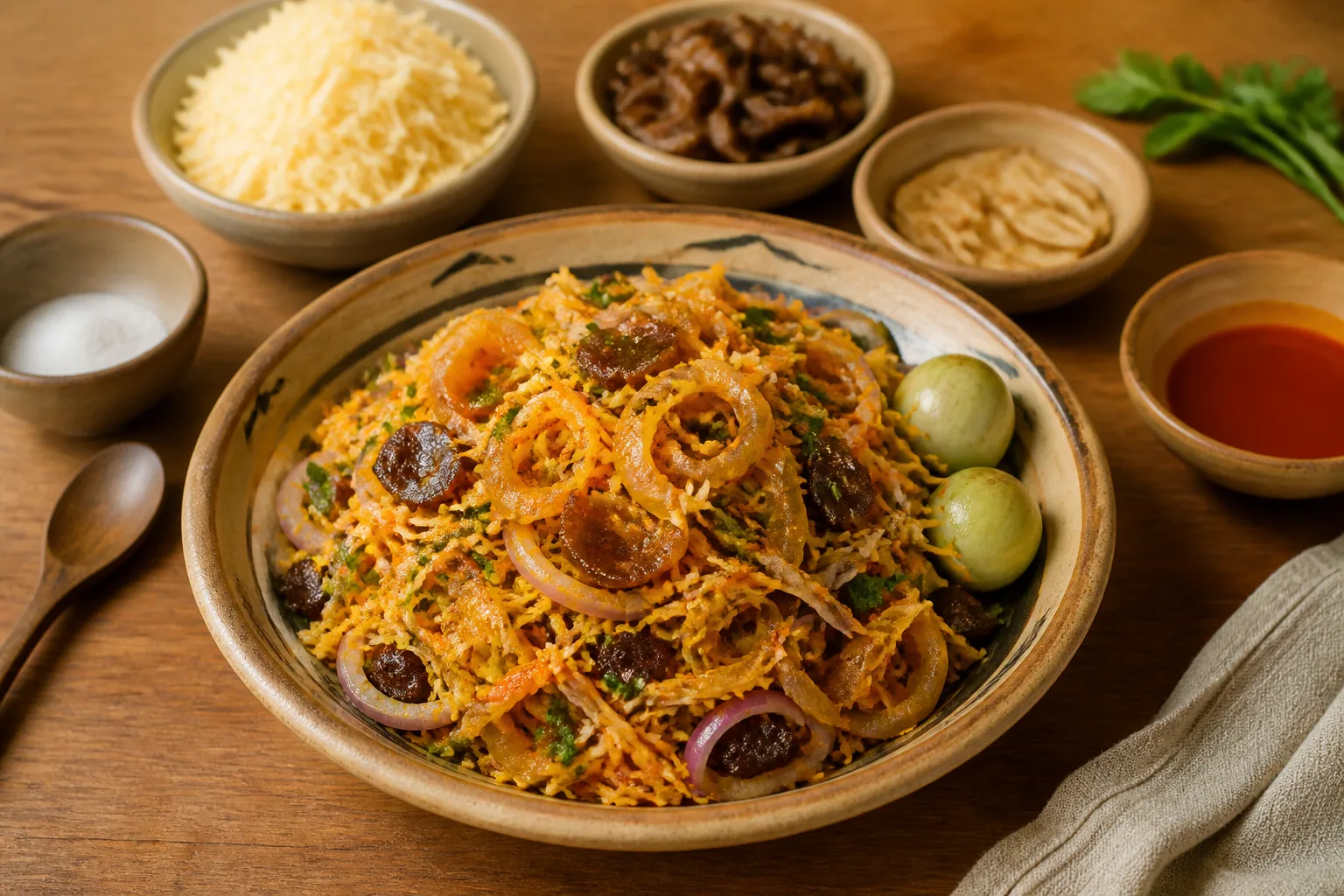
Ingredients
- Dried abacha, shredded cassava3 cups
- Ugba, sliced oil bean seed1/2 cup
- Palm oil1/3 cup
- Akanwu or potash1/2 teaspoon
- Warm water for dissolving potash1/4 cup
- Ground crayfish2 tablespoons
- Ground ehuru, calabash nutmeg1/2 teaspoon
- Ogiri Igbo1/2 teaspoon
- Scotch bonnet pepper, finely ground or chopped1 small
- Seasoning cube1/2 cube
- Saltto taste
- Cooked kpomo, sliced1/2 cup
- Smoked or fried fish, flaked1 cup
- Red onion, thinly sliced1 small
- Utazi leaves, thinly sliced1 tablespoon
- Garden egg leaves or anara leaves, sliced1/4 cup
- Whole garden eggs, optional2
Method
- Rinse the dried abacha briefly, then soak it in hot water for 5 to 8 minutes until softened but still slightly springy.
- Drain the abacha well in a sieve and set aside; do not let it become mushy.
- Dissolve the akanwu or potash in 1/4 cup warm water, stir, then let the sediment settle and carefully pour off only the clear liquid.
- Warm the palm oil in a pot or wide bowl, off direct high heat, then gradually stir in 1 to 2 tablespoons of the clear potash water until the oil thickens and turns bright orange-yellow.
- Add the ogiri, ground crayfish, ground ehuru, Scotch bonnet, crushed seasoning cube, and a little salt to the palm oil mixture and stir until smooth.
- Add the ugba, sliced kpomo, and flaked smoked or fried fish, then toss gently so they are coated in the sauce.
- Add the drained abacha in handfuls, mixing thoroughly until every strand is coated and glossy.
- Place the pot over very low heat for 2 to 3 minutes, stirring gently, just to warm everything through without cooking the leaves.
- Taste and adjust salt, pepper, crayfish, or a little more clear potash water if the sauce needs to loosen.
- Fold in most of the onion, utazi, and garden egg leaves, keeping a little aside for garnish.
- Serve the abacha warm or at room temperature, topped with the remaining onion, fresh leaves, and whole garden eggs if using.
Common questions
Can I substitute potash (akanwu) if I don’t have it for Abacha?
Yes. Use food-safe baking soda very sparingly—about a pinch dissolved in warm water, then add a little at a time until the palm oil lightens and thickens. Too much makes the dish soapy and bitter, so go slowly.
How long should I soak the abacha so it stays springy, not mushy?
Usually 5 to 8 minutes in hot water is enough. Drain it well immediately and don’t leave it sitting in liquid. If it feels too firm, you can mix it in with the sauce and let it soften slightly.
What are the most common mistakes when making Abacha?
Using too much potash, over-soaking the abacha, or adding the palm oil to high heat are the biggest mistakes. Also, don’t overmix once the fish is added, or it can break apart and turn the dish greasy or clumpy.
How should I store leftover Abacha, and how long does it keep?
Store leftovers in an airtight container in the refrigerator for up to 2 days. The texture is best fresh, but you can eat it cold or bring it to room temperature. Add a splash of palm oil if it looks dry.
What should I serve with Abacha, and can it be eaten warm or cold?
Abacha is often served with extra onion, garden egg, ugba, or fish on top. It can be eaten warm, room temperature, or slightly chilled, but avoid reheating hard; gentle warming is better so the cassava stays tender.