Five Korean Dishes You Can Have on the Table Fast
These Korean dishes come together in about half an hour, with clear flavours, simple methods, and little waiting.
Korean cooking has plenty of dishes that move quickly without feeling thin or hurried. A pot of rice, a little seasoning, and one or two well-handled ingredients are often enough.
These five recipes are the sort you can make when dinner needs to be ready soon but still needs to taste complete. They range from savoury stews to crisp pancakes and soft eggs, each finished in half an hour or less.
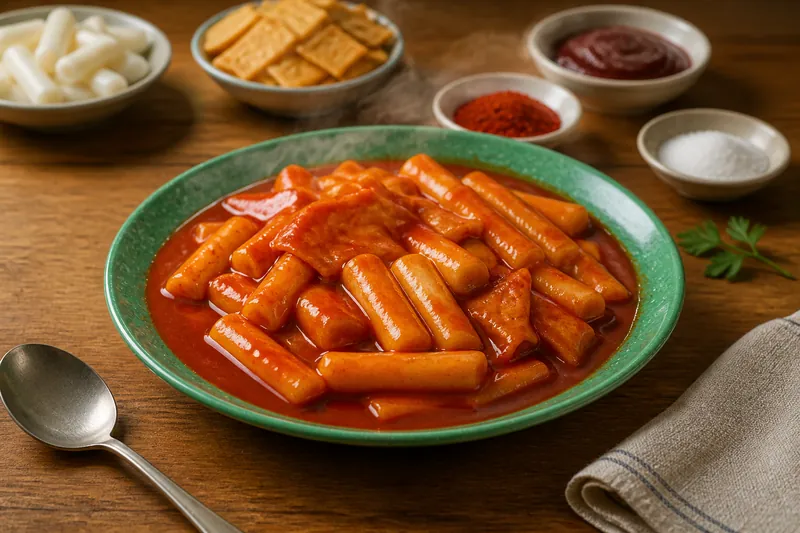
Chewy rice cakes in a glossy red sauce
TteokbokkiKoreanOpen the recipe →Tteokbokki is a street food staple built around soft rice cakes simmered in a spicy, slightly sweet sauce. The flavour is bold and direct: gochujang brings heat and depth, while a little sugar rounds it out. What makes it worth cooking is how quickly it turns into something satisfying and substantial. The rice cakes should be soaked if they are firm or refrigerated, otherwise they may stay too dense; once in the pan, keep an eye on the sauce so it reduces enough to coat rather than dry out.
Silky steamed eggs for a soft side dish
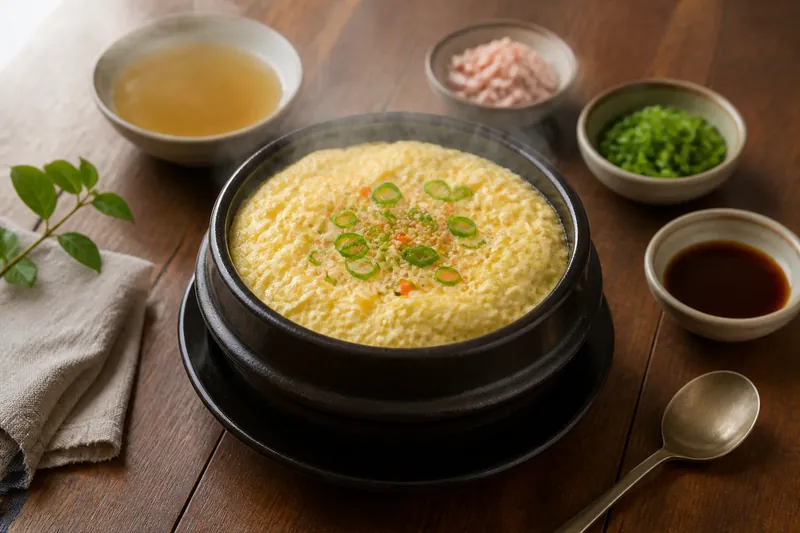 Gyeran-jjimKoreanOpen the recipe →
Gyeran-jjim is Korean steamed egg, light and custardy, with a texture somewhere between a soufflé and a very soft omelette. It tastes gentle and savoury, often finished with sesame oil, scallions, or a few drops of soy sauce. It is worth making when you want something warm and comforting that does not demand much attention. The main thing to know is that it cooks best over low heat; too much heat makes the eggs tough or pocked with large bubbles, so patience matters more than speed.
A savoury pancake packed with seafood and scallion
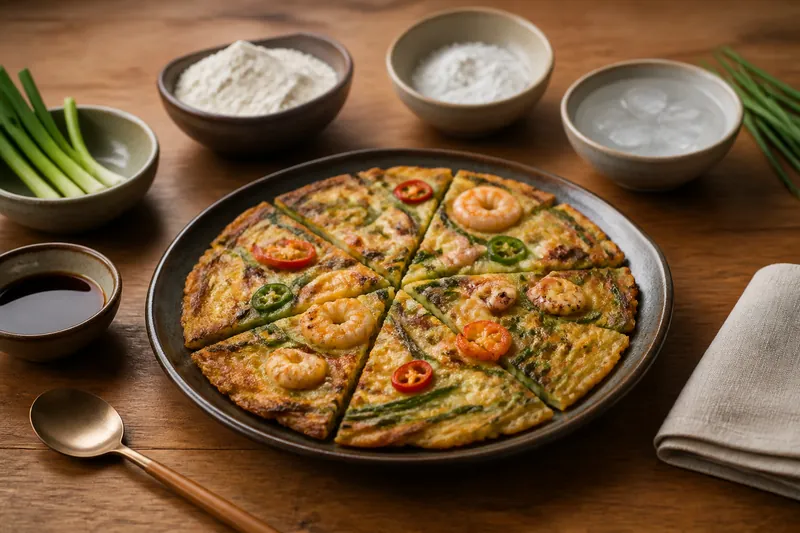 Haemul PajeonKoreanOpen the recipe →
Haemul pajeon is a pan-fried pancake with scallions and seafood, crisp at the edges and tender in the middle. The batter is light rather than bready, so the flavour stays with the green onion, squid, shrimp, or whatever seafood is on hand. It is worth cooking because it delivers both texture and a full meal feel with very little fuss. The key point is to keep the pan hot enough for browning but not so hot that the batter burns before the seafood cooks through.
Fast, crisp pancake with the bite of kimchi
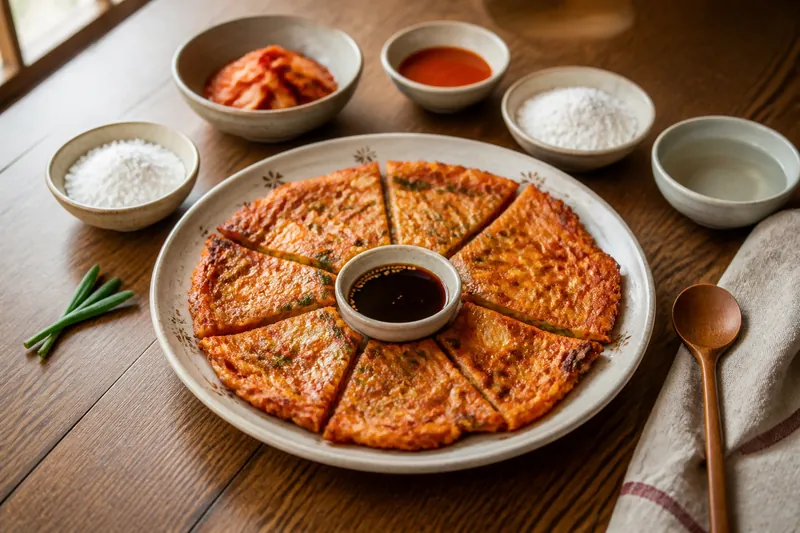 Kimchi JeonKoreanOpen the recipe →
Kimchi jeon uses chopped kimchi in a simple batter, making a pancake that is sharp, savoury, and a little sour. When it is cooked well, the edges go crisp while the centre stays soft and slightly chewy. It is a good dish to make when there is kimchi in the fridge that has become more fermented and punchy. Before starting, squeeze off excess liquid from the kimchi if it is very wet; too much moisture can make the pancake soft instead of crisp.
Clear bean sprout soup with clean, fresh flavour
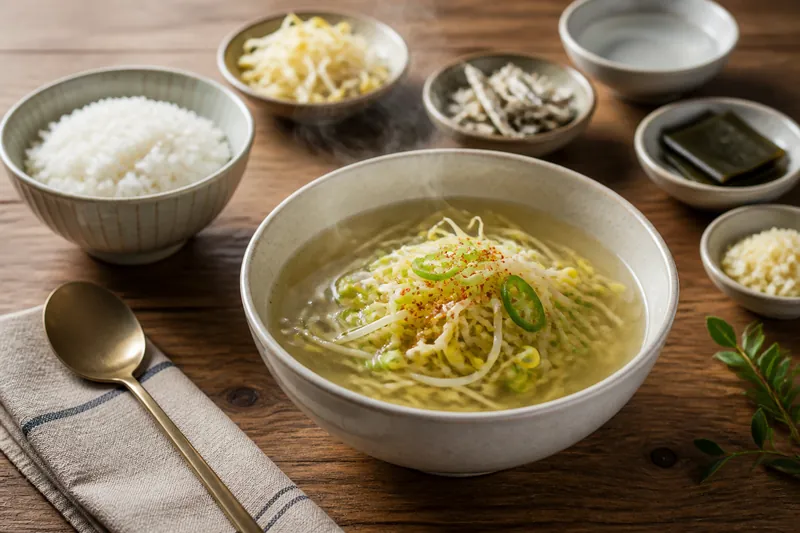 Kongnamul-gukKoreanOpen the recipe →
Kongnamul-guk is a simple bean sprout soup with a clean broth, mild seasoning, and a faint nuttiness from the sprouts. It is the kind of dish that tastes restrained but still feels complete, especially beside rice and a few banchan. The appeal is its freshness and ease: it is inexpensive, quick, and comforting without heaviness. One thing to know is that bean sprouts should not be overcooked; they need enough time to soften slightly and flavour the broth, but they should keep some crunch.
These dishes show how much Korean cooking can do in little time. Some are crisp, some soft, some brothy, but all are practical for a weeknight and all are best eaten soon after cooking.