Seven Hungarian Dishes That Feed Six or More
From fish soup to filled dumplings and layered cakes, these Hungarian dishes are built for a table with plenty of seats.
Hungarian cooking has a generous streak. It makes room for long-simmered soups, yeasted pastries, dumplings, and cakes that serve a crowd without feeling plain or dutiful.
The seven dishes here all feed six or more, and each one asks for a little time, a steady hand, or both. That is part of the point: these are dishes meant for sharing, not for haste.
A sharp, red fish soup
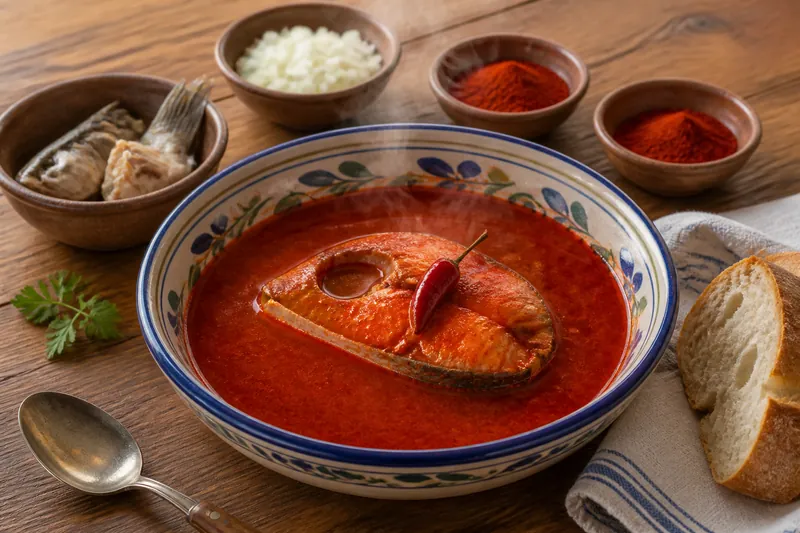
HalászléHungarianOpen the recipe →Halászlé is a paprika-bright fish soup with a clear, lively heat and a deep savoury base. It is usually built on river fish, so the broth tastes clean rather than heavy, with onion, paprika, and the natural flavour of the fish doing most of the work. It is worth cooking because a big pot feeds a table well and still feels light enough to begin a meal. One thing to know: paprika can turn bitter if it is scorched, so keep the heat moderate and add liquid promptly.
Bean soup with smoke and body
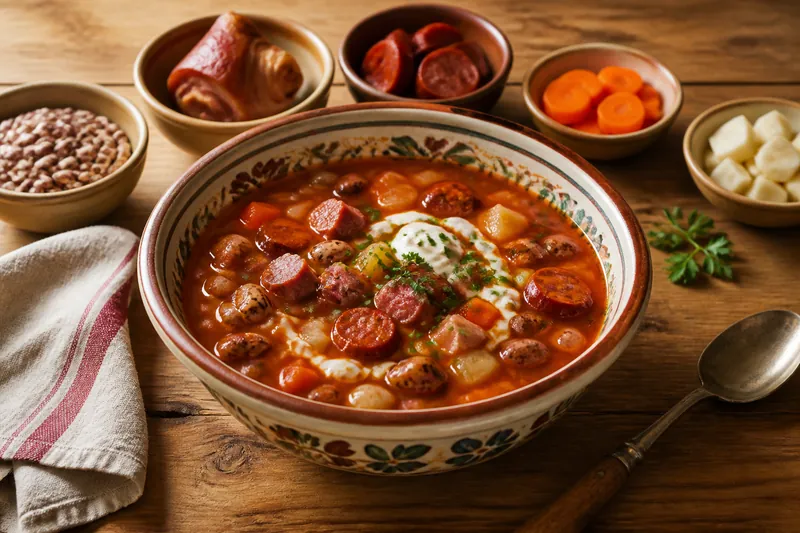 Jókai bablevesHungarianOpen the recipe →
Jókai bableves is a substantial bean soup, often enriched with smoked meat, sausage, and a little sour cream. The beans give it a soft, creamy base, while the smoke and paprika bring depth and a rounded warmth. It is the sort of soup that stands as a full meal, especially in cold weather, and it feeds many without much fuss once the soaking is done. One thing to know: the overnight soak is not optional if you want even cooking and a smooth texture in a reasonable time.
Plum dumplings in a crumb coat
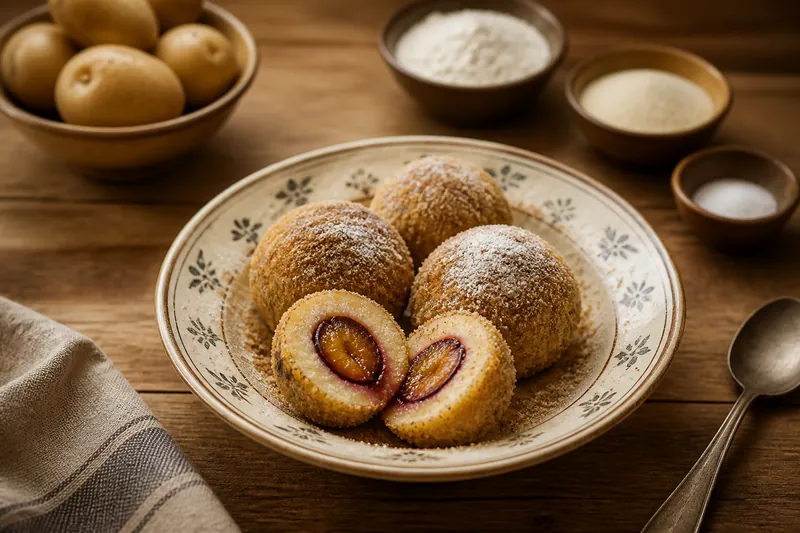 Szilvás gombócHungarianOpen the recipe →
Szilvás gombóc are potato dumplings wrapped around plums, then rolled in buttered crumbs and sugar. The result is soft, fruity, and gently rich, with a contrast between the tender dough, the tart plum, and the toasted crumb outside. They are worth making because they turn simple fruit into a substantial sweet dish that can be served as dessert or as an afternoon meal. One thing to know: the dough should be handled while still supple; if it sits too long, it becomes sticky and harder to shape neatly.
A layered cake with crackly caramel
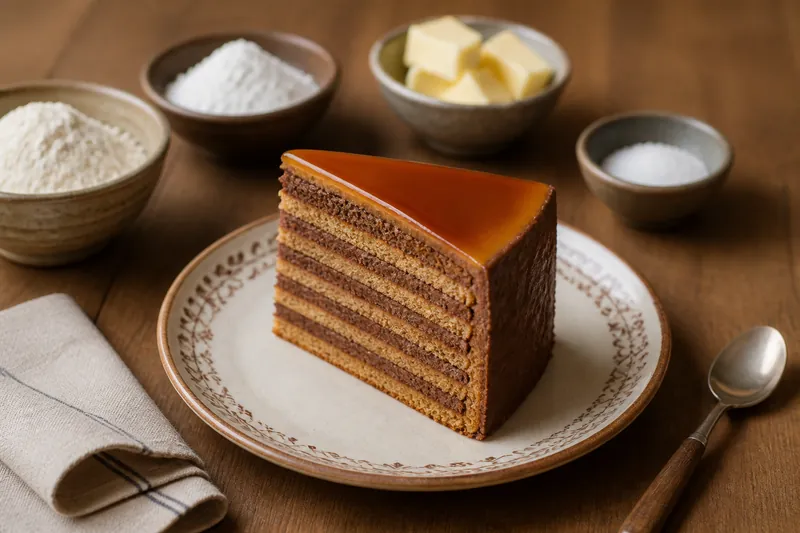 DobostortaHungarianOpen the recipe →
Dobostorta is a classic Hungarian layer cake with thin sponge layers, chocolate buttercream, and a hard caramel top. It tastes rich but not cloying, with the chocolate cream carrying most of the weight and the caramel adding a clean crack when sliced. It earns its place at a large table because one cake goes far and holds well for serving later in the day. One thing to know: the caramel layer needs prompt, careful work, since it hardens fast once spread and must be cut before it sets too firmly.
Trifle-like spoonfuls of sponge and cream
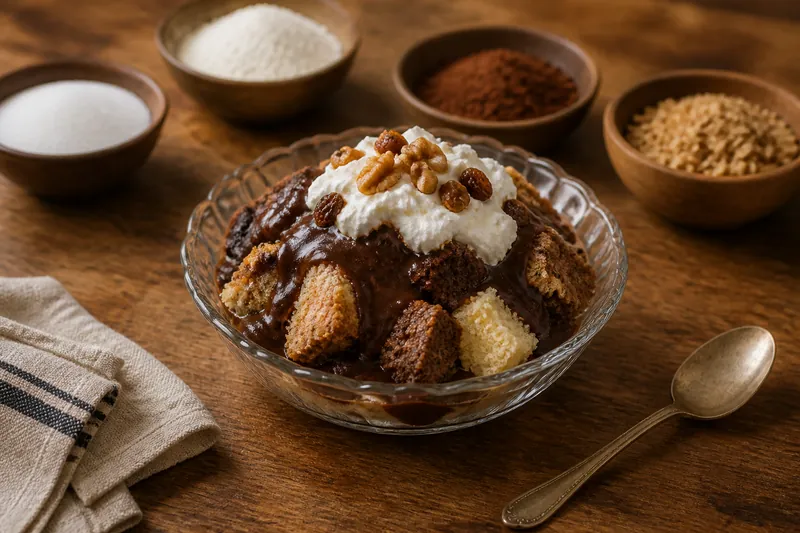 Somlói galuskaHungarianOpen the recipe →
Somlói galuska is a layered dessert of sponge cake, custard, whipped cream, chocolate sauce, and often rum-soaked fruit or raisins. It is soft, creamy, and deeply comforting, with enough bitterness from cocoa and enough sweetness from custard to keep each spoonful balanced. It is worth cooking when you need a dessert that serves many and can be assembled ahead. One thing to know: the components need cooling before layering, or the cream and custard will loosen and the dessert will lose its structure.
Spit cake with a caramel crust
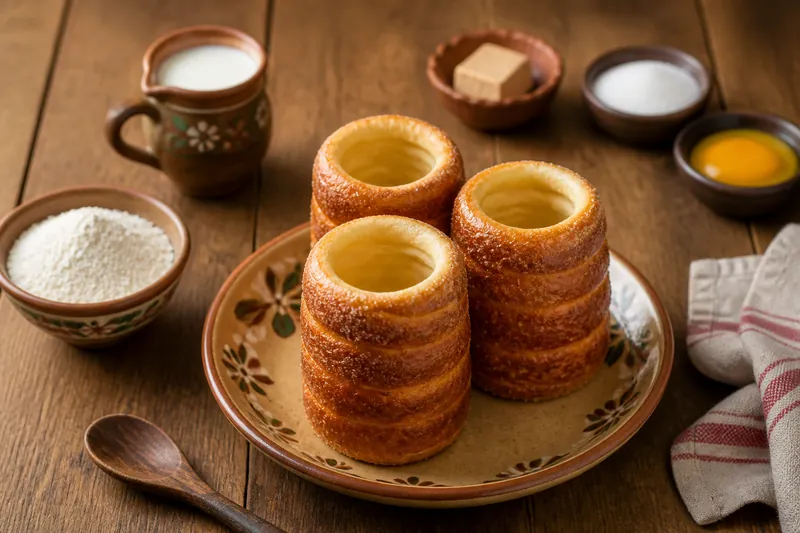 KürtőskalácsHungarianOpen the recipe →
Kürtőskalács is a yeasted dough wrapped around a cylinder, baked, and finished with sugar so the outside turns crisp and glossy. It tastes of buttered dough, caramel, and sometimes cinnamon or nuts, with a soft, pull-apart interior. It is worth making for a group because the shape is dramatic and the finished cake can be torn and shared at once. One thing to know: the dough needs time to rise properly, and the rolling and wrapping should be even so it bakes through without leaving thick, undercooked patches.
Rolled pastry for a crowd
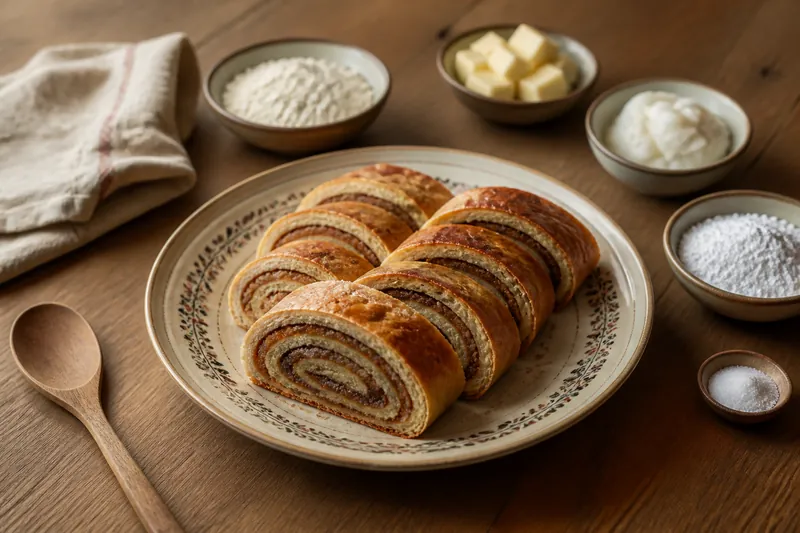 BejgliHungarianOpen the recipe →
Bejgli is a rolled pastry, usually filled with walnut or poppy seed paste, sliced to show a tight spiral. The pastry is tender and lightly sweet, while the filling is dense, nutty, and aromatic. It is worth making because each log yields many neat slices, which suits a large gathering and keeps well after baking. One thing to know: the dough should rest before baking so it does not split, and the rolls should be pricked before they go into the oven to let steam escape evenly.
These dishes show how Hungarian cooking handles a table with ease: soup in a pot, dumplings by the plateful, cakes cut into generous slices. They ask for time, but not for fuss, and each one rewards feeding more than a few.