6 Filipino Dishes That Feed Six or More
These Filipino dishes make generous portions, from breakfast breads and sweets to snacks and desserts that stretch easily for a crowd.

Filipino cooking has a useful habit of making more than enough. Some dishes are built for sharing at the table, others for a tray on the sideboard, but all of them scale well when you are feeding six or more.
This list stays with dishes that travel easily across a meal: savory bites, rice cakes, bread, and sweet finishes. Each one is practical to cook for a group, and each one has a clear place at the table.
Crisp eggs for a crowd
Kwek-KwekFilipinoOpen the recipe →Kwek-kwek are quail eggs dipped in orange batter and fried until crisp, then served with a sharp dipping sauce. They taste savory, lightly sweet, and a little rich from the egg yolk inside. They are worth cooking because they vanish fast at parties and do not require much advance work. For six or more, they make a good starter or snack tray. One thing to know: fry in batches and keep the oil steady. If the oil is too cool, the coating turns heavy instead of light and crisp.
Soft rolls for breakfast or sharing
 PandesalFilipinoOpen the recipe →
Pandesal are the familiar Filipino bread rolls with a soft crumb and a light, browned crust often coated in breadcrumbs. They taste gently sweet and milky, with enough structure to hold butter, cheese, jam, or a savory filling. They are worth making in quantity because they feed a table from breakfast through snack time, and the dough is easy to shape into many pieces. One thing to know: the long rise matters. Give the dough enough time to expand, or the rolls will bake up dense rather than airy.
Steamed cakes that serve many
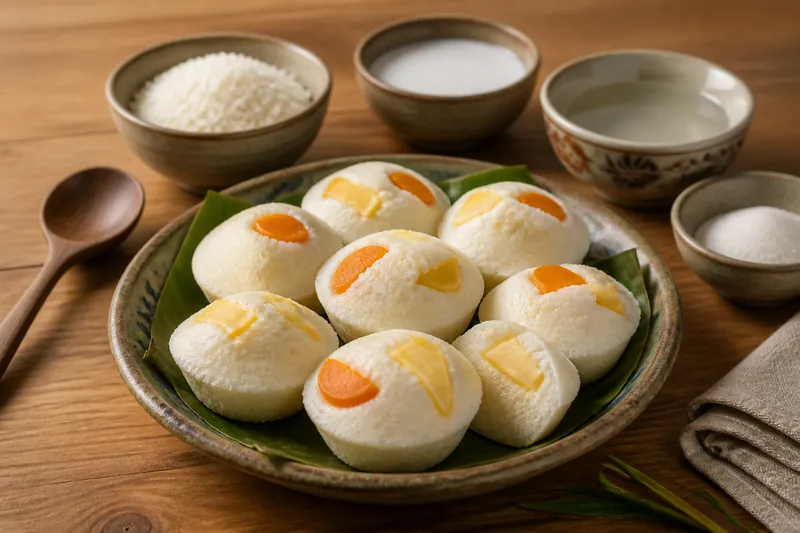 PutoFilipinoOpen the recipe →
Puto are small steamed rice cakes, usually soft, pale, and just a little sweet. They are often eaten with savory dishes, but they also work as a snack on their own. Their mild flavor makes them useful when you need a neutral bread-like side for a group. They are worth cooking because they portion neatly and can be served warm in multiples. One thing to know: the batter or fermented mix needs time. Do not rush the long preparation, or the cakes will lack the tender, airy texture that makes puto right.
A creamy dessert that slices cleanly
 Maja BlancaFilipinoOpen the recipe →
Maja blanca is a coconut milk pudding thickened until it can be cut into squares or scooped in firm spoonfuls. It tastes creamy, gently sweet, and often carries corn for a soft bite. It is worth cooking for a large group because it is inexpensive, makes a full pan, and holds well in the fridge. One thing to know: keep stirring as it thickens. Coconut milk and starch can catch quickly, so a steady hand on the pot gives you a smooth dessert instead of a lumpy one.
Layered rice cake with color and texture
 Sapin-SapinFilipinoOpen the recipe →
Sapin-sapin is a layered sticky rice cake made from glutinous rice flour, coconut milk, and sugar, often tinted in different colors. It tastes rich, chewy, and coconut-forward, with each layer giving a slightly different sweetness and texture. It is worth making when you want a dessert that looks generous and feeds many from one pan. One thing to know: patience with the steaming pays off. Each layer needs proper setting, or the cake can collapse and lose the clean stripes that make sapin-sapin distinct.
Warm silken tofu with syrup and pearls
 TahoFilipinoOpen the recipe →
Taho is soft silken tofu served warm with sweet syrup and chewy sago pearls. It tastes delicate, creamy, and lightly caramel-like from the syrup, with the pearls adding contrast. It is worth cooking for a group because it can be portioned into cups and served quickly once the components are ready. One thing to know: timing matters most with the tofu. Keep it gentle so it stays soft, and warm the syrup and pearls separately so you can assemble each serving without breaking the tofu.
These dishes feed a crowd without asking for complicated timing or elaborate plating. Some are best served warm, some slice neatly after resting, and some are made to be carried from kitchen to table in one pan. Together, they show how Filipino food stretches well for six or more.