10 Tunisian dishes that define the cooking
From crisp pastries to slow-cooked soups and sweet sesame breads, these ten dishes show the range and daily life of Tunisian cooking.
Tunisian cooking is built on grain, olive oil, spice, and careful frying. It moves easily between street food, celebratory sweets, and long-cooked dishes meant to feed a table.
These ten dishes are among the best known. Some are eaten hot and crisp, others are stirred, soaked, or braised until soft. Together they give a clear picture of how Tunisian cooks balance salt, heat, sweetness, and texture.
The crisp egg parcel
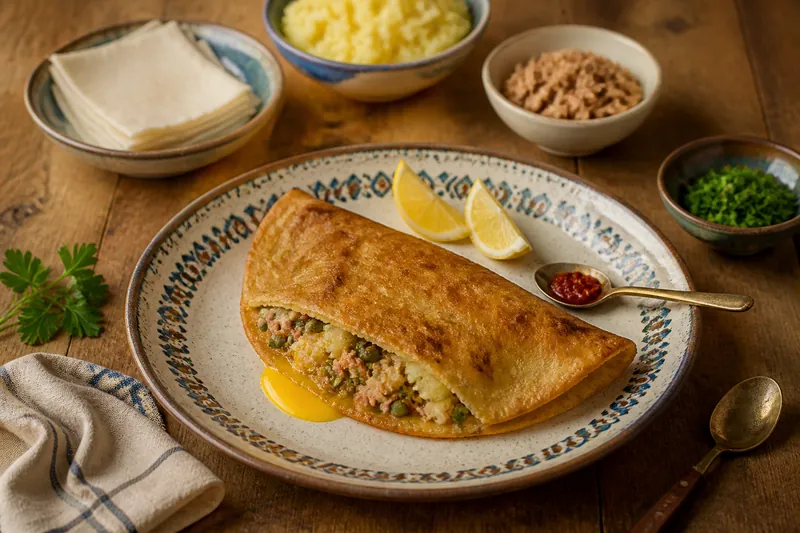
Brik à l’œufTunisianOpen the recipe →Brik à l’œuf is one of Tunisia’s most familiar starters: a thin pastry folded around an egg, often with tuna, parsley, and capers. The appeal is plain enough. The wrapper fries to a delicate crackle while the yolk stays runny, so every bite shifts between brittle and soft. It is sharp, salty, and rich without being heavy. Cook it in hot oil and serve it at once, because the pastry loses its edge quickly. The main thing to watch is the egg; once it goes in, the brik needs only a brief fry.
A soup for cooler days
 Chorba FrikTunisianOpen the recipe →
Chorba Frik is a tomato-based soup thickened with frik, or cracked green wheat, and usually finished with meat, chickpeas, and herbs. It tastes warm, tangy, and gently spiced, with the wheat giving the broth body and a slight chew. It is common at Ramadan tables, but it works just as well as an everyday supper. What makes it worth cooking is the depth it gets from a simple pot of simmered ingredients. A cook should know that frik thickens as it stands, so the soup is best judged while still hot.
The sandwich with a fried crust
 Fricassé tunisienTunisianOpen the recipe →
Fricassé tunisien is a fried yeast dough sandwich filled with tuna, potato, harissa, olives, egg, and sometimes salad. The dough is soft inside and lightly crisp outside, with a gentle sweetness that offsets the salty filling. It is sold as street food, but it is also a home snack, especially when there are leftovers to use up. It is worth making for the contrast alone: hot bread, cool fillings, and a clean hit of heat from harissa. The dough needs time to rise, so plan ahead and keep the filling ready before frying.
Tunisian doughnuts, simply fried
 BambalouniTunisianOpen the recipe →
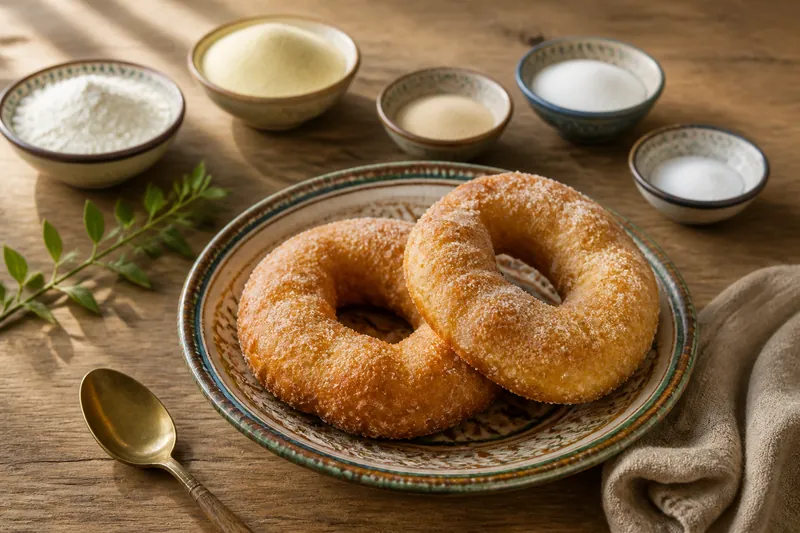
Bambalouni are ring-shaped fried doughs, dusted with sugar and eaten while still warm. They are airy rather than dense, with a pale, tender crumb and a faint yeast flavor that makes them easy to keep eating. You find them at seaside stalls and bakeries, where they are made to order and handed over in paper. Their value lies in their simplicity: flour, yeast, water, oil, sugar. The dough needs a long rest to develop the right lightness, and the oil must be hot enough to brown the outside without greasing the inside.
Flatbread turned street snack
 Chapati tunisienTunisianOpen the recipe →
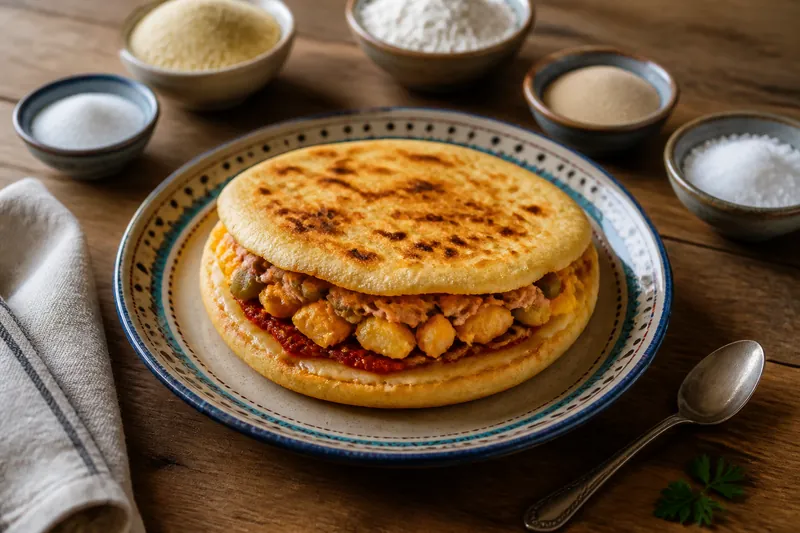
Chapati tunisien is a layered flatbread sandwich filled with tuna, egg, potatoes, herbs, and sauce, then pressed and griddled. It is soft, filling, and a little messy, with the bread soaking up the seasoning while holding the filling together. It is one of the more satisfying Tunisian street foods because it eats like a full meal. What makes it worth cooking is its balance of bread and filling, each one shaped by the other. The dough needs resting, so do not rush that stage if you want the bread to roll thinly and cook evenly.
Couscous with stuffed tripe
 Couscous bel OsbaneTunisianOpen the recipe →
Couscous bel Osbane is a festive, labor-heavy couscous served with stuffed tripe and a rich sauce. It is deeply savory, aromatic with spices, and built for long cooking, so the flavors settle into each other rather than standing apart. This is not an everyday tray; it belongs to occasions when the cook can take time over each element. The couscous itself gives the dish its grainy lightness, while the tripe and stuffing add depth and richness. A cook should know that cleanliness and slow simmering matter here, because both texture and flavor depend on care.
Small hand-cut pasta in sauce
 HlalemTunisianOpen the recipe →
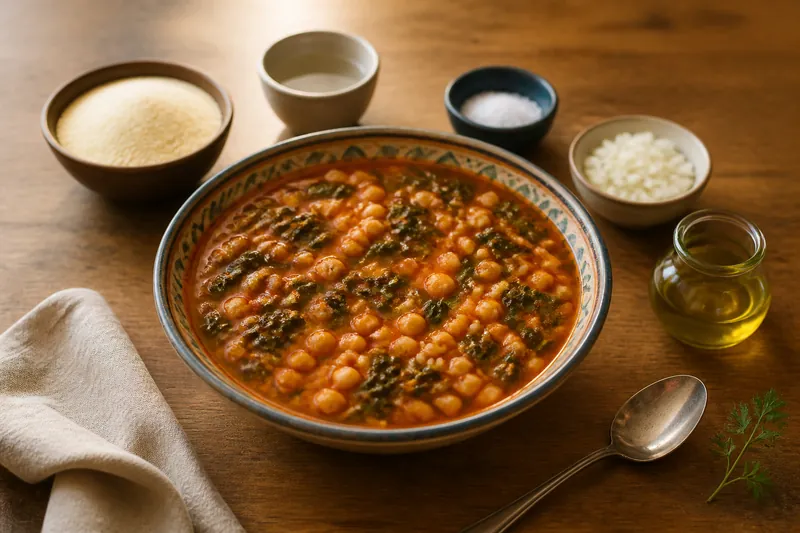
Hlalem are tiny strips of hand-cut dough cooked in a tomato-based sauce, often with chickpeas and meat. They are humble, filling, and comforting, with the pasta absorbing the broth until it becomes soft and substantial. The texture is part of the pleasure: small pieces of dough, not quite noodles, that thicken the sauce as they cook. It is the sort of dish that rewards patience more than technique. The dough should be rolled thin and cut evenly, because uneven pieces will cook at different speeds and leave some too firm and others too soft.
A slow-cooked dish with deep flavor
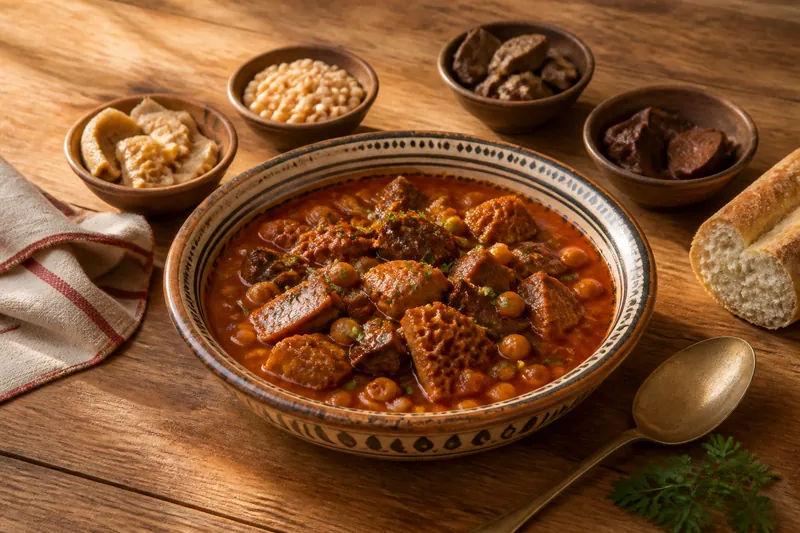 AkodTunisianOpen the recipe →
Akod is a long-cooked Tunisian dish that develops its character through time rather than speed. It is substantial, savory, and built for patient simmering, with a finished flavor that feels rounded and concentrated. The long cook is part of what makes it worth making: the ingredients soften, the sauce thickens, and the dish takes on a steady richness. It is the kind of food that asks for attention at the beginning and little else afterward. A cook should know not to crowd the pot or rush the heat, because a gentle simmer gives the best result.
The pine seed dessert of memory
 Assidat ZgougouTunisianOpen the recipe →
Assidat Zgougou is a pudding made from ground Aleppo pine seeds, milk, sugar, and starch, usually topped with cream, nuts, or dried fruit. It is soft, nutty, and lightly sweet, with a flavor that is unlike any other Tunisian dessert. It is especially associated with celebrations and remembrance, which gives it a place well beyond simple dessert. What makes it worth cooking is its texture, somewhere between custard and porridge, and its distinct pine-seed flavor. The seeds must be ground and strained well, because their fine texture determines whether the pudding feels smooth or grainy.
Ring cookies for special tables
 Kaak WarkaTunisianOpen the recipe →
Kaak Warka are ring-shaped Tunisian pastries made with a delicate dough and a fragrant almond filling. They are crisp, pale, and scented with orange blossom or rose water, with a restrained sweetness that makes them feel formal rather than heavy. They are often served with tea and appear at weddings and holidays. Their appeal lies in the contrast between the tender pastry and the dense nut filling. A cook should know that the dough is fragile and needs careful handling, especially when shaping the rings and sealing them so they keep their form in the oven.
These dishes show how Tunisian food moves between street corners and ceremony, between crisp pastry and slow stew. Some are quick, some demand time, but each depends on clear seasoning and careful handling. Together they give a useful first map of the cuisine.