Thai Cooking’s Best-Known Dishes, From Curry to Salad
These are the Thai dishes most cooks meet first, each with a clear balance of salt, sour, sweet, heat, and herbs.
Thai cooking is known for putting sharp, fresh, and deeply savory flavors in the same bowl. The most familiar dishes range from quick stir-fries to slow braises, but they share the same habit of balancing fish sauce, lime, chiles, coconut, and herbs.
These recipes are also practical. Some come together in minutes, while others ask for a long simmer or a long soak. Taken together, they show how Thai food can be bright, rich, smoky, and sweet without losing its directness.
The stir-fried noodle dish most people know first
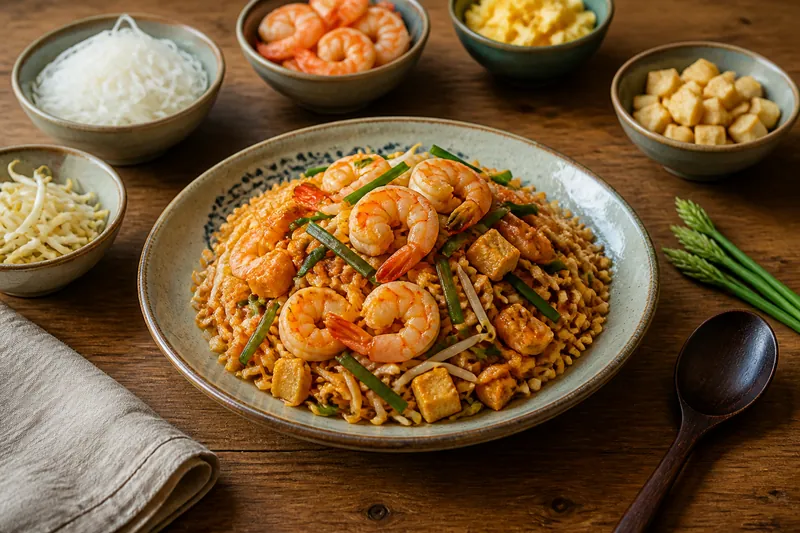
Classic Pad Thai with ShrimpThaiOpen the recipe →Pad Thai is a stir-fry of rice noodles with shrimp, egg, tofu or beansprouts, tamarind, fish sauce, and palm sugar. The taste should move between sweet, sour, and salty, with a little char from the wok. It is worth cooking because the dish is fast, complete, and satisfying without being heavy. The key thing to know is that the noodles need careful handling: soak or cook them just until pliable, then finish them in the pan so they absorb the sauce without turning soft.
Sharp, hot soup with a clean seafood edge
 Tom Yum Goong (Spicy Shrimp Soup)ThaiOpen the recipe →
Tom Yum Goong is a hot-and-sour shrimp soup scented with lemongrass, galangal, makrut lime leaves, chiles, lime juice, and fish sauce. It tastes bright first, then fiery, then deeply savory. Shrimp keep it light, while the broth carries a strong herbal perfume. It is worth making because it shows Thai seasoning at full clarity, with little to hide behind. A cook should know not to overcook the shrimp; they only need a brief simmer at the end so they stay tender.
A raw salad that depends on pounding and balance
 Som Tum (Green Papaya Salad)ThaiOpen the recipe →
Som Tum is a salad of shredded green papaya tossed with garlic, chiles, lime juice, fish sauce, palm sugar, tomatoes, and often long beans or peanuts. It is crisp, sour, salty, and hot, with a clean crunch that makes it especially refreshing. It is worth cooking because there is no actual cooking, only handling the ingredients well. The main thing to know is that the green papaya must be firm and properly shredded; if it is soft or ripe, the salad loses the texture that makes it work.
Coconut curry with a bright herbal burn
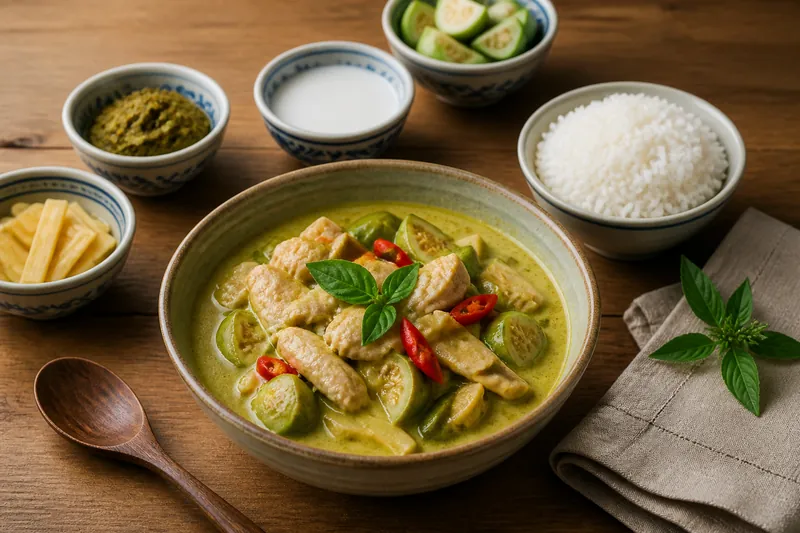 Thai Green Curry with ChickenThaiOpen the recipe →
Thai Green Curry with Chicken is built from green curry paste, coconut milk, chicken, fish sauce, palm sugar, basil, and vegetables. It tastes creamy, fragrant, and sharply green, with chiles and herbs giving it lift rather than blunt heat. It is worth cooking because it gives a full meal in one pot and shows how Thai curries can be rich without feeling flat. A cook should know to fry the curry paste in the coconut cream first, so the spices open up before the rest of the liquid goes in.
A slow beef curry with warm spice and depth
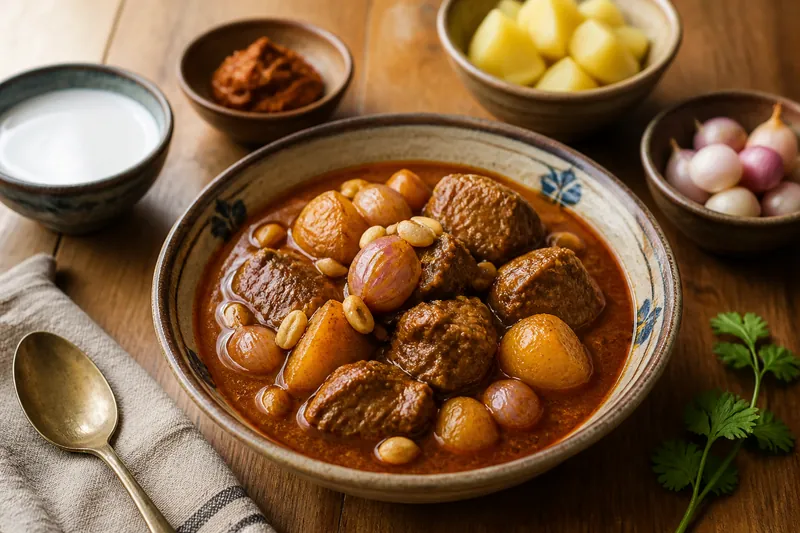 Gaeng Massaman NueaThaiOpen the recipe →
Gaeng Massaman Nuea is a mild, slowly cooked beef curry with coconut milk, potatoes, onions, peanuts, and a spice paste shaped by cinnamon, cardamom, cloves, and cumin. It tastes round, fragrant, and gently sweet, with less heat than many Thai curries but plenty of depth. It is worth cooking because long simmering turns the beef supple and the sauce thick and layered. The thing to know is that time matters here: the curry should cook long enough for the beef to soften and the spices to settle into the sauce.
Northern-style pork curry with ginger and spice
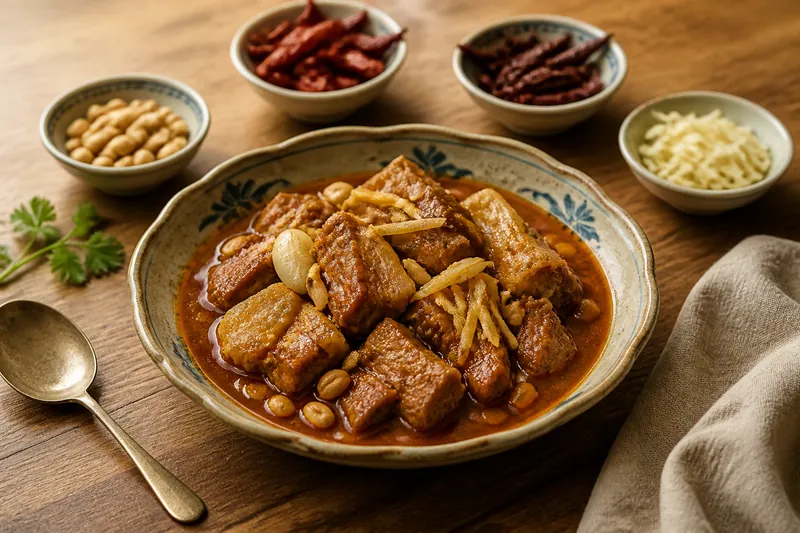 Gaeng Hung LayThaiOpen the recipe →
Gaeng Hung Lay is a pork curry from northern Thailand, made with a spice paste, garlic, ginger, tamarind, soy sauce, and often peanuts or preserved seasonings. It is less coconut-rich than many Thai curries and leans toward a dark, tangy, aromatic sauce. The flavor is deep rather than hot, with the ginger and tamarind standing out. It is worth cooking because slow braising gives pork belly or shoulder a soft, almost silky texture. One thing to know is that it improves as it simmers, so do not rush the reduction.
A sour fish curry built for brightness
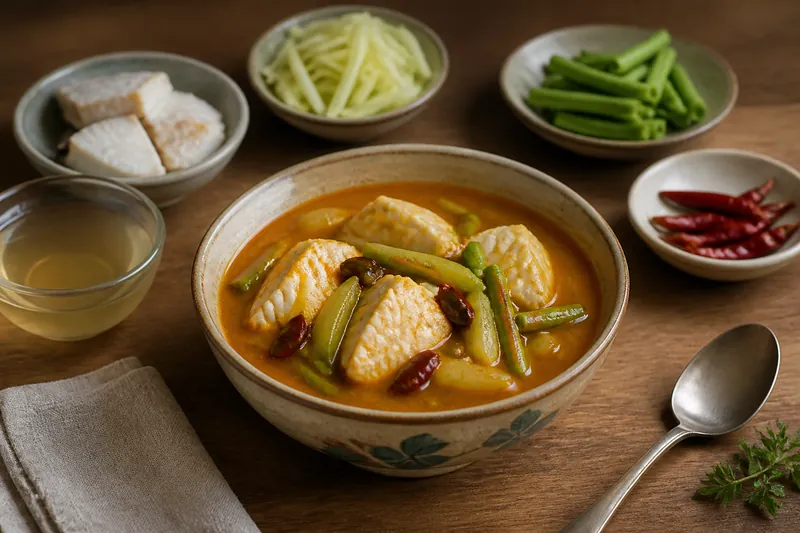 Gaeng Som PlaThaiOpen the recipe →
Gaeng Som Pla is a sour Thai curry with fish, vegetables, chiles, and a sharp tamarind-based broth. Unlike coconut curries, it is light, acidic, and direct, with heat and sourness leading the way. It is worth cooking because it shows another side of Thai food: lean, brisk, and very fresh-tasting. The important thing to know is that the fish and vegetables should be cooked just long enough to be tender; too much simmering dulls the clean sour edge that defines the dish.
Grilled chicken with smoke, garlic, and lemongrass
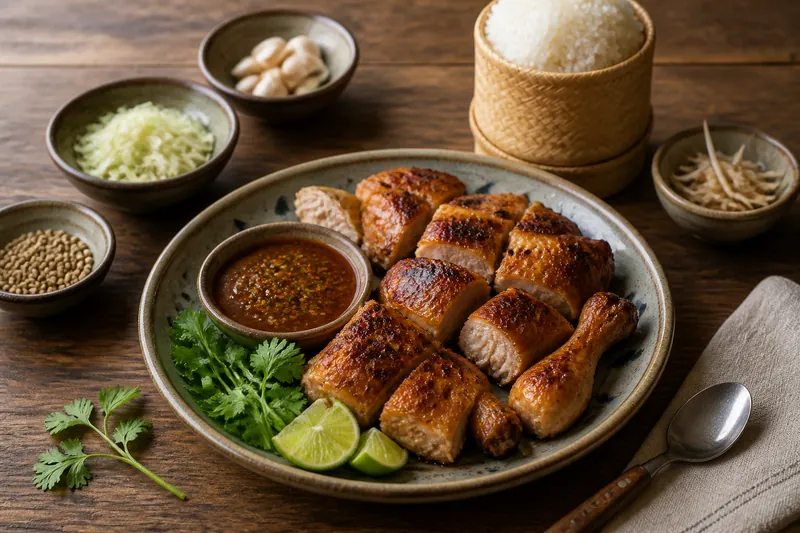 Gai YangThaiOpen the recipe →
Gai Yang is Thai grilled chicken, usually marinated with garlic, coriander root, fish sauce, soy sauce, sugar, and pepper before being grilled until the skin is bronzed and the meat juicy. It tastes savory, gently sweet, and smoky, with a marinade that seeps into the flesh. It is worth cooking because the method is straightforward but rewards patience with real depth. The main thing to know is the marinating time: the chicken needs hours in the seasoning, not minutes, if you want flavor all the way through.
Sweet rice and ripe fruit, kept simple
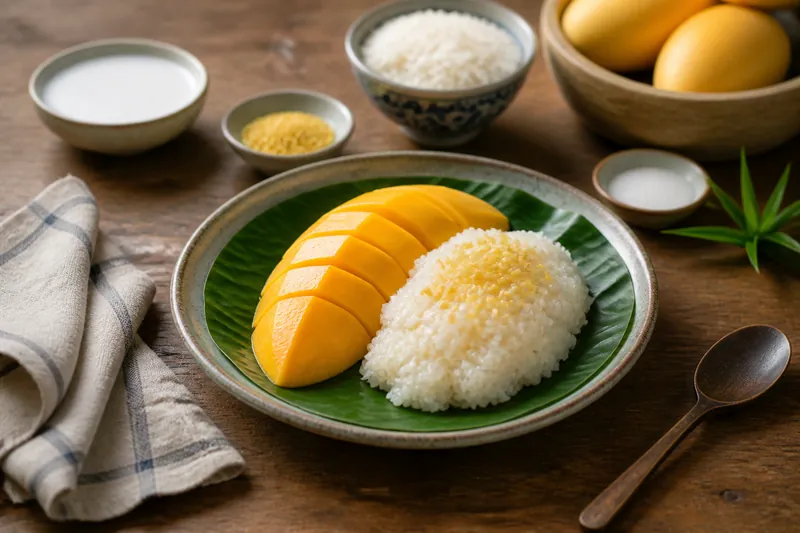 Mango Sticky RiceThaiOpen the recipe →
Mango Sticky Rice is a dessert of glutinous rice with coconut milk, sugar, salt, and ripe mango. It tastes soft, creamy, and fragrant, with the fruit giving acidity and perfume to the rich rice. It is worth cooking because it is simple but exacting, and when the rice and mango are both right, the contrast is excellent. A cook should know that the rice needs time to soak and steam properly; undercooked sticky rice ruins the texture, so this is not a dessert to hurry.
Steamed fish custard in leaf cups
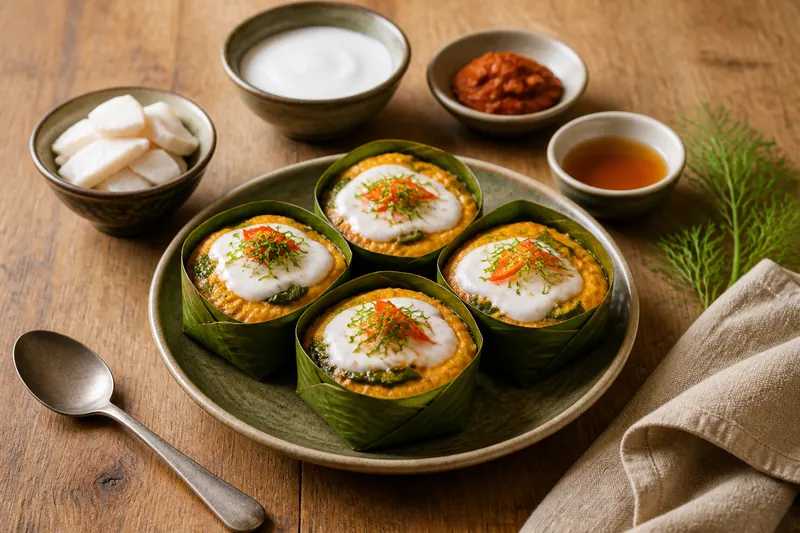 Hor Mok PlaThaiOpen the recipe →
Hor Mok Pla is a steamed fish custard made with fish, coconut milk, red curry paste, egg, and aromatics, often cooked in banana leaves or little containers. The taste is delicate but rich, with the curry paste giving warmth and the coconut milk making the custard soft. It is worth cooking because it has a fine, almost mousse-like texture and a clean fish flavor. The main thing to know is not to overmix or overcook it; the custard should set gently so it stays tender rather than rubbery.
These dishes give a fair picture of Thai cooking: sharp, herbal, sweet, salty, and often all at once. Some are fast enough for a weeknight, others need patience, but each shows the same discipline in seasoning and balance.