Spain’s Most Famous Dishes, From Broth to Dessert
A guided tour of ten Spanish dishes that define the country’s cooking, from humble tapas to slow braises and almond-scented sweets.

Spanish cooking is not one thing. It moves from seaside frying pans to long simmered stews, from bar snacks to desserts with a hard sugar crust.
These are the dishes most people meet first, and they still say a great deal about the country: thrift, patience, heat, and a clear sense of season.
Rice cooked in the taste of the sea
Arroz a bandaSpanishOpen the recipe →Arroz a banda is a rice dish built on fish stock, often with the broth served first and the rice after, though the two are usually eaten together now. The flavour is clean and marine, with garlic, paprika, and the concentrated taste of the stock doing most of the work. It is worth cooking because it shows how Spanish rice can be deeply savoury without being heavy. The key point is the stock: make it good, and keep an eye on the rice so it stays separate and tender, not wet.
Salt cod in an emulsion of its own juices
 Bacalao al pil pilSpanishOpen the recipe →
Bacalao al pil pil is a Basque classic made from salt cod, olive oil, garlic, and dried chilli. As the cod cooks gently, its gelatin helps form a thick, glossy sauce that tastes rich without cream. The result is delicate, oily, and deeply savoury, with the salt cod softened into something almost buttery. It is worth making for the texture alone. Before starting, the cod must be properly desalted, and the heat kept low; too much heat can break the emulsion and leave the sauce greasy.
The simplest fried squid sandwich
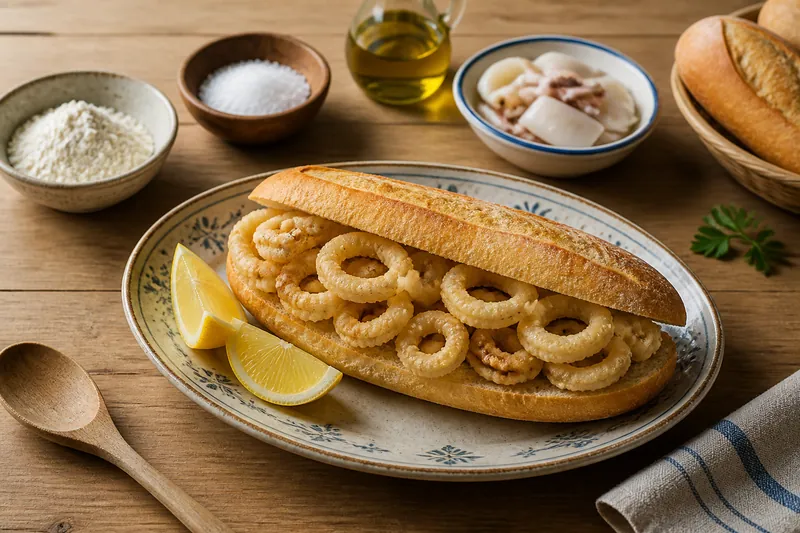 Bocadillo de calamaresSpanishOpen the recipe →
Bocadillo de calamares is a Madrid bar sandwich of fried squid in crusty bread, usually with little more than a squeeze of lemon or a dab of mayonnaise. It tastes of crisp batter, sweet squid, and warm bread, which is why it has lasted as a cheap, direct pleasure rather than a refinement. It is worth cooking because it asks for very little and delivers exactly what it promises. The main thing to know is that the squid must be fried quickly and drained well, so the coating stays crisp.
A slow stew of tripe and chorizo
 Callos a la madrileñaSpanishOpen the recipe →
Callos a la madrileña is a Madrid stew of tripe, chorizo, and sometimes morcilla, cooked until the broth turns thick and deeply seasoned. The flavour is bold, slightly smoky, and full of paprika and meat stock. It is one of the great examples of Spanish nose-to-tail cooking, and worth the time because long cooking transforms an ingredient many people overlook. The cook should know that this is not a quick dish; the tripe needs time to soften fully, and the stew benefits from rest before serving.
Charred spring onions with nutty sauce
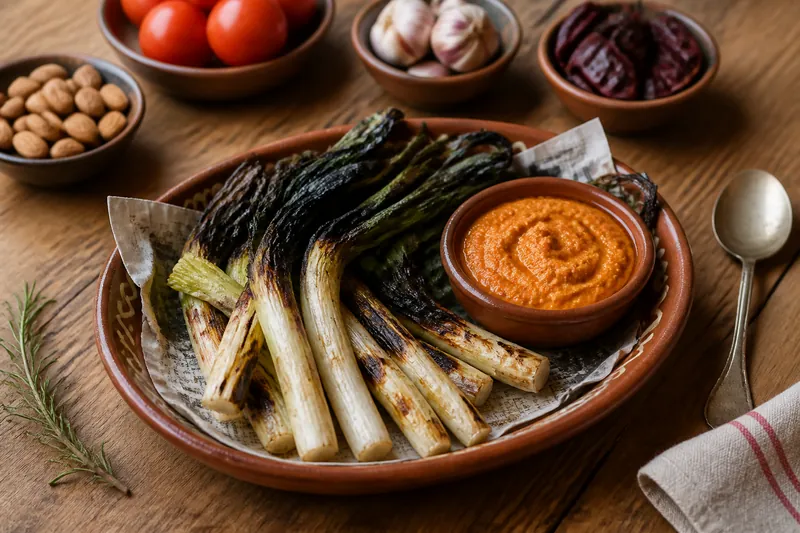 Calçots con salsa romescoSpanishOpen the recipe →
Calçots con salsa romesco is a Catalan dish of long spring onions grilled until blackened, then peeled and dipped into romesco, a red sauce made with nuts, peppers, garlic, and oil. The taste is smoky, sweet, and earthy, with the sauce giving richness and a little sharpness. It is worth cooking for the contrast of charred vegetables and silky sauce, and because it captures a very specific regional way of eating. The main thing to know is that calçots are messy by design; the outer layers are discarded before the tender centre is eaten.
Fried dough with thick hot chocolate
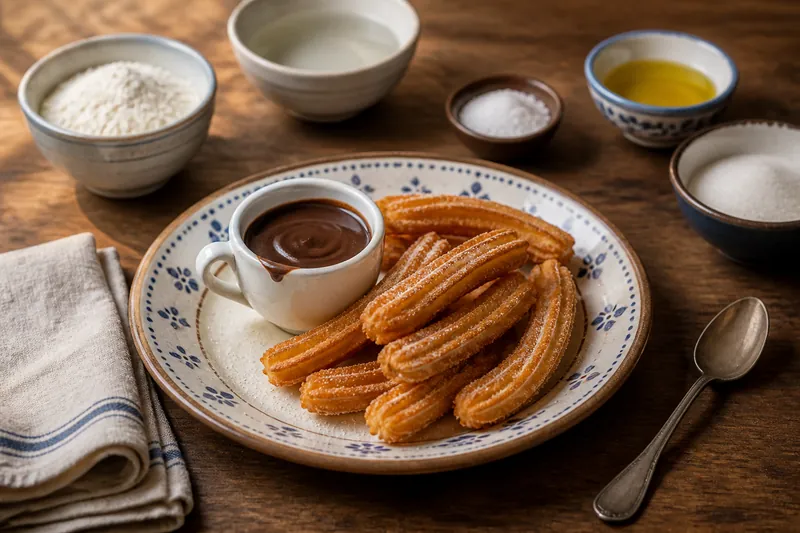 Churros con ChocolateSpanishOpen the recipe →
Churros con Chocolate is a breakfast or late-night staple: long ridged strips of fried dough served with dense, almost pudding-like hot chocolate for dipping. The churros should be crisp outside and light within, while the chocolate is bitter enough to balance the sugar. It is worth making because it is simple comfort with a sharp edge, not just sweetness. One thing to know before starting is that the dough must be piped or shaped carefully and fried at the right temperature, so the outside browns without leaving the centre greasy.
Roast suckling pig with brittle skin
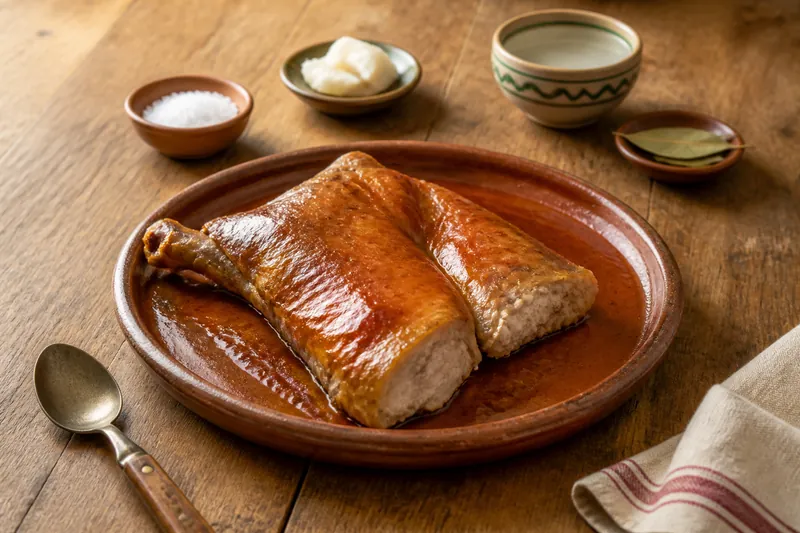 Cochinillo asadoSpanishOpen the recipe →
Cochinillo asado is one of Spain’s great celebratory roasts, especially associated with Castile. It is usually seasoned simply and roasted until the meat is tender and the skin crackles into a brittle crust. The flavour is clean, milky, and rich, with the skin giving the dish its appeal. It is worth cooking because it shows how much can be achieved with good meat and careful roasting rather than a long list of ingredients. The important thing is to manage heat and moisture so the skin finishes crisp while the meat stays juicy.
Madrid’s classic three-part stew
 Cocido madrileñoSpanishOpen the recipe →
Cocido madrileño is a chickpea stew built with meat, vegetables, and sometimes noodles, traditionally served in stages: broth first, then chickpeas and vegetables, then the meats. It tastes deep, comforting, and quietly complex, with the chickpeas carrying the flavour of the pot. It is worth cooking because it is both practical and generous, making a meal that feeds a table properly. The cook should know that the soaking time matters; dried chickpeas need it for even cooking, and the broth improves if nothing is rushed.
Custard with a crackling sugar top
 Crema catalanaSpanishOpen the recipe →
Crema catalana is a set custard flavoured with citrus peel and cinnamon, then finished with a layer of caramelised sugar. It is lighter than many cream desserts, with a clean dairy flavour and a brittle top that gives way under a spoon. It is worth cooking because it balances softness and crackle so well, and because the flavours are restrained rather than heavy. One thing to know is that the custard must be fully chilled before the sugar is burnt on top; otherwise the surface will not stay crisp.
Crisp shells, soft ham filling
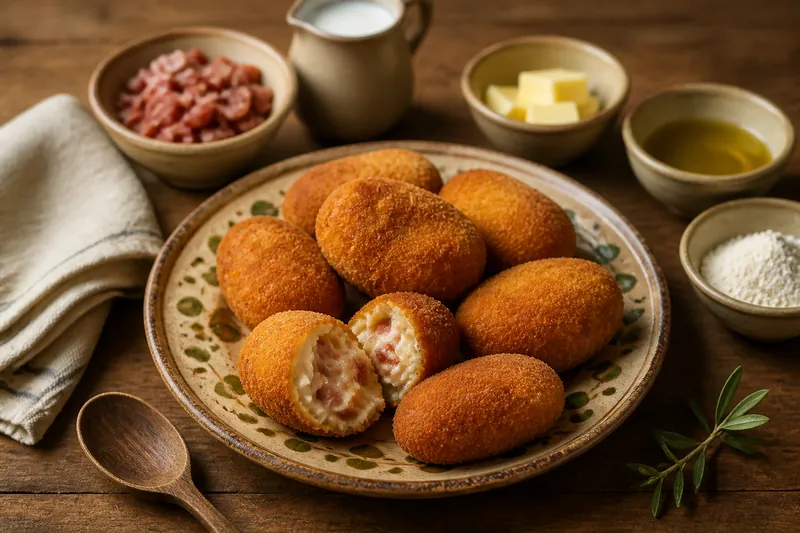 Croquetas de jamónSpanishOpen the recipe →
Croquetas de jamón are small fried croquettes with a béchamel base enriched with ham, then breaded and fried until golden. Inside, they are soft, almost creamy; outside, they should be crisp and light. Their appeal lies in that contrast, and in how well they turn leftovers and cured ham into something elegant. They are worth cooking because they are among the most useful Spanish snacks, but they do take patience. The filling must chill thoroughly before shaping, or the croquetas will be hard to form and likely split in the fryer.
Taken together, these dishes show the range of Spanish cooking: brothy rice, fried seafood, custards, stews, and roast meat. Some are everyday food, others are for Sundays or festivals, but each depends on clear flavour and careful timing rather than complication.