The Palestinian Dishes Worth Knowing and Cooking
From bread and stuffed leaves to slow-cooked stews and syrup-soaked pastry, these are the Palestinian dishes cooks return to most.
Palestinian cooking is built on restraint, good olive oil, fresh herbs, tangy dairy, and long-cooked comfort. The best-known dishes are not showpieces for their own sake; they are dishes that travel well across home kitchens, seasonal markets, and family tables.
Some are everyday food, some are for gatherings, and some are tied to place as closely as to method. Taken together, they show how Palestinian cooking balances brightness, richness, and patience.
The anchor dish
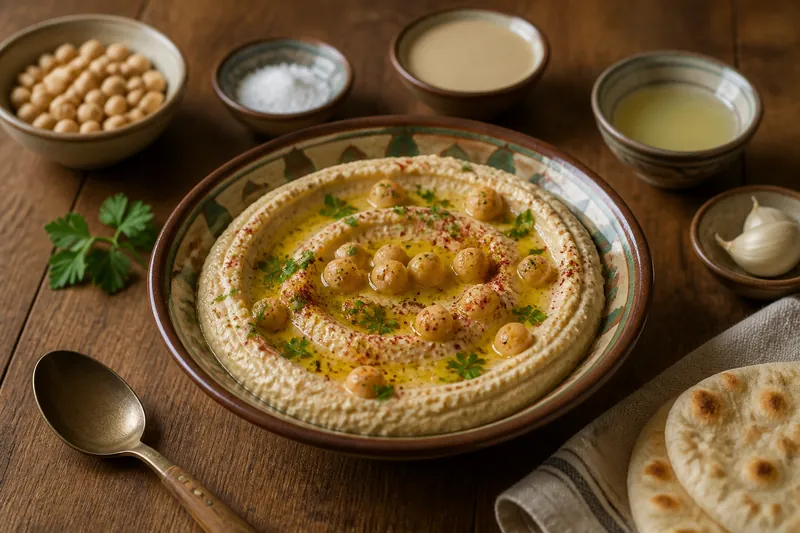
HummusPalestinianOpen the recipe →Hummus is the dish many people meet first, but the Palestinian version is worth knowing on its own terms: smooth, nutty, and clean in flavor, with tahini giving it depth rather than heaviness. Served warm or at room temperature, it is usually finished with olive oil, sometimes cumin, and perhaps a little parsley or chickpeas. It works as breakfast, mezze, or a side with bread and pickles. Before starting, soak the chickpeas well and cook them until they are truly soft; a silky texture depends on that first long step.
Hummus turned into a meal
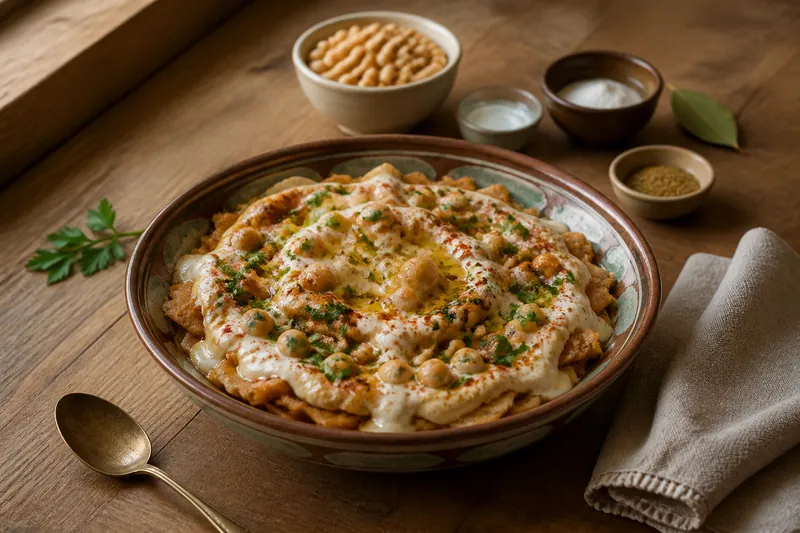 Fattet HummusPalestinianOpen the recipe →
Fattet hummus takes chickpeas, bread, yogurt, and tahini and layers them into a dish that is both sharp and comforting. The warm chickpeas and toasted bread soften under the yogurt sauce, while tahini and lemon keep the flavors bright. It is often served for breakfast or a large lunch, especially when there is a crowd. The appeal is in the contrast of textures: crisp bread, tender chickpeas, creamy sauce. Cook the chickpeas until very soft and assemble just before serving so the bread keeps some structure.
Bread for the table, and before it
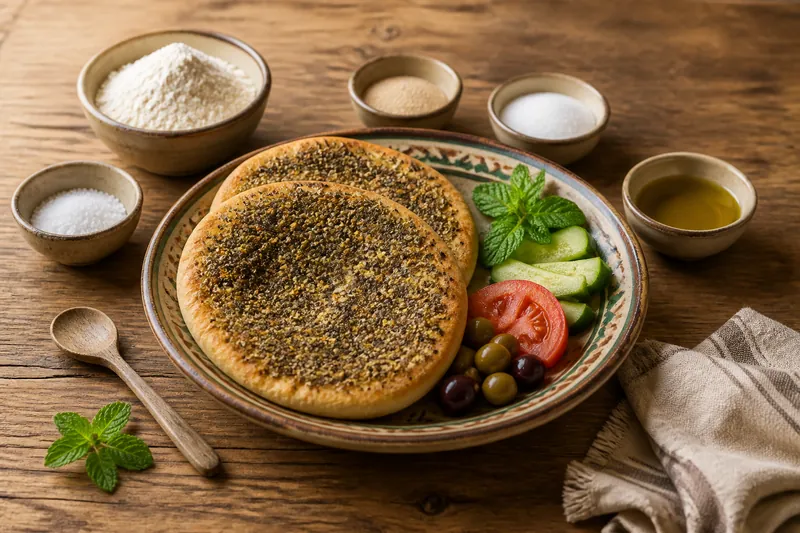 Manaqish Za'atarPalestinianOpen the recipe →
Manaqish za'atar is a flatbread spread with olive oil and za'atar, then baked until the dough is lightly blistered and the herbs smell fragrant. It is simple food, but not plain food: the sesame, thyme, sumac, and oil make each bite sharp, savory, and warm. It is often eaten at breakfast, folded and torn while still hot. What matters most is the dough, which should be relaxed and soft enough to stretch thinly without tearing. Bake it on a hot surface so the edges brown quickly.
Crisp bread, spiced meat
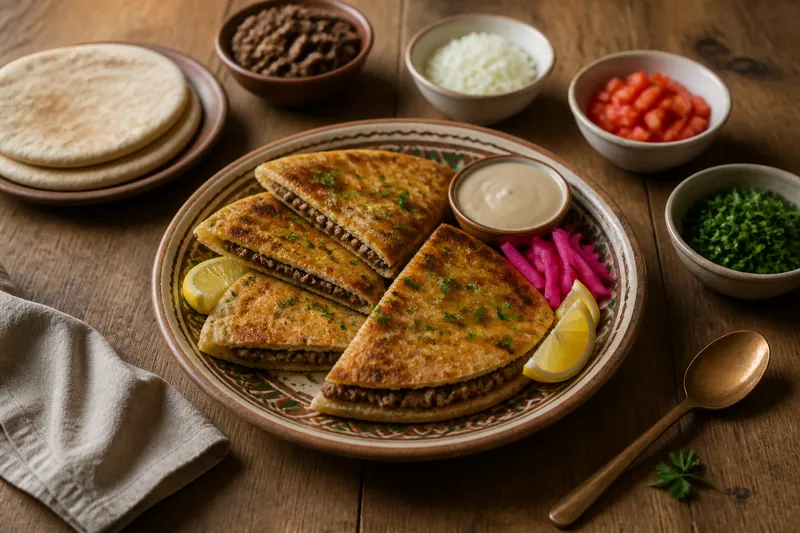 ArayesPalestinianOpen the recipe →
Arayes are pita breads filled with seasoned minced meat, then grilled or baked until the bread crisps and the filling cooks through. The result is simple and satisfying: crunchy outside, juicy inside, with cumin, onion, and herbs running through the meat. They are often served with salad, tahini, or yogurt, and they make a strong case for modest ingredients handled well. The key is not to overfill the bread; too much meat prevents even cooking and leaves the center heavy. Press the pitas flat before cooking so they brown evenly.
Meat in a tahini sauce
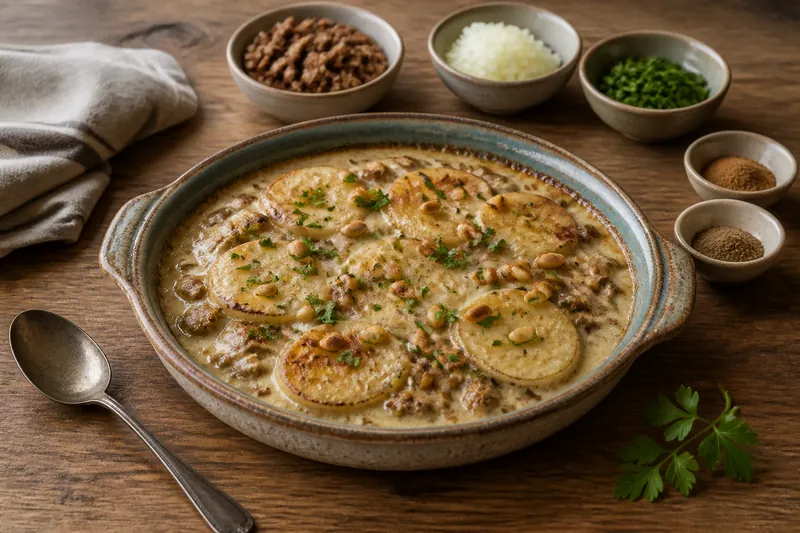 Kafta bil TahiniPalestinianOpen the recipe →
Kafta bil tahini is a baked dish of spiced meat patties or logs in a sesame sauce that turns creamy as it cooks. The flavor is rich but controlled: tahini brings nuttiness, lemon cuts through it, and the kafta gives the dish its savory core. It is a good dish for a family meal because it is hearty without being complicated at the table. A cook should know that tahini can seize if mixed badly; whisk it with water and lemon gradually until smooth before pouring it over the meat.
Okra in a gentle stew
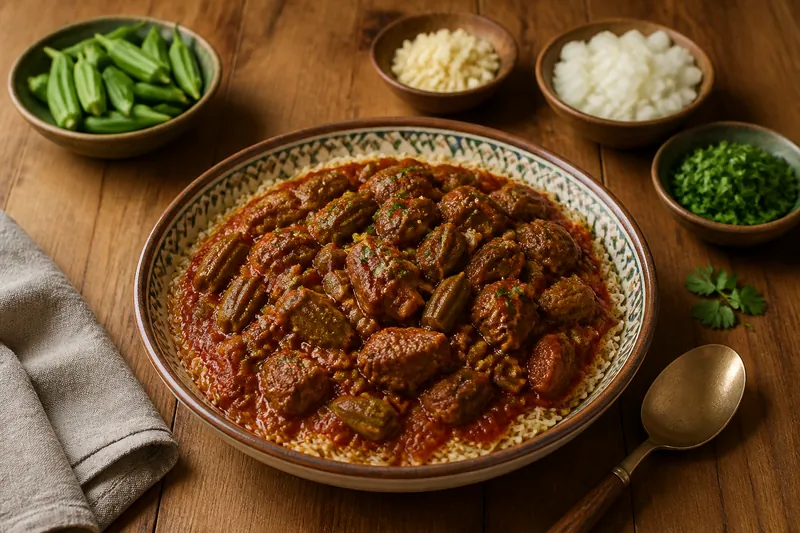 BamyehPalestinianOpen the recipe →
Bamyeh is an okra stew, often cooked with meat and tomatoes, until the sauce turns soft and savory and the okra loses any trace of harshness. Done well, it tastes rounded and slightly tangy, with the vegetables holding their shape inside the broth. It is the kind of dish that benefits from slow cooking and from being served with rice or bread to catch the sauce. The main thing to watch is the okra itself: it should be dried well before cooking, so it browns instead of turning slippery too quickly.
Green beans and meat, cooked slowly
 Fasolia Khadra Bil LahmehPalestinianOpen the recipe →
Fasolia khadra bil lahmeh combines green beans with meat in a tomato-based stew that is steady, homey, and full of depth. The beans take on the flavor of the sauce while keeping a slight bite, and the meat gives the dish a satisfying richness. It is the sort of food that tastes better after time on the stove, when the tomatoes mellow and the beans absorb the stock. Trim the beans neatly and cut them evenly so they cook at the same pace; uneven pieces will break down before the rest are ready.
Cabbage leaves stuffed with rice
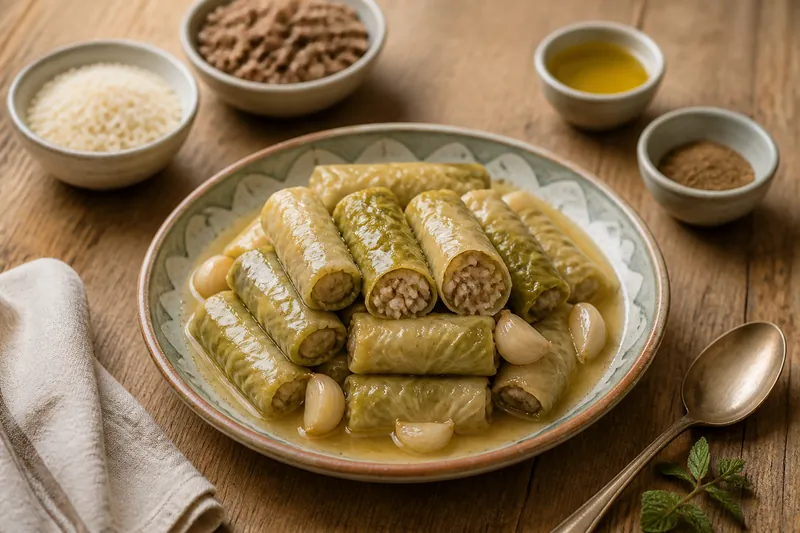 Malfouf MahshiPalestinianOpen the recipe →
Malfouf mahshi is cabbage stuffed with rice, sometimes with meat, rolled tightly and simmered until the leaves soften and the filling is fragrant with tomato, herbs, and spice. It is tidy food in the best sense: each roll is compact, patterned, and substantial. The flavor is mild but deeply satisfying, especially with lemon or a garlicky sauce alongside. Before you begin, blanch the cabbage long enough to make the leaves pliable; if they crack, rolling becomes frustrating and the parcels will not seal cleanly.
Tiny grains, big comfort
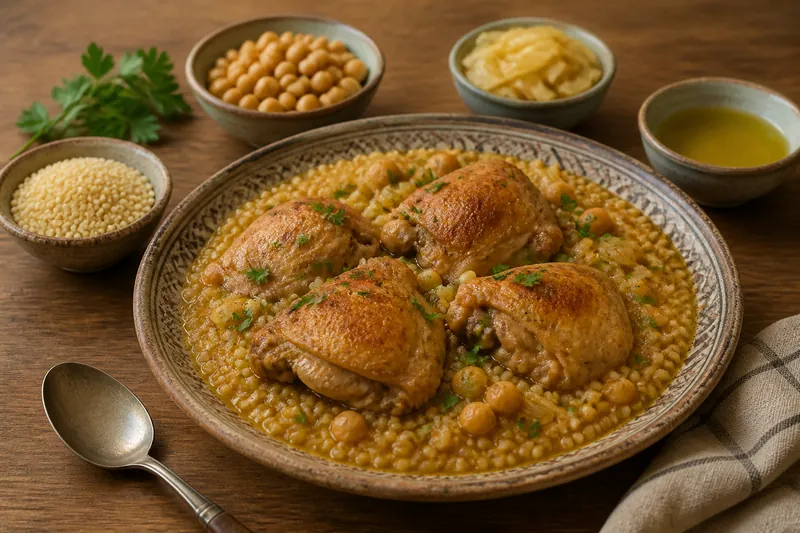 MaftoulPalestinianOpen the recipe →
Maftoul is Palestinian couscous, usually steamed and served with broth, chickpeas, vegetables, and sometimes meat. Its flavor is nutty and earthy, more substantial than standard couscous, with each grain able to hold sauce without collapsing. It is one of the clearest expressions of Palestinian pantry cooking, using simple ingredients to make a complete dish. The important thing is to steam it properly and fluff it between stages; rushed cooking leaves it dense. Give the grains time to absorb the broth so they stay separate but fully seasoned.
The sweet from Nablus
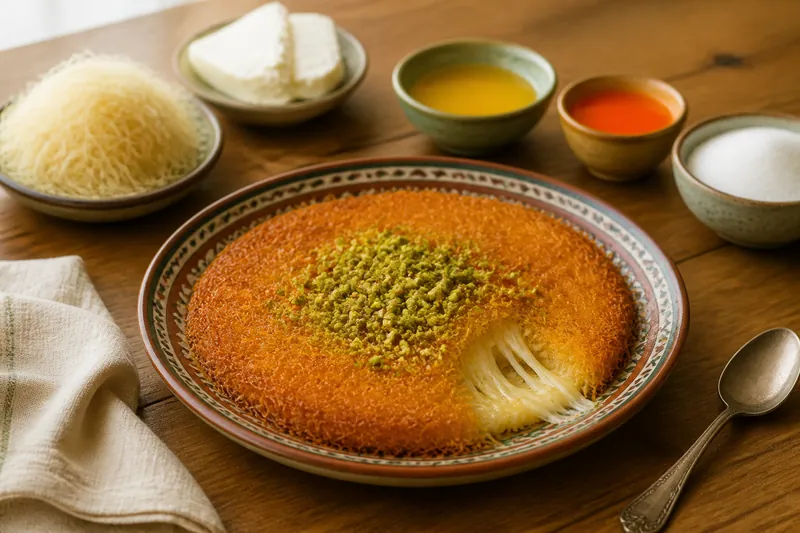 Knafeh NabulsiyehPalestinianOpen the recipe →
Knafeh Nabulsiyeh is a celebrated pastry of shredded or semolina-based dough layered with cheese, baked, then soaked with scented syrup. It is crisp on the outside, soft and stretchy within, and unmistakably sweet without losing its savory edge from the cheese. The version from Nablus is tied to place, but it is now the one most widely recognized. It rewards care and speed: the pastry should be assembled evenly, baked hot, and soaked while still warm. Use a cheese that melts cleanly and does not turn grainy.
These dishes are known because they do different work at the table: some feed a crowd, some start the day, some close it. Together they give a plain view of Palestinian cooking, where bread, grain, vegetables, and dairy are handled with patience and confidence.