Ten Nepali Dishes Worth Cooking First
From rice plates to snacks and fermented sides, these ten Nepali dishes show the range of everyday home cooking and festive food.
Nepali cooking is broad, practical, and deeply local, shaped by rice, lentils, millet, potatoes, yogurt, meat, and fermented sauces. The best-known dishes are not one style of food but a set of habits: warming spice, clean sourness, and a strong sense of balance.
These ten dishes are the ones most often used to understand the cuisine. Some are quick, some need soaking or resting, and several depend on sharp seasoning at the end. Together they give a clear view of how Nepali food is cooked and eaten.
The daily anchor
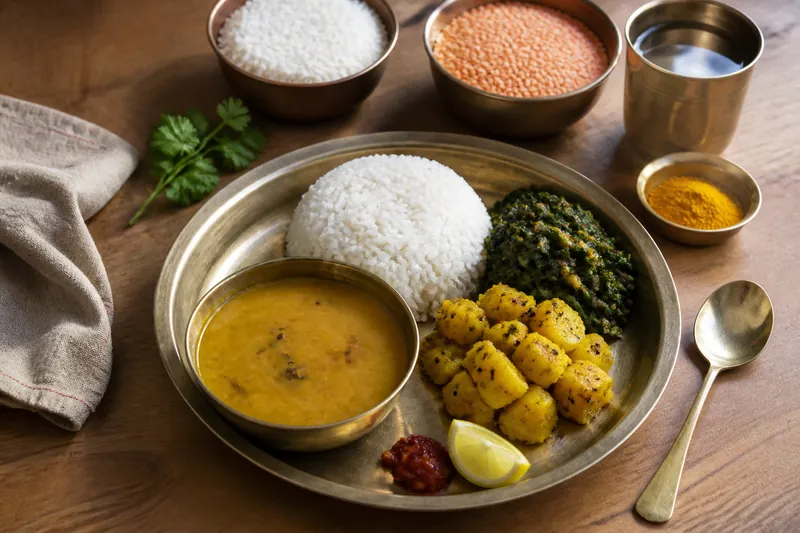
Dal BhatNepaliOpen the recipe →Dal bhat is the most familiar Nepali meal: lentil soup with rice, usually served with vegetables, pickle, and sometimes meat. It tastes clean and comforting, with the lentils carrying cumin, garlic, turmeric, and sometimes ghee. What makes it worth cooking is its balance and flexibility; it can be plain or layered with several sides. The main thing to know is that dal bhat is less a fixed recipe than a meal structure, so seasoning and accompaniments matter as much as the lentils themselves.
Rice crepes with a crisp edge
 ChatamariNepaliOpen the recipe →
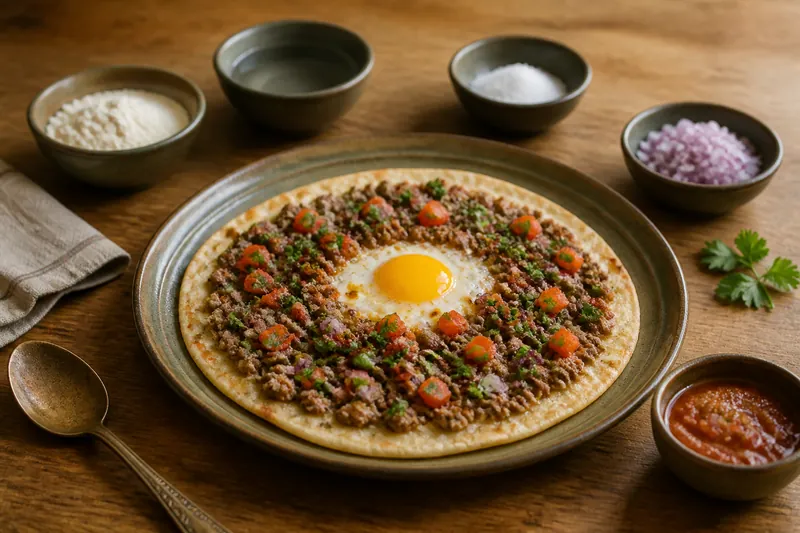
Chatamari is often described as a Nepali rice crepe, but it eats more like a thin, crisp-edged flatbread topped with seasoned meat, egg, or vegetables. The base is mild and lightly nutty, with a texture that can be soft in the center and browned at the edges. It is worth cooking because it shows how Nepali food handles rice in forms beyond a bowl. The key point is batter thickness: too thick and it turns heavy; too thin and it loses the structure that makes it special.
Smoky meat with sharp seasoning
 Buff ChoilaNepaliOpen the recipe →
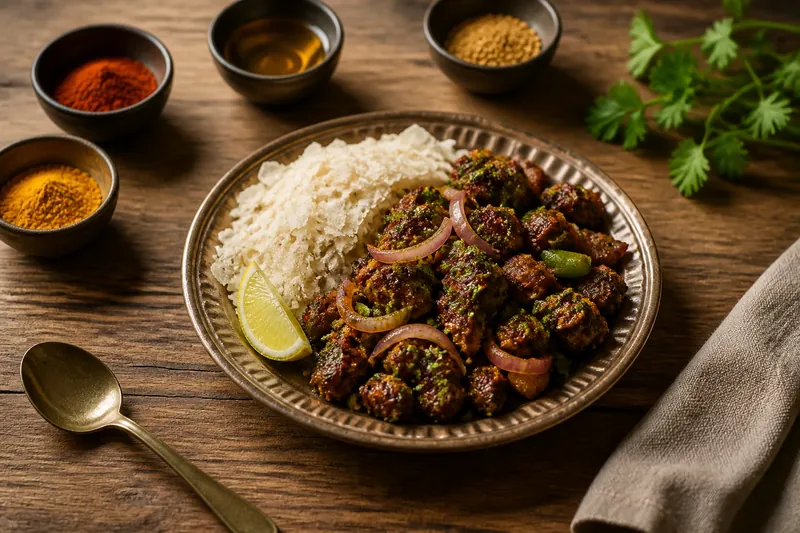
Buff choila is a grilled or charred buffalo meat dish dressed with mustard oil, chilies, ginger, garlic, and spices. It has a deep smoky flavor, with heat and sharpness cutting through the richness of the meat. It is worth cooking for its directness; there is little to hide behind, so every seasoning note comes through clearly. A cook should know that the meat must be cooked until well browned and then tossed while still hot, so it takes on the dressing rather than sitting under it.
Seasoned potatoes, Nepali style
 Aloo SadekoNepaliOpen the recipe →
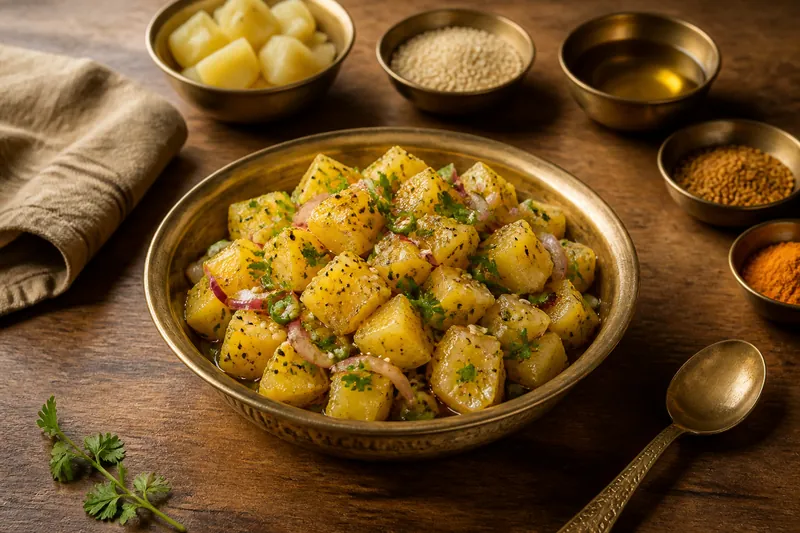
Aloo sadeko is a potato dish tossed with spices, herbs, onion, and usually mustard oil for a bright, pungent finish. It tastes earthy, hot, and slightly sour, depending on the seasoning used. What makes it worth cooking is how quickly it turns simple boiled potatoes into a dish with real character. The main thing to know is that the potatoes should be cooked until just tender, not falling apart, so they can hold the seasoning without turning pasty.
Potato and bamboo shoot curry
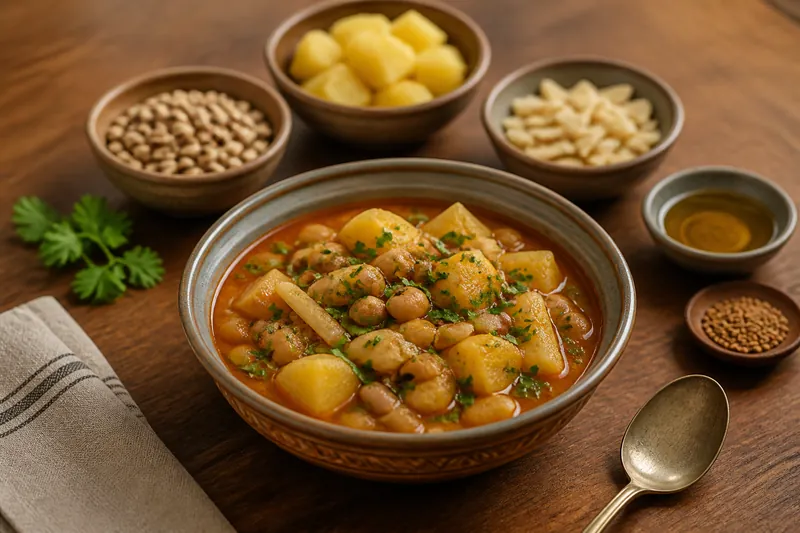 Aloo TamaNepaliOpen the recipe →
Aloo tama is a sour, brothy curry made with potatoes and fermented bamboo shoots. The flavor is distinctive: earthy from the potato, tangy from the tama, and rounded by spices that often include cumin, turmeric, and chili. It is worth cooking because the fermentation gives the dish a depth that fresh ingredients alone cannot create. A cook should know that the bamboo shoots bring the main flavor, so they need to be properly rinsed and simmered long enough for the sourness to soften into the broth.
Potato salad with yogurt tang
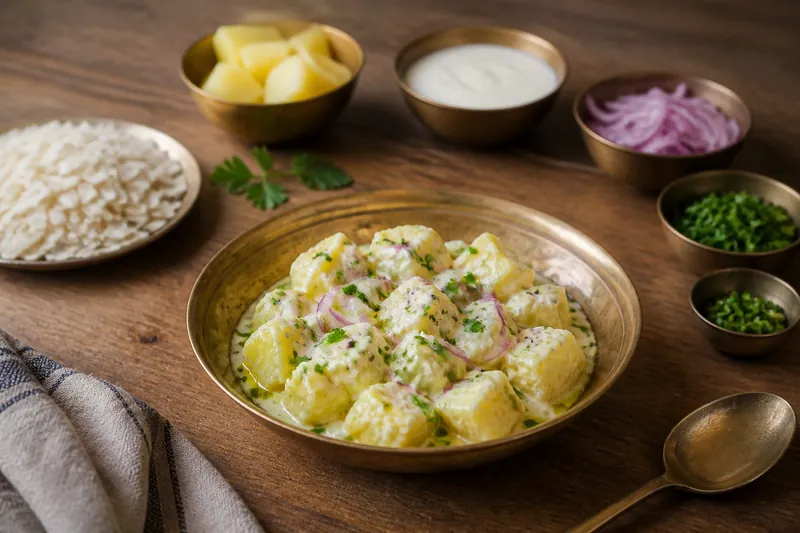 ChukauniNepaliOpen the recipe →
Chukauni is a potato salad from western Nepal, usually mixed with yogurt, onions, chilies, and spices. It tastes cool and tangy, with enough heat and salt to keep it from feeling plain. It is worth cooking because it is simple but not mild; the yogurt gives body while the seasoning keeps the dish lively. A cook should know that the potatoes must be cooled before mixing, or the yogurt can split and the texture will turn loose instead of creamy.
A staple made by stirring
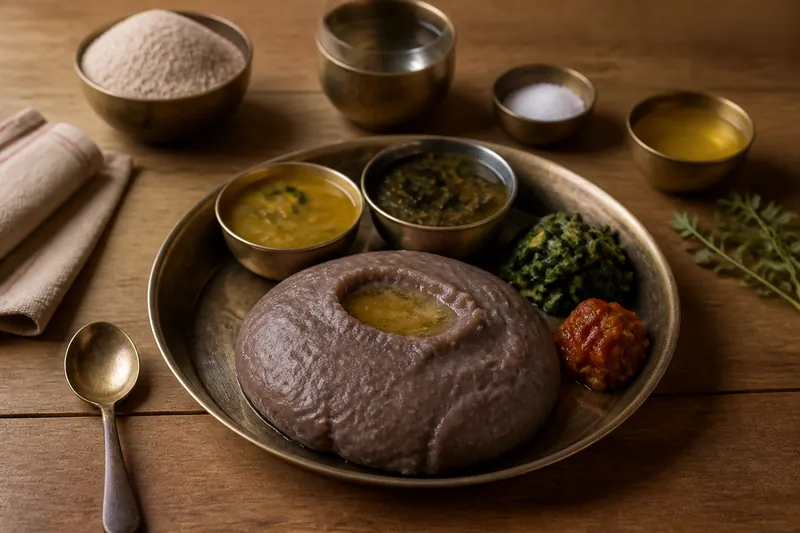 DhidoNepaliOpen the recipe →
Dhido is a thick, spoonable staple made from flour cooked in water and stirred until it becomes smooth and elastic. It has a mild, grainy taste that serves as a base for curries, pickles, and vegetable dishes. It is worth cooking because it shows a different idea of a staple from rice: one that is sturdy, filling, and made to be eaten with the hand. The cook should know that steady stirring matters; the texture depends on patience and adding the flour gradually so it does not clump.
Lentil pancakes with a crisp shell
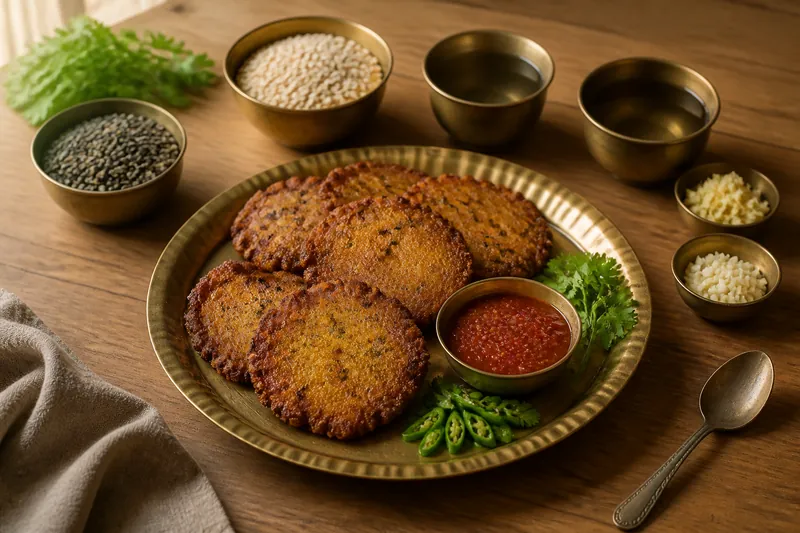 BaraNepaliOpen the recipe →
Bara are savory lentil fritters or pancakes, often soft inside and browned outside, sometimes topped with egg or minced meat. They taste nutty from the lentils and warm with spice, with a texture that sits between a pancake and a fritter. They are worth cooking because they show how fermented or soaked batter can become something crisp and substantial. A cook should know the batter usually needs long soaking, which is where much of the flavor and texture develop, so it is not a same-day shortcut dish.
Sweet rice cakes for special days
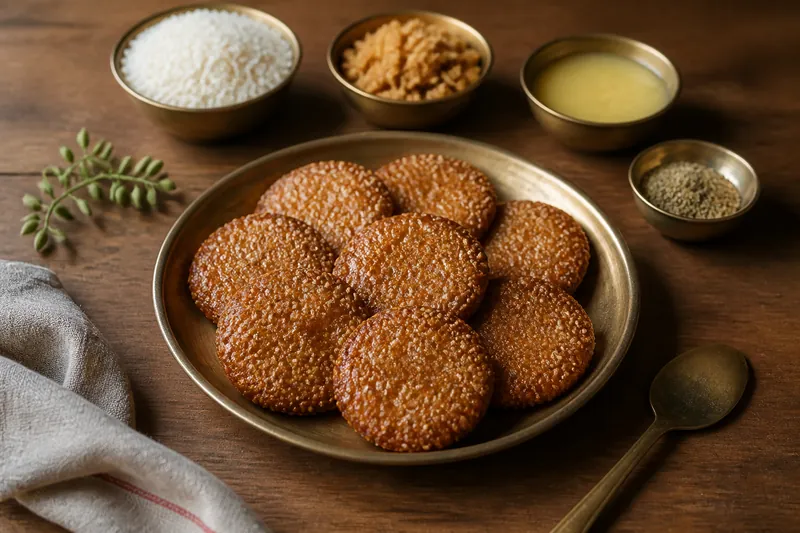 AnarsaNepaliOpen the recipe →
Anarsa are sweet rice cakes made from soaked rice, sugar, and often sesame, fried until golden. They taste gently sweet, with a toasted aroma and a crisp exterior that gives way to a dense center. They are worth cooking because they belong to the festive side of Nepali cooking, where time and texture matter as much as flavor. A cook should know the rice needs long soaking and careful grinding or processing, since the dough’s fine texture is what makes the cakes hold together in the pan.
Taken together, these dishes show how Nepali cooking moves between steamed dumplings, fermented sauces, rice-based staples, and sharp relishes. Some are everyday food, others are tied to gatherings, but all depend on careful seasoning and practical technique.