The Best-Known Dishes of Israeli Cooking
From stuffed pastries to sharp salads and slow-cooked stews, these are the dishes that show the range and memory of Israeli home cooking.

Israeli cooking draws from many places, but the dishes that stay are the ones that fit the table as it is: generous, practical, and full of contrast.
Some are eaten hot from the pan, others after hours on the stove, and a few are as much about the ritual around them as the food itself.
The fresh counterpoint
Israeli SaladIsraeliOpen the recipe →Israeli Salad is the simplest dish here, and one of the most useful. It is a finely chopped mix of tomato, cucumber, and often onion, dressed lightly so the vegetables stay bright and crisp. The taste is clean and juicy, with enough sharpness to wake up heavier foods. It earns its place because it fits breakfast, lunch, or a plate of grilled meat without crowding anything else. The one thing to know is that texture matters: cut the vegetables small and evenly, and dress the salad just before serving so it does not go watery.
A crisp pastry with a soft center
 BourekasIsraeliOpen the recipe →
Bourekas are savory pastries, usually made with flaky pastry and filled with cheese, potato, spinach, or mushrooms. They bake to a deep golden color and give a contrast of shattering layers outside and a soft, seasoned filling inside. Their appeal is plain: they are easy to carry, good warm or room temperature, and familiar in a way that feels immediate. What a cook should know is that filling must stay fairly dry; too much moisture softens the pastry and makes it lose the crisp edge that defines it.
Thin cutlet, crisp crust
 Israeli SchnitzelIsraeliOpen the recipe →
Israeli Schnitzel is a breaded cutlet, usually made from chicken breast pounded thin and fried until the coating is crisp and deeply colored. The flavor is mild, which is the point: the seasoned crumb, hot oil, and a squeeze of lemon do the work. It is worth cooking because it is direct and dependable, and it satisfies both as a sandwich filling and on a plate with salad. The main thing to know is to pound the meat evenly; if the cutlet is thick in one place and thin in another, it will cook unevenly and the crust will darken before the center is done.
Simple patties with room for seasoning
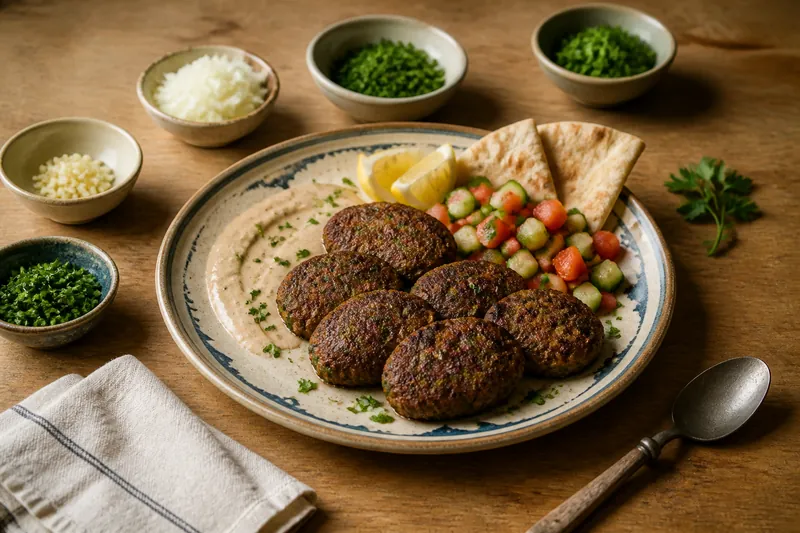 KtzitzotIsraeliOpen the recipe →
Ktzitzot are small seasoned patties, often made from ground meat and bound with onion, herbs, and crumbs before being pan-fried. They are compact, browned on the outside, and tender in the middle, with a straightforward savory flavor that takes well to garlic, parsley, cumin, or paprika. They are worth making because they are adaptable and efficient, good for a weeknight meal or tucked into bread. The thing to know is that the mixture should be mixed just enough to hold together; overworking it makes the patties dense rather than tender.
Grilled meat with a strong edge
 Israeli KebabIsraeliOpen the recipe →
Israeli Kebab is built from seasoned ground meat shaped around skewers or into short logs and cooked quickly over heat. It tastes of onion, spices, and char, with a juicy center when handled well. It belongs on the list because it captures the directness of grill cooking without much fuss, and it pairs naturally with salad, bread, and pickles. The key thing to know is that the mixture needs enough fat to stay moist; if it is too lean, the kebab will dry out before the outside takes on its proper color.
Offal, spice, and the skillet
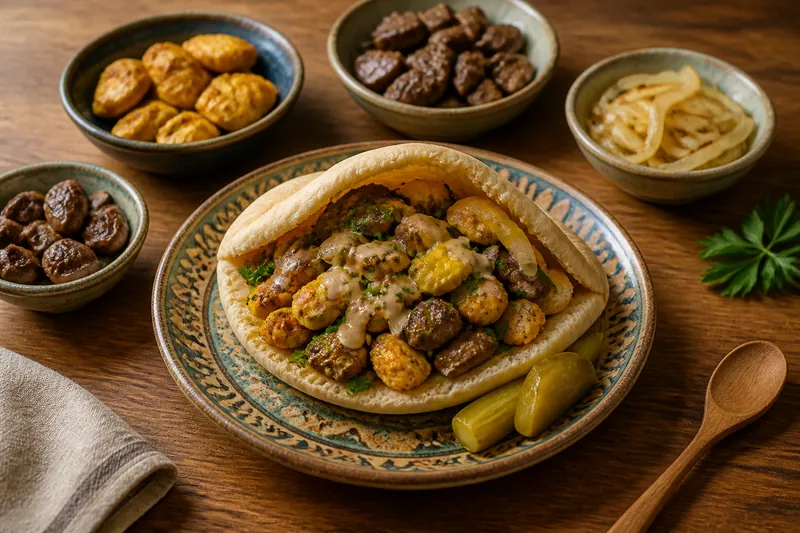 Jerusalem Mixed GrillIsraeliOpen the recipe →
Jerusalem Mixed Grill is a hot skillet dish made from chicken parts, often including liver or hearts, cooked with onions and a spice mixture until browned and fragrant. The taste is rich and a little earthy, with sweetness from the onions and heat from the seasoning. It is worth cooking because it turns modest ingredients into something concentrated and satisfying. A cook should know that the ingredients need high heat and careful timing; if they sit too long in the pan, the offal toughens, but if they are rushed, they miss the browned edges that give the dish its character.
Fish in tomato and chile sauce
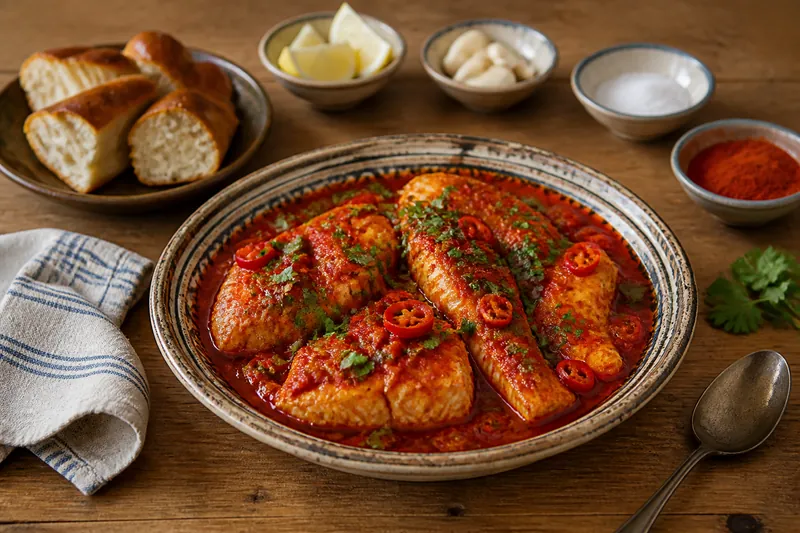 ChraimeIsraeliOpen the recipe →
Chraime is a fish dish cooked in a spicy tomato sauce, often enriched with garlic, paprika, cumin, and fresh chile. The sauce is bright, red, and aromatic, and it coats the fish rather than burying it. The flavor is warm and sharp, with enough heat to linger without overwhelming the fish. It is worth making because it is vivid and comforting at the same time, especially with bread for soaking up the sauce. The important thing to know is to choose fish that will stay intact in the sauce; delicate fillets can break apart if they are handled too roughly or simmered too long.
Sour soup with dumplings
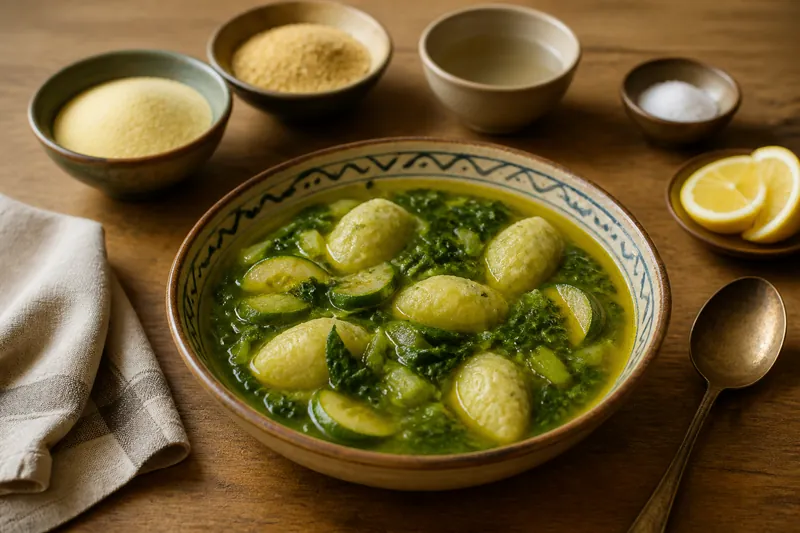 Kubbeh HamustaIsraeliOpen the recipe →
Kubbeh Hamusta is a soup of dumplings in a sour, green broth, usually sharpened with lemon or other souring ingredients and thickened with greens. The dumplings are tender, the broth is lively and tart, and the whole dish tastes both light and substantial. It is worth cooking because it shows how layered a simple soup can be, and because the sourness keeps every spoonful lively. The main thing to know is that the dumplings need careful shaping and gentle simmering; if the broth boils too hard, they can break apart and cloud the soup.
A slow pot for the Sabbath
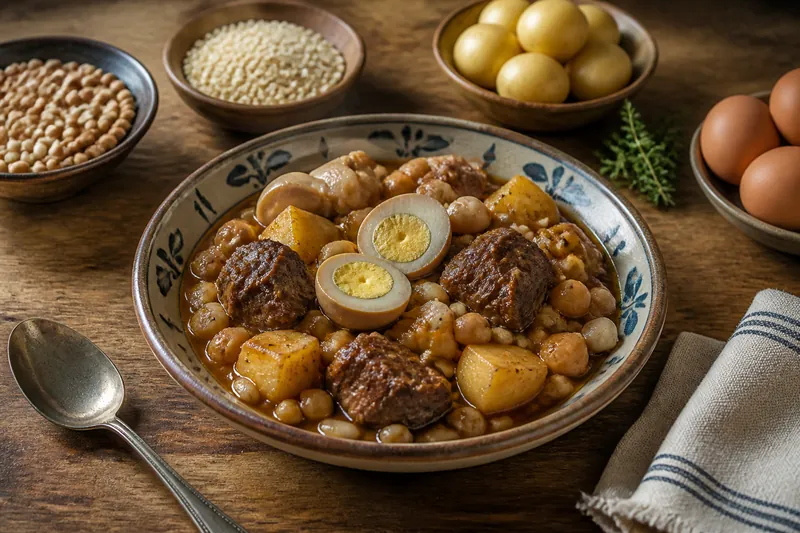 CholentIsraeliOpen the recipe →
Cholent is a long-cooked stew of beans, meat, grains, and often potatoes or barley, left to cook for many hours until everything becomes deep and unified. The flavor is dark, meaty, and gently sweet from the slow breakdown of the ingredients. It is worth making because time does the work, and the result has the kind of comfort that only a daylong simmer can bring. What a cook should know is that it is built for advance planning: the ingredients need enough liquid to last through the long cook, and the pot must be set up so it can hold steady heat without drying out.
Cheese pastry with syrup
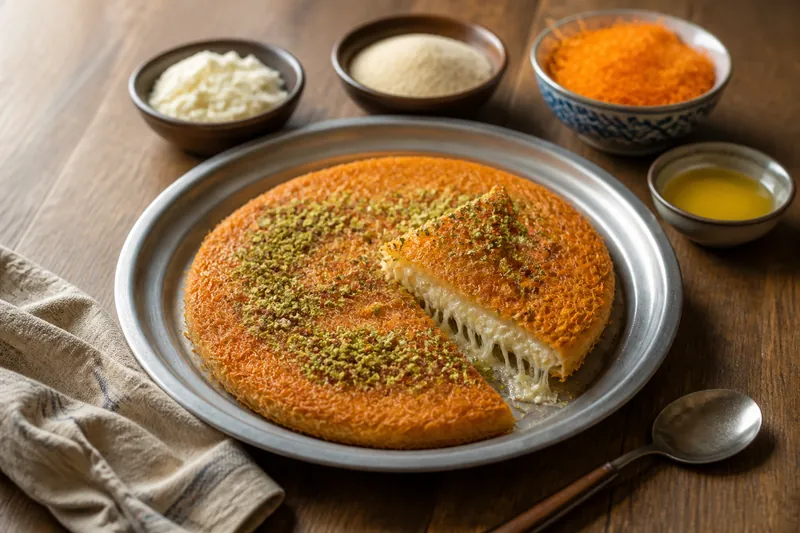 KnafehIsraeliOpen the recipe →
Knafeh is a dessert of shredded pastry or fine crumbs baked around soft cheese, then soaked with scented syrup and often finished with nuts. It tastes crisp at first, then creamy, sweet, and fragrant, with the cheese giving it a slight stretch under the syrup. It earns its place because it balances richness with a clear floral sweetness, and because the contrast of textures is so satisfying. The thing to know is that timing matters: it should be served soon after baking while the crust still has some bite and the syrup has settled into the pastry without making it soggy.
These dishes show how Israeli cooking moves between crisp and soft, fresh and slow, direct and layered. Together they make a clear picture of a cuisine built from practical habits, strong seasoning, and a respect for ingredients that can stand up to real daily eating.