The Iraqi Dishes That Define Home Cooking
From stuffed vegetables to syrup-soaked sweets, these are the Iraqi dishes most often used to introduce the country’s everyday cooking.
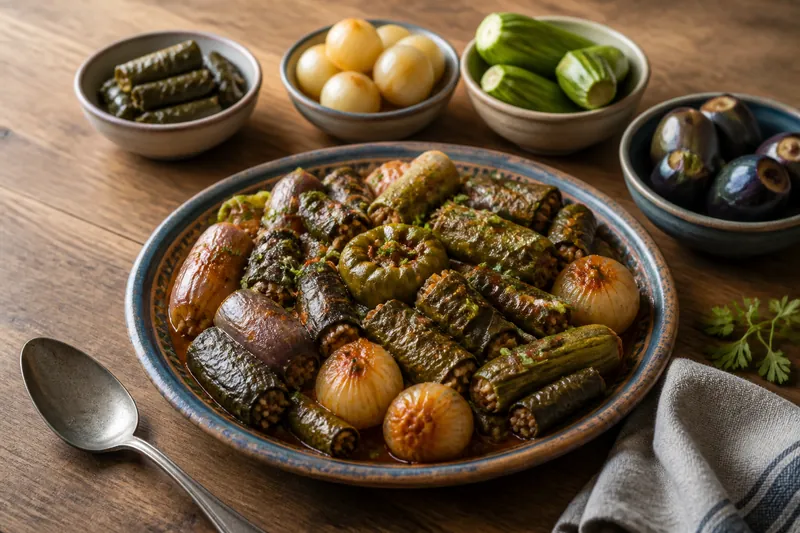
Iraqi cooking is built on rice, wheat, meat, herbs, legumes, and slow, careful seasoning. It is generous food, but rarely showy, and its best-known dishes tend to come from family kitchens rather than restaurant habit.
These recipes cover breakfast, supper, celebratory platters, and sweets. Together they show how Iraqi cooks work with spice, fat, acidity, and texture to make food that is direct, filling, and memorable.
Stuffed vegetables at the center of the table
Iraqi DolmaIraqiOpen the recipe →Iraqi dolma is a pan of stuffed vegetables, often layered with meat, rice, herbs, tomato, and sometimes fruit or dried lime for sharpness. The flavor is rich, tangy, and aromatic, with each vegetable taking on its own character while sharing the same seasoned filling. It is worth cooking because it captures Iraqi home cooking at its most complete: careful, varied, and meant for sharing. A cook should know that the assembly takes time and patience; packing the pot well is part of getting the right texture.
The biscuit-like pastry of celebrations
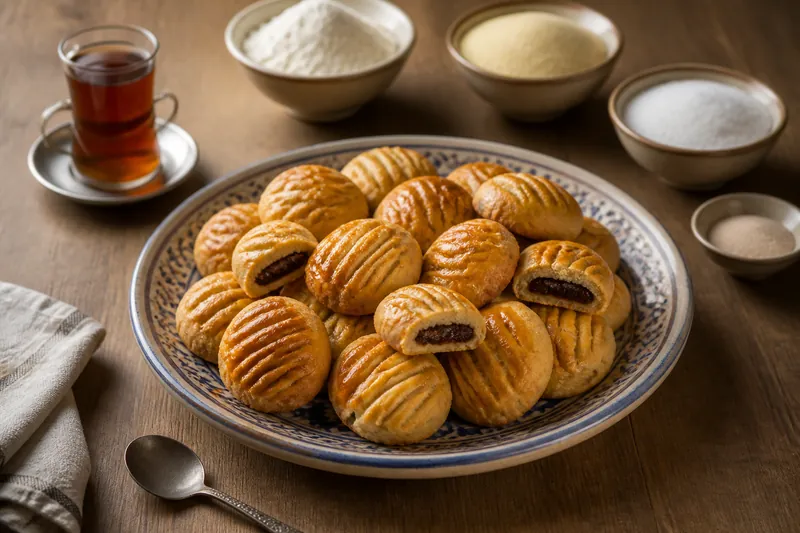 KleichaIraqiOpen the recipe →
Kleicha is the best-known Iraqi sweet pastry, usually filled with dates, nuts, or spiced coconut, then baked into neat rounds or crescents. The dough is tender and lightly fragrant, and the filling gives a dark sweetness against a plain, crumbly crust. It is worth making because it keeps well and carries the flavor of holidays and family visits. A cook should know that the dough needs rest and careful shaping; if it is rolled too thin, the filling can burst or dry out in the oven.
Breakfast pastry with cream and syrup
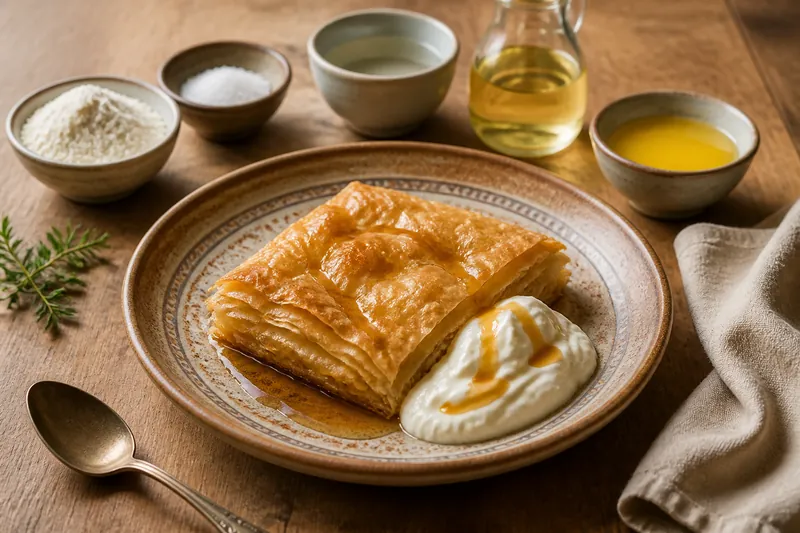 Kahi wa GeymarIraqiOpen the recipe →
Kahi wa Geymar pairs crisp, layered pastry with geymar, the thick clotted cream used across Iraq, and a pour of syrup or honey. It tastes rich, milky, and deeply buttery, with a contrast between the flaky pastry and the cool cream. It is worth cooking because it shows Iraqi sweetness at breakfast rather than dessert, where richness is balanced by restraint in the topping. A cook should know that the pastry is best served immediately, while it is still hot and brittle, before the cream softens it.
Slow-cooked wheat and meat porridge
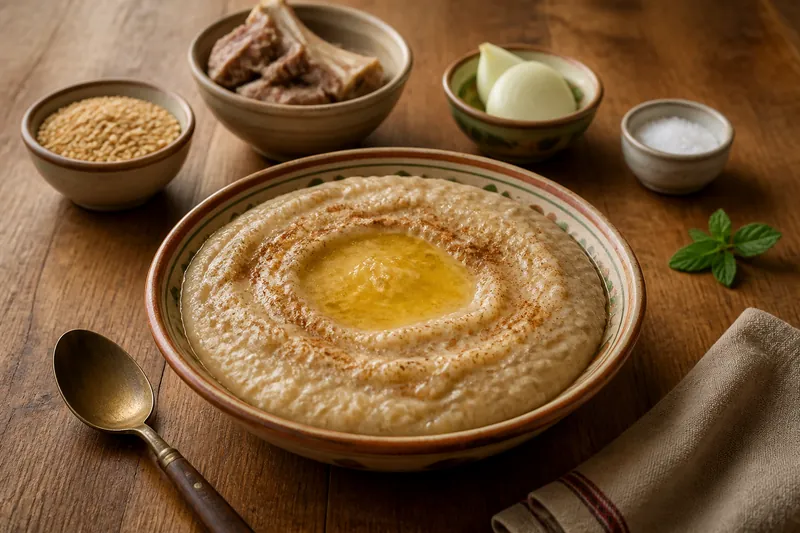 HareesIraqiOpen the recipe →
Harees is a long-cooked dish of wheat and meat, stirred until the grains break down into a thick, smooth porridge. It is mild, savory, and sustaining, often finished with ghee or a little spice rather than heavy sauce. It is worth cooking for its plainness, which becomes deeply satisfying through time and steady heat. A cook should know that the overnight soaking is not optional if you want the right texture, and the pot needs regular attention so the mixture does not catch at the bottom.
Spiced rice with a layered Iraqi character
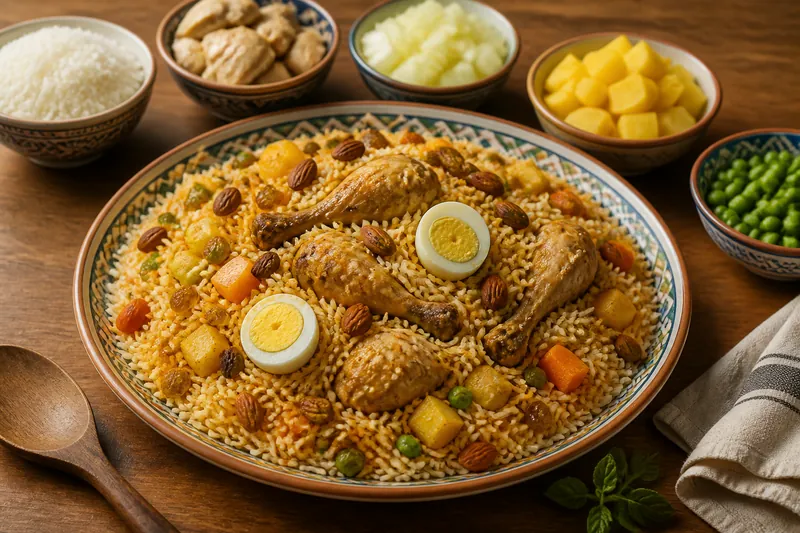 Iraqi BiryaniIraqiOpen the recipe →
Iraqi biryani is not the layered dish many cooks expect from the name alone, but a fragrant rice dish built with meat, vegetables, and warm spice. It is savory, gently aromatic, and often finished with fried nuts or raisins for contrast. It is worth cooking because it is flexible and substantial, yet still distinctively Iraqi in the way it balances spice with softness. A cook should know that the rice must stay light and separate, so the moisture in the pan needs close control.
Herbed fritters with a crisp edge
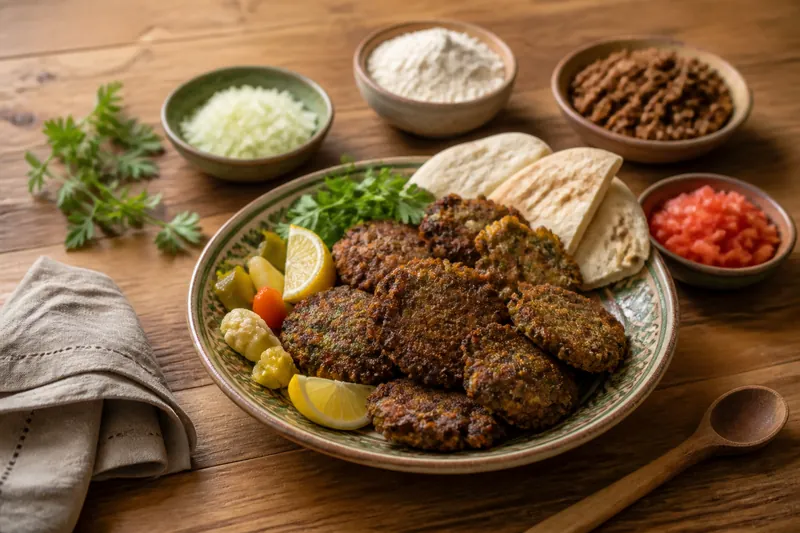 ArukIraqiOpen the recipe →
Aruk are fried patties made from a mixture that often includes potato, herbs, spices, and sometimes meat or eggs. They are crisp outside, soft inside, and pleasantly savory, with enough seasoning to stand on their own or alongside salad and bread. They are worth cooking because they are direct and practical, good for using what is on hand without losing flavor. A cook should know that the mixture must be firm enough to hold shape in the pan; if it is too loose, the patties will break.
Skewered meat with strong seasoning
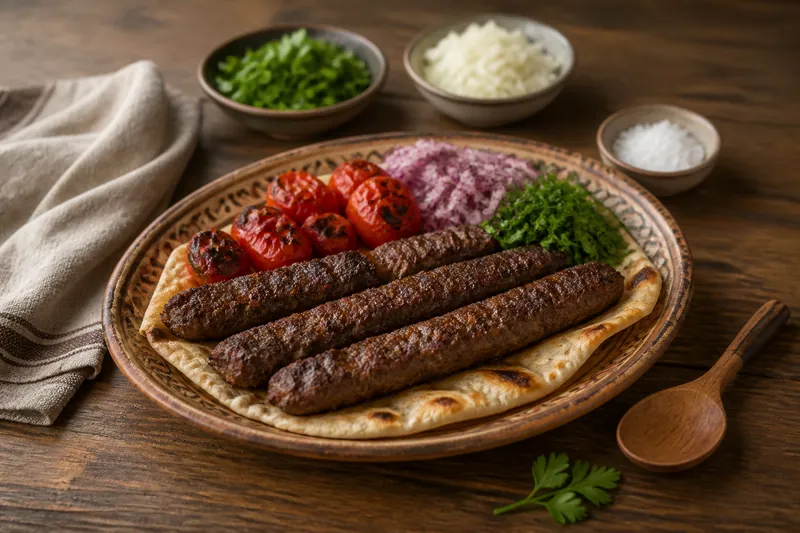 Iraqi KebabIraqiOpen the recipe →
Iraqi kebab is usually made from seasoned minced meat shaped around skewers and cooked over heat until browned and juicy. The taste is meaty, peppery, and smoky, with a simple but forceful seasoning that depends on careful mixing and even cooking. It is worth cooking because it shows how Iraqi grilling can be both plain and exact, with very little else needed at the table. A cook should know that the meat mixture must be worked enough to bind, but not so much that it turns dense.
Eggs and tomatoes cooked to order
 Bayd wa TamatIraqiOpen the recipe →
Bayd wa Tamat is a straightforward dish of eggs cooked with tomatoes, usually until the sauce is soft, sharp, and just thick enough to hold the eggs. It tastes bright, savory, and comforting, with the acidity of tomato cutting through the richness of the yolks. It is worth cooking because it is one of the clearest examples of Iraqi everyday food: few ingredients, quick to make, and best eaten hot with bread. A cook should know that the tomatoes need enough time to lose their raw edge before the eggs go in.
A dense sweet cake with a deep finish
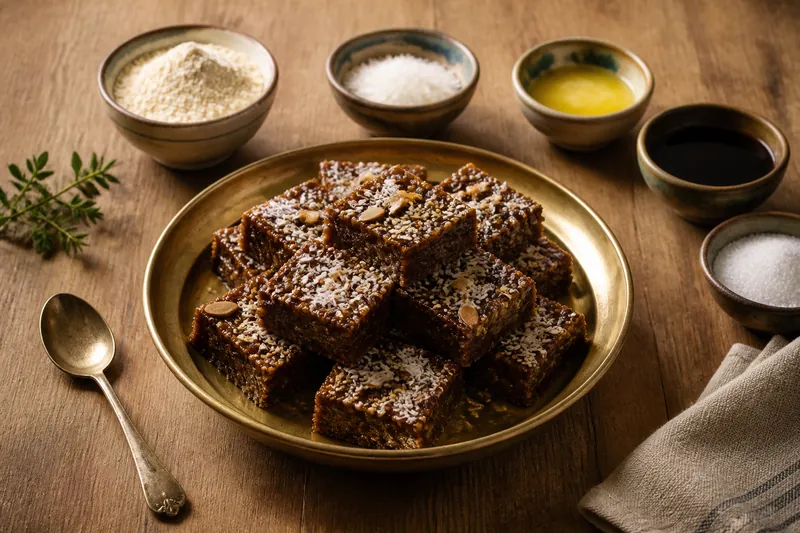 DaheenIraqiOpen the recipe →
Daheen is a sweet Iraqi cake with a rich, dense crumb and a glossy finish, often cut into squares and served in small portions. The flavor is sweet and full, sometimes with notes of date syrup or sesame, depending on the recipe. It is worth making because it belongs to the more old-fashioned side of Iraqi sweets, where richness matters more than decoration. A cook should know that the cake needs steady baking to set fully; underbaking will leave the center heavy and difficult to slice cleanly.
Fried vermicelli turned into dessert
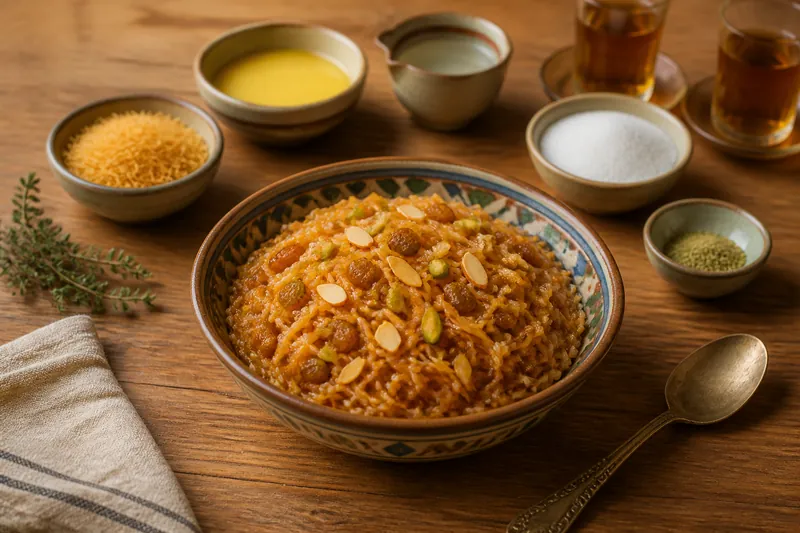 Halawat Sha'riyyaIraqiOpen the recipe →
Halawat Sha'riyya turns thin vermicelli noodles into a sweet, buttery pudding or cake-like dessert, often set with syrup and scented with cardamom or rose water. It tastes toasted, soft, and gently perfumed, with the noodles giving a distinctive texture that sits between custard and pastry. It is worth cooking because it transforms an ordinary pantry staple into something unexpected. A cook should know that the noodles need careful browning before the syrup is added, since that toasted flavor is what keeps the dish from tasting flat.
These dishes show Iraqi cooking in full range: grilled, stuffed, simmered, fried, and baked. Some are plain enough for breakfast, others belong to feast days, but all depend on patience, balance, and a steady hand with seasoning.