10 Best-Known Hungarian Dishes to Cook at Home
From soup and stew to noodles, pastries, and cake, these are the Hungarian dishes most often cooked and remembered.
Hungarian cooking is built on clear flavours and practical richness: paprika, onions, pork, beans, potatoes, dough, and long simmering. The best-known dishes show that range without needing much embellishment.
Some are everyday food, some are holiday fare, and some sit between the two. Together they give a useful map of the kitchen, from the first spoonful of soup to the last slice of cake.
The soup that anchors the table
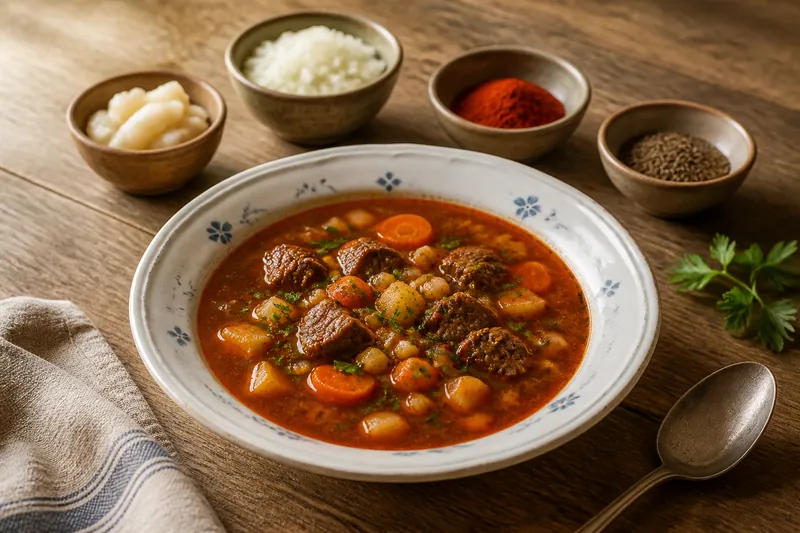
GulyáslevesHungarianOpen the recipe →Gulyásleves is a brothy beef soup with onions, paprika, potato, carrot, and often a little caraway. It tastes deep and clean at once, with the paprika giving warmth rather than heat. What makes it worth cooking is its balance: it is substantial enough for a meal but still clear enough to keep eating. The best versions rely on slow cooking, so the meat softens and the broth gathers flavour. A cook should not rush the onion base or add the paprika over high heat, or it can turn bitter.
Paprika fish soup with a sharp edge
 HalászléHungarianOpen the recipe →
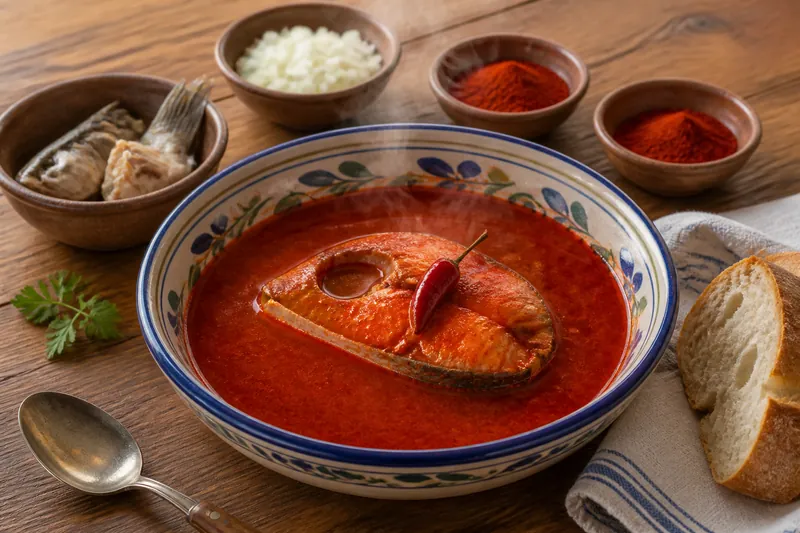
Halászlé is a bright red fish soup, usually made with river fish and plenty of paprika. It tastes bold, a little fiery, and distinctly freshwater, with a broth that should be clear in flavour even when it looks intense. It is worth cooking because it shows how direct Hungarian fish cookery can be: few ingredients, strong character, no hiding. The main thing to know is that the fish matters more than garnish. Use good stock and treat the paprika gently, so the soup stays vivid instead of muddy.
Bean soup with smoke and body
 Jókai bablevesHungarianOpen the recipe →
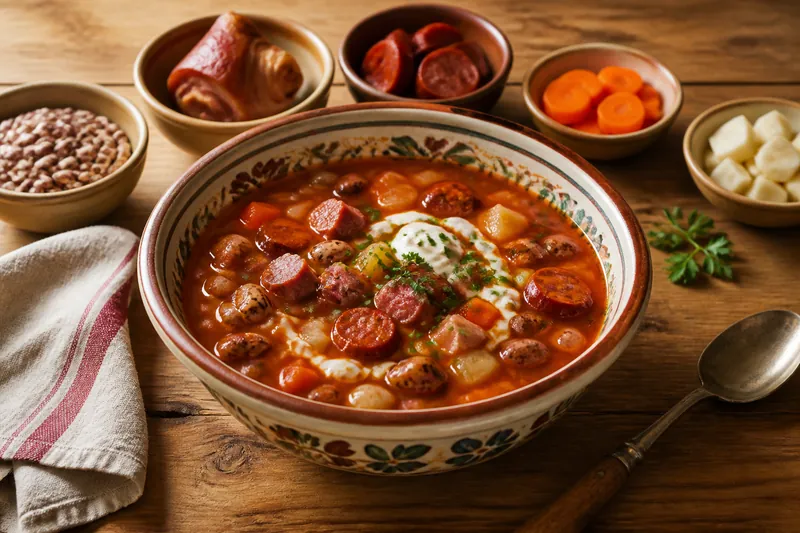
Jókai bableves is a thick bean soup enriched with smoked meat, sausage, and often a little sour cream. It tastes hearty, savoury, and rounded, with the beans giving creaminess and the smoke carrying the flavour. It is worth cooking because it turns humble ingredients into something sustaining and layered. The overnight soaking is not optional if you want the beans to cook evenly and the soup to stay balanced. A cook should be patient with the simmer, since the beans need time to soften without breaking apart too soon.
Savory pancakes in paprika sauce
 Hortobágyi palacsintaHungarianOpen the recipe →
Hortobágyi palacsinta are crêpe-like pancakes filled with a minced meat ragout, then baked or served under a paprika and sour cream sauce. They taste soft, rich, and slightly tangy, with the pancake taking on the sauce rather than standing apart from it. They are worth cooking because they combine familiar parts in a way that feels complete and old-fashioned. The main thing to know is that the filling should be moist but not loose, since the pancakes need to hold together when rolled and reheated in sauce.
Pork and potatoes for a late meal
 Brassói aprópecsenyeHungarianOpen the recipe →
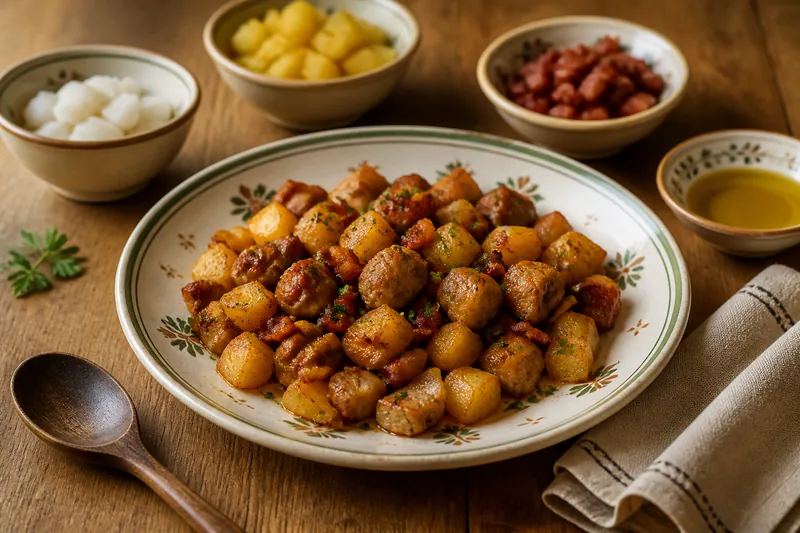
Brassói aprópecsenye is a pan dish of pork cut small and browned with potatoes, garlic, and often a little bacon. It tastes savoury, crisp at the edges, and comforting without being delicate. It is worth cooking because it is straightforward and satisfying, especially when the potatoes are properly browned rather than merely softened. The cook should work in stages so the pork sears and the potatoes fry rather than steam. A heavy pan helps, and the dish benefits from being served immediately while the edges are still crisp.
Potato and pasta, plain and filling
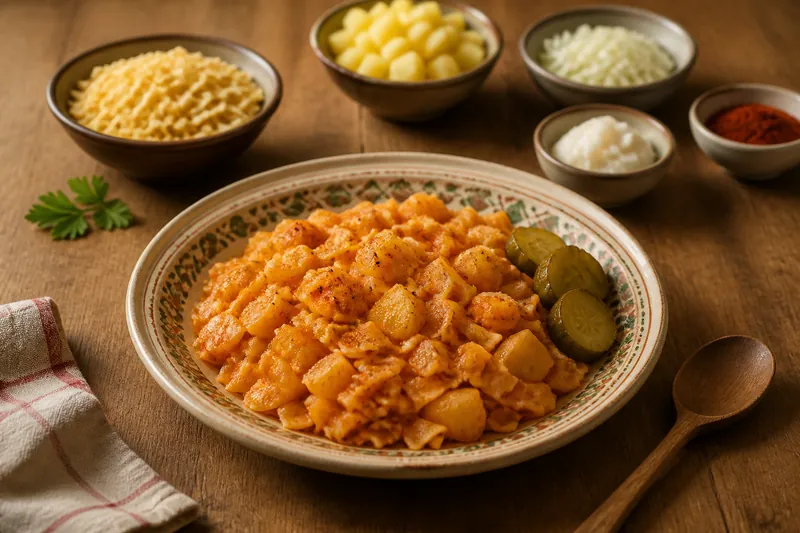 Krumplis tésztaHungarianOpen the recipe →
Krumplis tészta is a simple pasta dish with potatoes, onions, and often paprika. It tastes soft, mild, and gently sweet from the onion, with the potato binding the pasta into something more substantial than it sounds. It is worth cooking because it shows how Hungarian home food can stretch a few ingredients into a proper meal. The important thing is to season the potato mixture well; without enough salt, it falls flat. Keep the potato pieces soft but not watery, so they coat the pasta instead of turning gluey.
Eggy bread for breakfast or supper
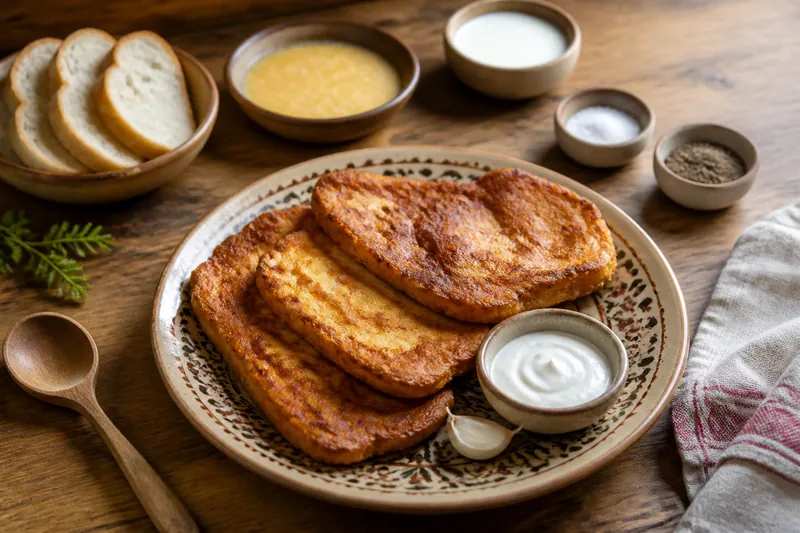 Bundás kenyérHungarianOpen the recipe →
Bundás kenyér is bread dipped in egg, then fried until golden. It tastes crisp outside and soft inside, with a savoury egg flavour that makes stale bread useful again. It is worth cooking because it is one of the fastest Hungarian dishes and one of the most adaptable, eaten plain or with cheese, pickles, or jam. The one thing to know is that the bread should be sturdy enough to hold its shape after soaking. Use a pan with enough fat to brown the slices evenly on both sides.
Pork jelly for cold weather
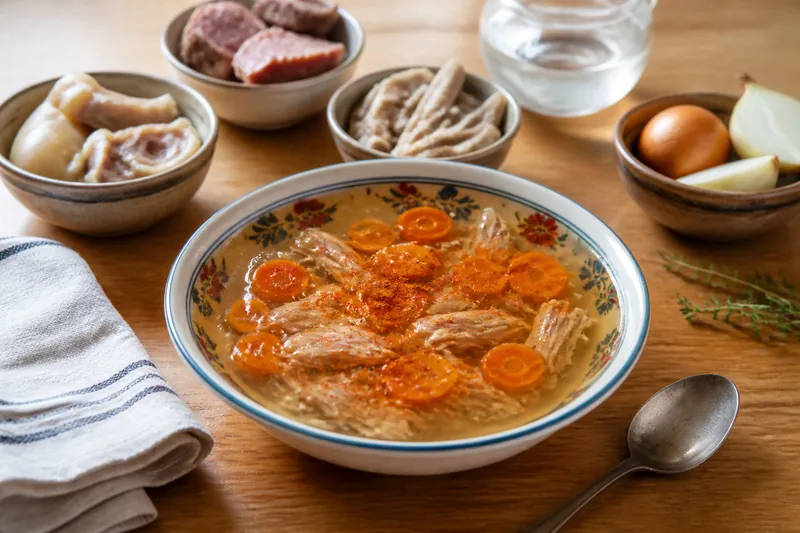 KocsonyaHungarianOpen the recipe →
Kocsonya is a cold set meat jelly made from pork cuts that release gelatin, often with garlic and pepper. It tastes clean, savoury, and firm, with the richness of the meat held in a clear, chilled broth. It is worth cooking because it uses slow simmering to create a texture that is unusual and traditional at the same time. The cook should not expect quick results: the long boil extracts the gelatin, and the overnight chilling is needed for the dish to set. Use a shallow vessel so it cools evenly.
Layer cake with caramel on top
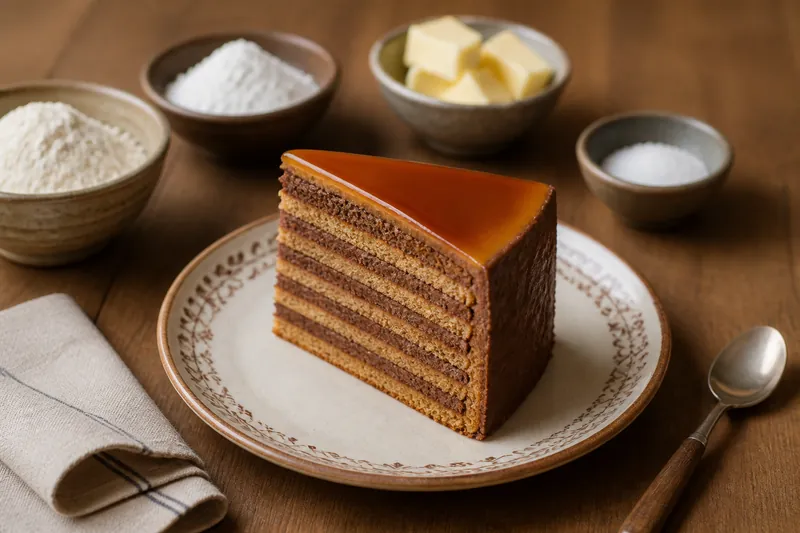 DobostortaHungarianOpen the recipe →
Dobostorta is a layered sponge cake filled with chocolate buttercream and finished with a hard caramel top. It tastes rich but not heavy, with contrast between soft cake, smooth filling, and brittle caramel. It is worth cooking because it is one of the most recognisable Hungarian cakes, and because its structure is simple even if the assembly takes care. The cook should work with the caramel at the right moment, since it sets quickly and must be cut while still workable. Thin, even sponge layers make the cake easier to stack neatly.
Holiday roll with nut or poppy seed filling
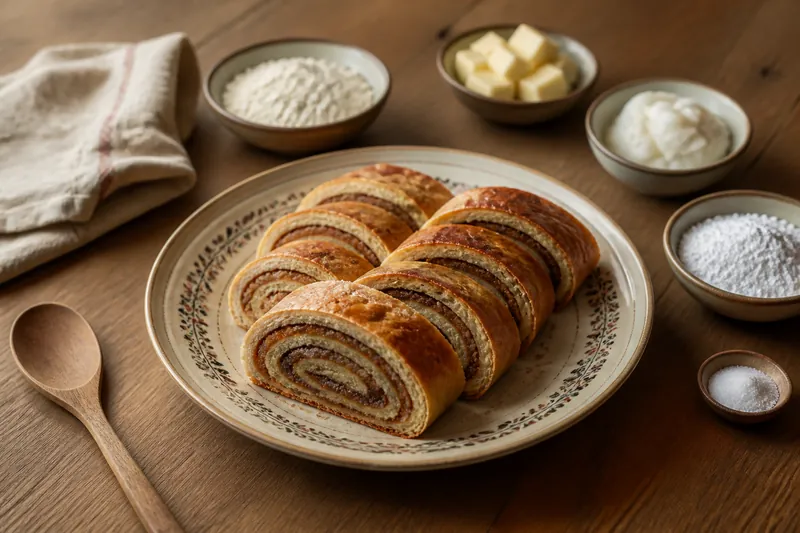 BejgliHungarianOpen the recipe →
Bejgli is a rolled pastry, usually filled with walnut or poppy seed paste and baked until the surface cracks in the familiar pattern people expect. It tastes buttery, nutty, and not overly sweet, with a soft crumb around a dense filling. It is worth cooking because it belongs to the centre of the Hungarian holiday table and keeps well for a few days. The crucial thing is to chill and handle the dough carefully, since the roll can split if it is stretched too tightly or proofed too long before baking.
These dishes cover the core of Hungarian cooking: soup, stew, fish, beans, pork, pastry, and cake. Some are weekday food, some are festive, and some change with season and region. Taken together, they show a cuisine built on patience, strong seasoning, and good timing.