The Greek Dishes You Should Know and Cook Well
From salads and pies to braises and soups, these are the Greek dishes that define home cooking, seaside eating, and long-table meals.

Greek cooking is built on restraint: olive oil, lemon, herbs, grain, cheese, vegetables, fish, and meat handled with confidence. The best-known dishes are not complicated, but they depend on good seasoning and clear method.
These are the dishes many people meet first, and for good reason. They show the range of the cooking, from cold salad to layered pastry, from slow-braised lamb to quick souvlaki.
The salad that depends on ripe produce
Horiatiki (Traditional Greek Salad)GreekOpen the recipe →Horiatiki is the plainest and most exacting of Greek dishes: tomatoes, cucumbers, onion, olives, feta, oregano, and olive oil, usually without lettuce. It tastes sharp, salty, juicy, and clean, with the cheese softening into the vegetables as it sits. It is worth cooking because there is nothing to hide behind; when the produce is good, the result is immediate. A cook should know that the tomatoes must be ripe and the olive oil generous, since the dish is assembled, not dressed in the usual sense.
A layered bake with depth
 Classic MoussakaGreekOpen the recipe →
Classic Moussaka is a baked dish of eggplant, meat sauce, and a thick béchamel topping, often with potato beneath. It tastes rich and savory, with sweetness from the vegetables and warmth from cinnamon or allspice in the meat. It is worth making because the layers settle into each other and the finished dish slices neatly once rested. A cook should know that the components need time and order: the eggplant should be cooked properly before assembly, and the moussaka should rest after baking so it holds together.
Grilled meat, simply handled
 Pork Souvlaki with TzatzikiGreekOpen the recipe →
Pork Souvlaki with Tzatziki is one of the most direct Greek meals: marinated pork cooked fast over high heat and served with the cool garlic-yogurt sauce. The meat should be browned at the edges and juicy inside, while the tzatziki brings cucumber, dill, lemon, and a clean chill. It is worth cooking because it gives a lot of flavor from a short list of ingredients. A cook should know the pork needs time in the marinade, and the grill or pan must be hot enough to color the meat before it dries out.
Flaky pastry with a green, salty filling
 Spanakopita (Spinach Pie)GreekOpen the recipe →
Spanakopita is a pie of spinach, herbs, and feta wrapped in filo pastry and baked until crisp and golden. It tastes grassy, savory, and buttery, with the cheese giving salt and the herbs lifting the filling. It is worth cooking because it works as a snack, lunch, or main dish, and it is as good warm as it is at room temperature. A cook should know that filo dries quickly, so the sheets need to be kept covered while assembling, and the filling should not be wet or the pastry will turn soft.
Bright broth finished with egg and lemon
 Avgolemono SoupGreekOpen the recipe →
Avgolemono Soup is a smooth, pale broth thickened with egg and sharpened with lemon, often with rice or orzo. It tastes comforting but light, with a gentle richness rather than creaminess and a clear citrus edge. It is worth cooking because it turns a few simple ingredients into something elegant and restorative. A cook should know the key moment is tempering: the hot broth must be added slowly to the egg-lemon mixture so it thickens without curdling. Once that is understood, the soup is straightforward.
Slow lamb with herbs and softness
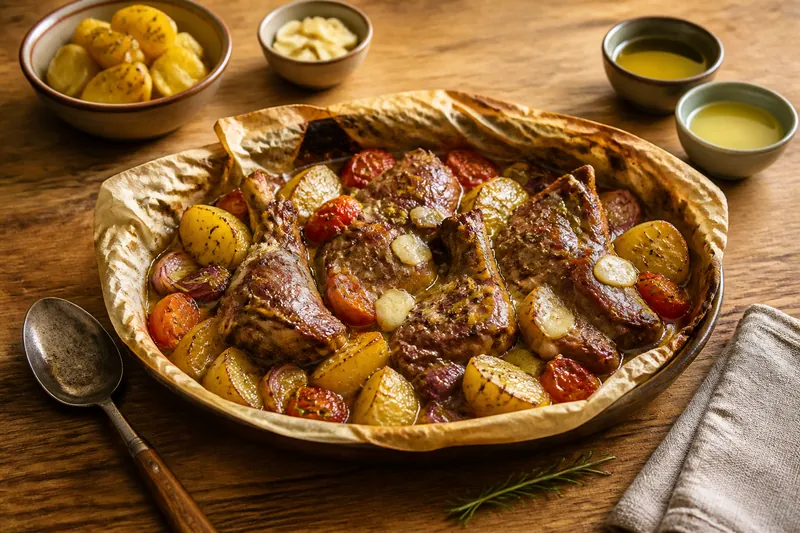 Arni KleftikoGreekOpen the recipe →
Arni Kleftiko is lamb baked slowly with garlic, lemon, herbs, and often potatoes, until the meat becomes very tender. It tastes deeply savory, with the lamb absorbing the perfume of oregano and the lemon cutting the richness. It is worth cooking because long, enclosed roasting gives a result that feels both rustic and composed. A cook should know that it is a dish of patience: the lamb needs enough time to soften fully, and it should be sealed well for steady cooking and concentrated flavor.
Pastry with a sweet or savory center
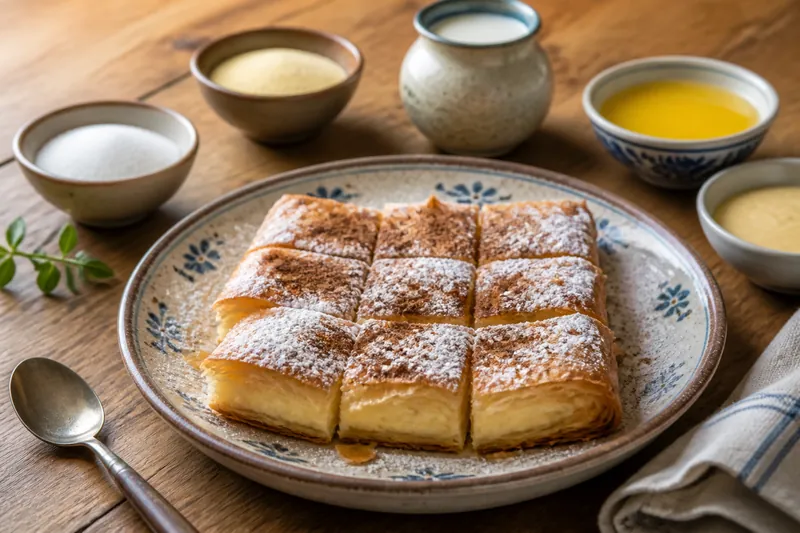 BougatsaGreekOpen the recipe →
Bougatsa is a filo pastry filled most often with a custard or, in some versions, cheese or minced meat, then baked and dusted with sugar and cinnamon when sweet. It tastes crisp outside and soft within, with a clean dairy richness in the filling. It is worth cooking because it shows how Greek pastry can move between breakfast, snack, and dessert. A cook should know the filling must be thick enough to set, and the pastry should be baked until thoroughly browned so the layers stay distinct rather than soggy.
Oven vegetables in olive oil
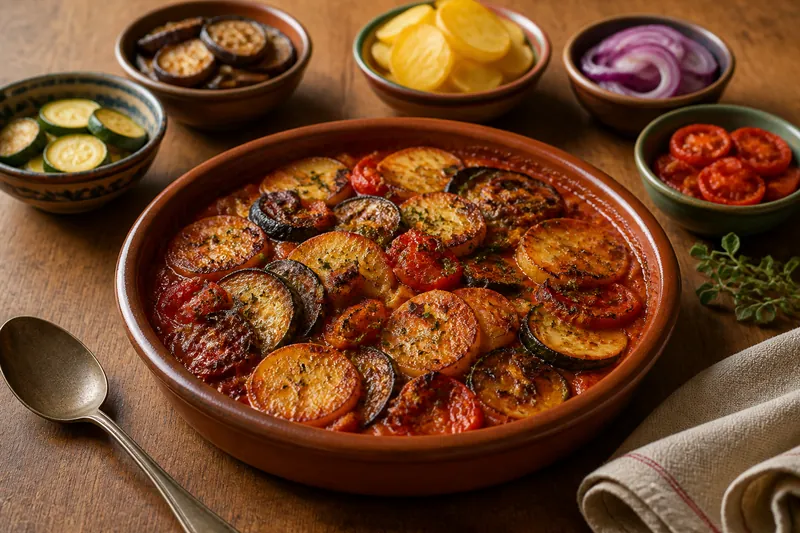 BriamGreekOpen the recipe →
Briam is a tray of vegetables, usually zucchini, potatoes, tomatoes, onions, and sometimes eggplant, baked slowly in olive oil and herbs. It tastes soft, sweet, and herbal, with the vegetables melting into one another rather than staying separate. It is worth cooking because it turns everyday produce into something more than a side dish; it can stand alone with bread and feta. A cook should know the vegetables need to be sliced evenly so they cook at the same rate, and the dish benefits from enough olive oil to keep everything lush.
A hard rusk turned into a meal
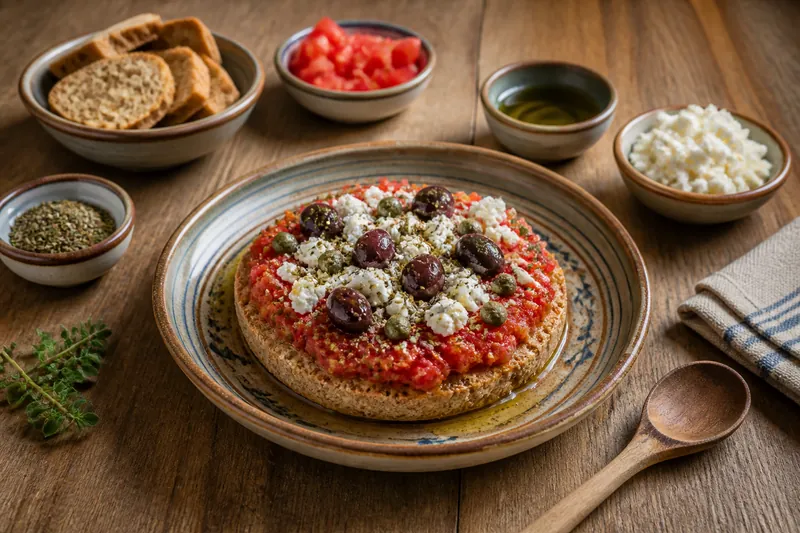 DakosGreekOpen the recipe →
Dakos is a Cretan dish of barley rusk topped with grated or chopped tomato, olive oil, oregano, and feta or mizithra. It tastes salty, fruity, and dry in the right way, with the tomato soaking into the rusk just enough to soften it without losing texture. It is worth cooking because it is fast, inexpensive, and satisfying in a very direct way. A cook should know the balance is important: the tomato should be juicy, but the rusk should not be drowned, or the dish loses the contrast that makes it work.
Stuffed leaves with a lemony finish
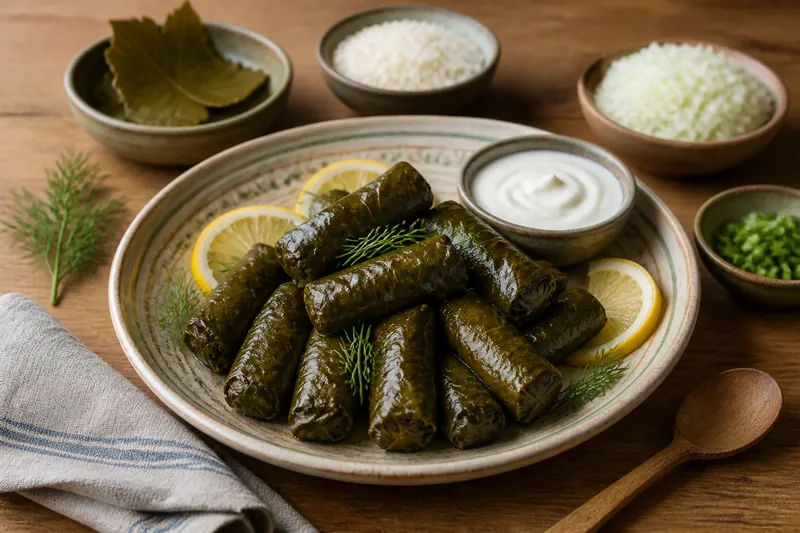 DolmadesGreekOpen the recipe →
Dolmades are vine leaves wrapped around rice, herbs, onions, and sometimes minced meat, then gently simmered. They taste fresh, lemony, and savory, with the leaf giving a slight bitterness that keeps the filling from feeling heavy. They are worth cooking because each one is small but complete, and they are excellent at room temperature or cold. A cook should know the leaves must be handled carefully so they do not tear, and the rolls need to be packed snugly in the pan so they stay closed during cooking.
Taken together, these dishes show Greek cooking at its most familiar: bright salad, crisp pastry, braised meat, vegetable bakes, and soups finished with lemon. They are dishes of clear flavor and careful timing, and they reward good ingredients more than elaborate technique.