French Classics That Define the Table and the Home Kitchen
From wine-braised stews to custards and tarts, these are the French dishes most worth knowing, cooking, and serving well.

French cooking is often remembered through a handful of dishes that travel well beyond the regions where they began. Some are rustic and practical, some are careful and exacting, but each has become part of the language of home cooking.
These are the dishes people return to for their balance, their clarity, and the way they hold up at the table. They ask for patience more often than complexity, and that is part of their appeal.
Deep broth, sweet onions, melted cheese
Classic French Onion SoupFrenchOpen the recipe →French onion soup is built from onions slowly cooked until sweet and deeply browned, then moistened with stock and finished under a crust of bread and cheese. The taste is rich, savory, and slightly sweet, with a sharp edge from the cheese. It is worth cooking because it turns a few basic ingredients into something layered and satisfying. The key thing to know is that the onions need real patience; if they are rushed, the soup loses its depth.
A custard tart with a savory core
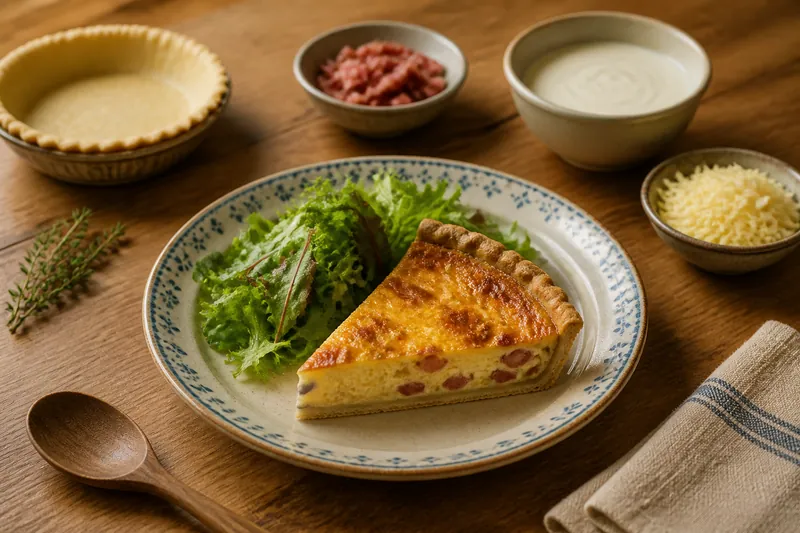 Quiche LorraineFrenchOpen the recipe →
Quiche Lorraine is a baked tart of eggs, cream, and bacon in a pastry shell, cut into neat slices once set. It tastes rich and gently smoky, with a soft custard that contrasts with crisp pastry. It earns its place because it is as useful for lunch as it is for a buffet or supper. Before starting, make sure the pastry case is well chilled and properly baked; a pale or underbaked shell will soften once the filling goes in.
Potatoes baked until tender and creamy
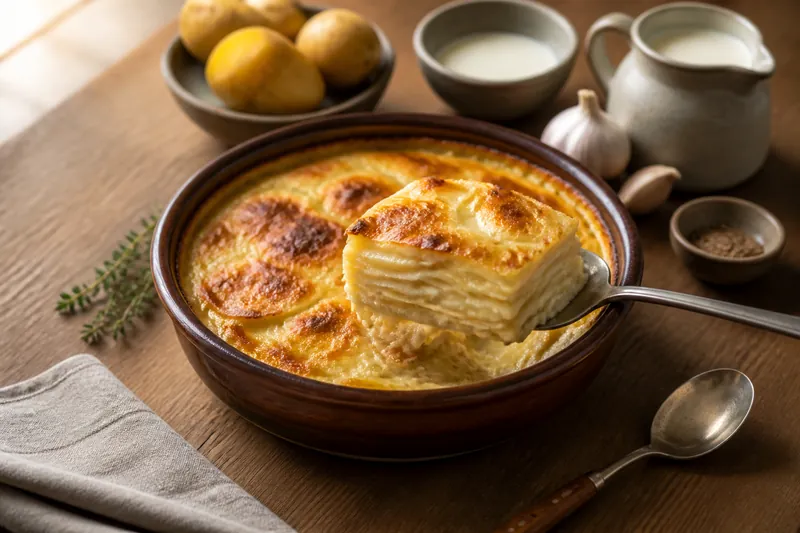 Gratin DauphinoisFrenchOpen the recipe →
Gratin Dauphinois is a dish of sliced potatoes baked with cream, garlic, and often a little milk until the top is golden and the center is soft. It tastes mild, buttery, and comforting, with the garlic just present enough to sharpen the richness. It is worth making because it delivers a great deal from a short ingredient list. The main thing to know is that the potatoes should be sliced evenly; thin, regular slices cook more reliably and give a better texture.
A vegetable dish with real summer flavor
 Traditional RatatouilleFrenchOpen the recipe →
Ratatouille is a cooked mix of tomatoes, aubergines, courgettes, peppers, onion, and garlic, brought together until soft but still distinct. Its taste is bright, herbal, and gently sweet, with olive oil carrying the vegetables’ flavor. It is worth cooking because it can be a side dish, a main with bread, or a base for other meals. One thing to know is that the vegetables should not be crowded or underseasoned; they need enough heat and salt to soften properly and taste like themselves.
Caramelized fruit under a crisp crust
 Tarte TatinFrenchOpen the recipe →
Tarte Tatin is an upside-down tart, usually made with apples cooked in butter and sugar until caramelized, then covered with pastry and baked. It tastes of baked fruit, caramel, and pastry that has soaked up some of the syrup underneath. It is worth making because the method gives a concentrated, glossy result with very little garnish needed. The one thing to know is that the caramel stage matters; it should be watched closely, since it can move from amber to bitter very quickly.
Silky custard beneath a brittle crust
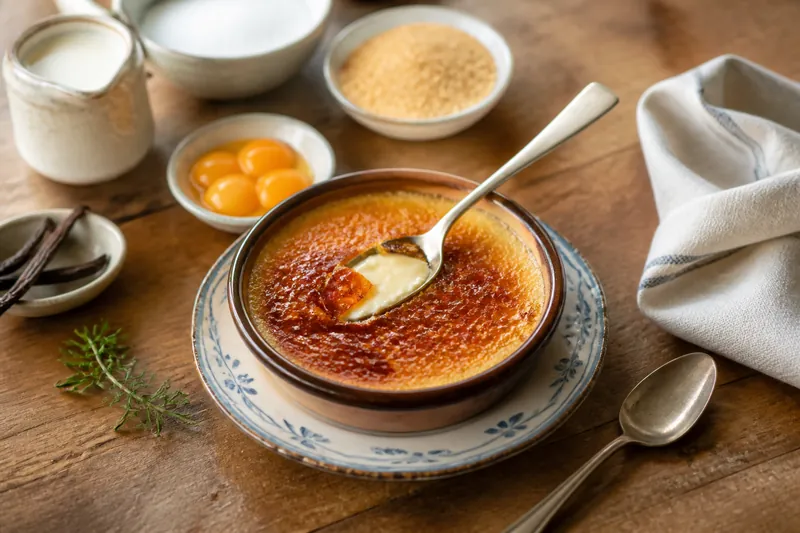 Classic Crème BrûléeFrenchOpen the recipe →
Crème brûlée is a baked cream custard topped with a thin layer of caramelized sugar that cracks under a spoon. It tastes clean, rich, and vanilla-scented, with a contrast between the cool custard and the hard, burnt-sugar lid. It is worth cooking because the texture contrast is exact and satisfying. Before beginning, remember that the custards need chilling before the sugar is torched or browned; if they are warm, the surface will melt instead of forming a proper shell.
Roast duck with a sharp citrus glaze
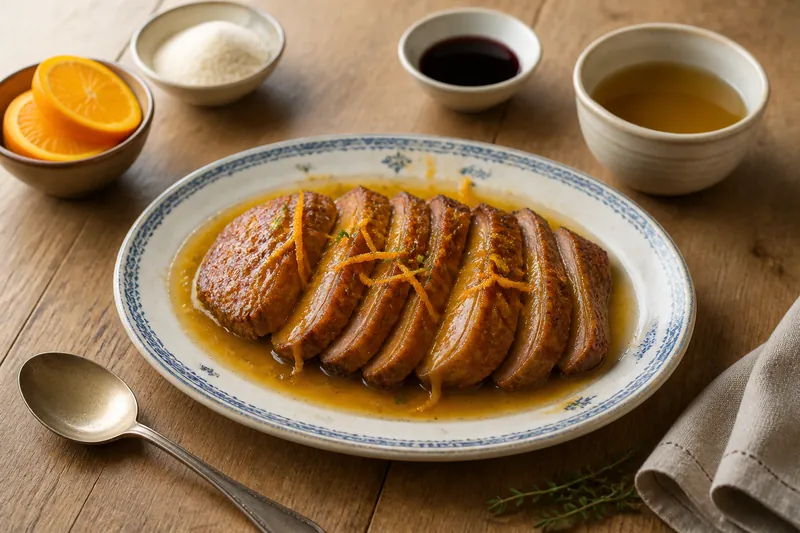 Duck à l'OrangeFrenchOpen the recipe →
Duck à l'Orange pairs duck with an orange sauce that cuts through the bird’s fat and brings brightness to each bite. The flavor is rich, savory, and slightly sweet, with citrus adding lift rather than perfume. It is worth cooking because the sauce gives the duck a clear, memorable finish. One thing a cook should know is that duck needs careful heat so the fat renders without drying the meat; managing the skin well makes the dish far better.
A seafood soup with saffron and garlic
 Provençal BouillabaisseFrenchOpen the recipe →
Bouillabaisse is a Provençal fish soup or stew made with mixed seafood, tomatoes, garlic, herbs, and saffron. It tastes briny, aromatic, and gently sweet from the shellfish and broth, with saffron giving it a distinctive warmth. It is worth cooking because it captures the sea in a concentrated, fragrant bowl. Before starting, know that the broth sets the tone; good fish stock and careful seasoning matter more than piling in extra ingredients.
A slow stew with wine and depth
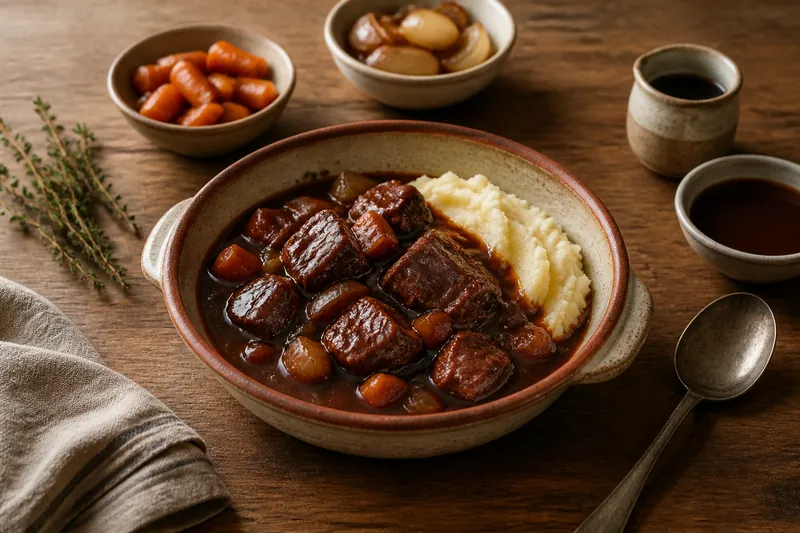 Beef BourguignonFrenchOpen the recipe →
Beef Bourguignon is beef braised in red wine with onions, carrots, mushrooms, and often bacon until the meat turns tender and the sauce becomes dark and full. The taste is deep, winey, and savory, with the vegetables absorbing the braising liquid. It is worth cooking because time turns inexpensive cuts into something polished and complete. The main thing to know is that the browning stage is not optional; the stew needs a good sear on the meat to build its flavor.
Chicken braised in wine and mushrooms
 Classic Coq au VinFrenchOpen the recipe →
Coq au Vin is a chicken stew braised in wine with bacon, mushrooms, onions, and herbs until the sauce is glossy and the meat is tender. It tastes earthy, savory, and slightly acidic, with the wine bringing color and structure. It is worth cooking because it has the comfort of a stew but the character of a more carefully composed dish. One thing to know is that the marinade, where used, needs enough time to matter; otherwise the dish can taste blunt rather than rounded.
These dishes endure because they are specific without being fussy. Each has a clear method, a clear flavor, and a reason to keep returning to it. Cook them well, and French cooking stops feeling abstract and starts to look like ordinary good sense at the stove.